The Turkish-Egyptian Role in Sudan: Between Geopolitical Rivalry and the Entrenchment of Division
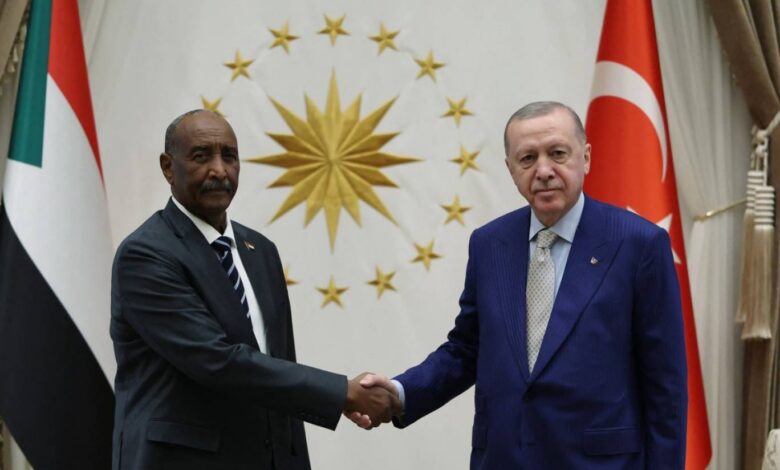
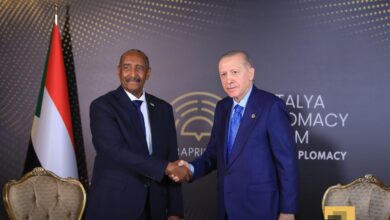
Owing to its unique geopolitical position overlooking the Red Sea, its proximity to the Horn of Africa, and its strategic depth within the African continent, Sudan has long been a focal point of regional and international competition. At the center of these dynamics, Egypt and Turkey have emerged as two major actors with a long history of involvement in Sudanese affairs. However, the role played by Ankara and Cairo in recent years—particularly following Sudan’s political transformation in 2019 and the devastating war that followed—illustrates a pattern of intervention widely viewed as counterproductive. Within Turkish and Egyptian strategic calculations, Sudan has increasingly become a “strategic backyard” for settling regional rivalries or expanding influence. Rather than contributing to the establishment of a unified and stable Sudanese state, these policies have deepened internal divisions, weakened national sovereignty, and prolonged humanitarian suffering.
The Egyptian Approach: National Security First and the Neglect of Internal Complexities
Egypt frequently views Sudan through the narrow lens of national security, considering stability along its southern frontier essential to safeguarding its water security within the Nile Basin and protecting its borders. Historically, Cairo has supported Sudan’s traditional state institutions—particularly the Sudanese Armed Forces—which it regards as the principal guarantor of national unity and territorial integrity.
Nevertheless, the shortcomings of this approach lie in its diplomatic rigidity and its one-dimensional reading of Sudan’s political landscape. On numerous occasions, Cairo has distanced itself from broad segments of Sudanese society and civilian political forces under the justification of defending the legitimacy of the state and its institutions.
This rigid stance has largely overlooked the profound political and social transformations that have taken place in Sudan, as well as the emergence of other influential military and political actors with substantial leverage on the ground. Consequently, Egyptian support has often been perceived by many Sudanese as interference in sovereign national choices or as favoritism toward one faction at the expense of another.
Moreover, Egypt’s overwhelming emphasis on military and security considerations has at times led it to overlook certain violations or reinforce the influence of Sudan’s traditional military establishment. This has contributed to obstructing the democratic transition sought by the Sudanese people and has helped reproduce governance failures that ultimately pushed the country toward armed conflict.
The Turkish Approach: Neo-Ottoman Ambitions and Ideological Instruments
Conversely, Turkey regards Sudan as a key component of its broader strategy to expand its influence across Africa and the Red Sea region. Ankara has sought to strengthen its presence through economic and military agreements, including attempts to secure strategic ports and obtain major agricultural concessions.
The controversial aspect of Turkey’s involvement lies in its use of ideological and historical narratives as instruments of influence. At various stages, Ankara sought to build alliances with Sudanese Islamist movements, believing these groups represented a natural extension of its regional influence.
This orientation intensified political polarization within Sudanese society. A significant segment of the population viewed these policies as support for political currents associated with the former regime that was overthrown during the 2019 revolution. Likewise, Turkish initiatives suggesting a military or security presence in the Red Sea—particularly regarding Suakin Island—raised concerns among many Sudanese national forces, which regarded such moves as an infringement upon national sovereignty and an attempt to transform Sudan into a Turkish military outpost.
As a result, rather than serving as a mediator or promoter of stability, Turkey became, according to this analysis, a factor contributing to domestic tensions, with various Sudanese actors exploiting its role either as political leverage or as a perceived external threat to mobilize public opinion.
The Negative Intersection: Sudan as an Arena for Bilateral Rivalry
The damage cannot be attributed solely to the independent policies of each country. The Turkish-Egyptian rivalry itself has had profound consequences for Sudan. During periods of heightened tension between Cairo and Ankara, Sudan bore the cost.
Sudanese political forces increasingly found themselves divided between a camp aligned with the Egyptian axis and another seeking Turkish support. This polarization was driven less by a distinctly Sudanese vision for the country’s future than by broader regional rivalries.
Furthermore, this competition undermined serious regional initiatives aimed at resolving Sudan’s recurring crises. Whenever Egypt proposed a political initiative, Turkey tended to interpret it through the prism of its own strategic interests or as an attempt to undermine Egyptian influence—and vice versa. This diplomatic confrontation deprived Sudan of a cohesive Arab regional framework capable of supporting its democratic transition and instead transformed the country into a testing ground for the foreign policies of both states.
Implications for the Current War
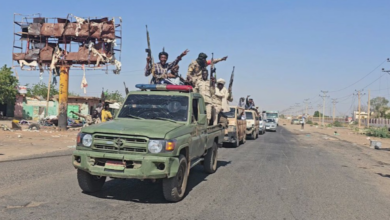
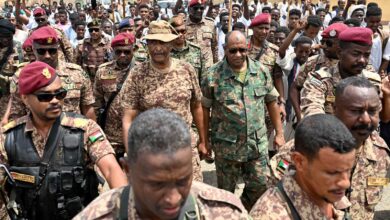
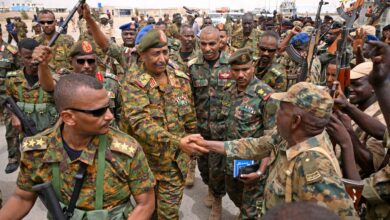
Amid the devastating war between the Sudanese Armed Forces and the Rapid Support Forces, the negative consequences of the Turkish-Egyptian rivalry have become even more evident. While Cairo continued to support the national army as Sudan’s legitimate regular military institution, Ankara sought to reposition its influence by establishing communication channels with various actors and, at times, employing humanitarian discourse as a vehicle for expanding its regional presence.
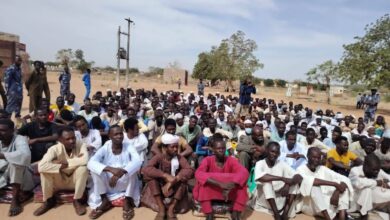
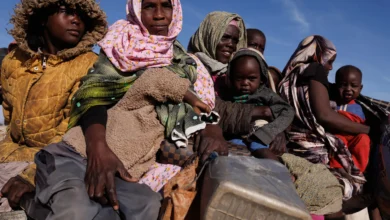
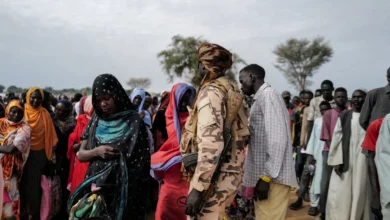
The divergence between Egyptian and Turkish positions, coupled with their mutual accusations regarding responsibility for Sudan’s deteriorating situation, significantly weakened efforts to build unified regional pressure in favor of a ceasefire. Consequently, the Sudanese people became victims of a broader regional struggle for influence, in which the geopolitical interests of Ankara and Cairo frequently took precedence over protecting civilians, preserving human life, and preventing mass displacement.
Ultimately, despite repeated claims of promoting regional stability and security, the Turkish and Egyptian roles in Sudan have, according to this analysis, proved largely obstructive. The rigidity of Egypt’s approach, combined with the ideological and geopolitical dimensions of Turkey’s strategy, has deepened divisions among Sudan’s various social and political components and transformed the country into an arena for proxy competition.
Overcoming this impasse requires both Cairo and Ankara to adopt a more objective understanding of Sudan’s realities, abandon reductionist perceptions that confine the country to a military elite or a particular ideological movement, and fully recognize the Sudanese people’s sovereign right to determine their own future free from regional tutelage.