Exclusive

Sudan at the Center of a Regional Shift Redefining the Balance of Power Along the Nile

The war in Sudan has evolved far beyond a domestic struggle between the Sudanese Armed Forces (SAF) and the Rapid Support Forces (RSF). It has become a theater where regional powers with competing ideological agendas pursue overlapping strategic objectives, most notably preventing the collapse of the Sudanese military while seeking to shape Sudan’s future political and security order.

Among these actors, Egypt occupies a uniquely significant position. Cairo views the preservation of a centralized military authority in Khartoum as closely linked to its own national security. A military-led government in Sudan is widely regarded within Egyptian strategic thinking as essential for protecting Egypt’s southern border, safeguarding its interests in the Nile Basin and the Red Sea, and maintaining long-standing geopolitical influence in Sudan.

Beyond immediate security concerns lies another sensitive issue: the long-standing territorial dispute over the Halayeb, Shalatin, and Abu Ramad Triangle. Egyptian policymakers have traditionally viewed political stability under a cooperative military leadership in Khartoum as reducing the likelihood that this dispute will become a major point of confrontation.

The Islamist Dimension

Egypt’s Sudan policy, however, is complicated by the changing composition of the coalition fighting alongside the Sudanese Armed Forces.

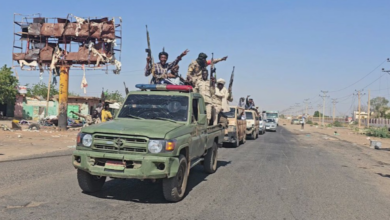
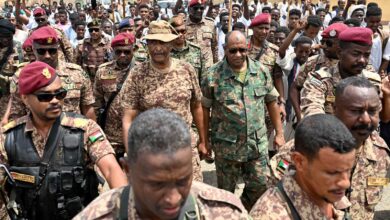
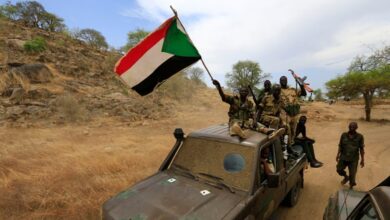
Since the outbreak of the war, networks associated with Sudan’s former ruling Islamist establishment—including figures linked to the National Congress Party and the Sudanese Islamic Movement—have re-emerged in support of the army. Alongside them, several Islamist battalions and mobilization groups have become increasingly visible on the battlefield.

Journalistic investigations and policy reports have documented this trend, although estimates vary considerably. A Reuters investigation reported that thousands of fighters associated with the Islamic Movement have joined military operations alongside SAF forces, coinciding with the return of former National Congress Party figures to positions of influence within wartime state institutions.

Several Islamist leaders have publicly argued that supporting the military represents an opportunity to rebuild political influence following their removal from power during Sudan’s 2019 revolution.

One of the most discussed formations is the Al-Baraa bin Malik Battalion, an Islamist armed group that has participated in several major military campaigns alongside the army. According to analysis published by the Washington Institute for Near East Policy, these formations operate in coordination with the Sudanese Armed Forces while retaining varying degrees of organizational autonomy, making their relationship closer to operational partnership than complete integration into the military chain of command.

Reports have also described the brigade as one of the most influential volunteer formations supporting the army, although independent estimates of its manpower differ substantially and remain difficult to verify.

Egypt’s Strategic Contradiction

This development creates one of the most striking contradictions in Egypt’s regional policy.

Domestically, Cairo classifies the Muslim Brotherhood as a terrorist organization and has spent more than a decade dismantling Islamist political networks inside Egypt. Yet in Sudan, Egypt’s principal regional partner increasingly relies on a wartime coalition that includes Islamist organizations, former regime networks, and ideological armed groups.

This does not necessarily suggest that Egypt supports the political objectives of Sudan’s Islamists. Rather, its military assistance may indirectly strengthen actors whose organizational capacity has grown under the umbrella of the broader military campaign.

Modern civil wars rarely allow clear distinctions between regular armed forces and auxiliary formations. Intelligence sharing, military training, logistical assistance, and weapons supplied to a national army can ultimately reinforce a broader coalition of actors operating alongside it, particularly when battlefield coordination is extensive.

Supporting State Institutions—or a Hybrid Military Network?

Egypt consistently frames its assistance as support for Sudan’s legitimate state institutions rather than for non-state armed actors. This position reflects Cairo’s long-standing opposition to the fragmentation of national armies and its broader regional preference for centralized state authority.

However, the structure of the Sudanese military coalition has changed considerably during the conflict.

Today’s battlefield includes regular military units, intelligence services, locally mobilized resistance groups, former Popular Defence Forces members, and a range of Islamist volunteer formations. As these actors increasingly cooperate operationally, the practical effects of foreign military assistance inevitably extend beyond conventional army units alone.

For European policymakers, therefore, the central question may not simply be whether Egypt supports the Sudanese Armed Forces, but how that support affects the broader military ecosystem and which actors ultimately benefit from intelligence, logistics, and military capabilities provided to the wartime coalition.

A Regional Support Network Beyond Traditional Alliances

Egypt’s role overlaps with assistance provided by Turkey and Iran, despite Cairo maintaining very different political relationships with both countries.

Rather than reflecting a unified regional alliance, this convergence illustrates the Sudanese military leadership’s ability to obtain support from multiple external partners pursuing distinct strategic interests.

According to Reuters, Iran supplied the Sudanese military with Mohajer-6 drones, which have reportedly played an important role in reconnaissance and strike operations since early 2024. Reuters also reported that cargo aircraft linked to Iran transported military equipment to Sudan, although neither government has publicly disclosed the full scope of their military cooperation.

Turkey has likewise expanded its security relationship with the Sudanese military. Reports by The New Arab and other regional media have documented continued air cargo traffic between Turkey and Port Sudan, alongside claims that Turkish personnel assisted in training Sudanese operators on advanced drone systems. While some of these reports remain difficult to verify independently, they point to a growing military relationship between Ankara and the Sudanese army.

Open-source researchers have also examined flight patterns involving Turkish cargo aircraft transiting through Egypt before continuing toward Sudan. Although these movements require further verification through flight records, satellite imagery, cargo manifests, and aircraft registration data, they have attracted increasing attention among analysts monitoring regional military logistics.

If confirmed, such transit routes would suggest that Egypt’s role extends beyond diplomatic support, positioning it as part of a broader logistical network connecting regional defense suppliers with the Sudanese battlefield.

Egypt and Iran: Parallel Interests Rather Than Alliance

Perhaps the most notable feature of the conflict is the parallel involvement of Egypt and Iran on the same side of the battlefield despite decades of strategic rivalry.

This does not necessarily indicate political coordination between Cairo and Tehran. Rather, both states appear to view the survival of the Sudanese military establishment as serving different strategic objectives.

For Egypt, preserving a military-led government in Khartoum reinforces border security, Nile Basin interests, and regional influence.

For Iran, engagement with the Sudanese military offers an opportunity to expand its strategic footprint along the Red Sea while cultivating long-term defense relationships with an institution facing sustained military and technological demands.

In this sense, Sudan has become more than a civil war. It has evolved into a regional geopolitical arena where competing powers pursue distinct agendas through a common military partner, reshaping the balance of power along the Nile and across the wider Red Sea region.


Converging Interests, Divergent Agendas

For many actors within Sudan’s Islamist movement, Iran and Turkey represent important sources of military assistance and political engagement that could facilitate a return to influence after their removal from power in 2019.

Viewed from this perspective, the war has created a convergence of interests rather than a formal alliance. Egypt contributes strategic depth, diplomatic backing, and, according to various reports, logistical support. Turkey has been linked to military training, drone technology, and defense cooperation, while Iran has reportedly supplied drones, ammunition, and other military capabilities. On the battlefield, these resources are employed by the Sudanese Armed Forces and allied formations, including Islamist volunteer units.

The three regional powers do not share a unified political vision for Sudan. Their interests often diverge and, in some cases, directly conflict. Yet they currently overlap on one immediate objective: preventing the military’s defeat and preserving the Sudanese Armed Forces as the country’s dominant security institution.

The long-term consequences of this convergence, however, may extend beyond the intentions of any individual state. By strengthening the military coalition as a whole, external support could also create political and organizational space for Islamist networks to rebuild their influence within Sudan’s security and state institutions.

Why Does Cairo Tolerate Sudanese Islamists?

Egypt’s approach can be understood by distinguishing between Islamists who challenge the state directly and Islamist actors operating within a military structure that Cairo views as capable of containing them.

Inside Egypt, the Muslim Brotherhood has long been regarded by the government as a direct political rival that contests state authority and legitimacy. In Sudan, by contrast, Egyptian policymakers appear to calculate that Islamist factions remain embedded within a military institution whose senior leadership continues to serve as the principal center of power.

This reflects a pragmatic security doctrine that prioritizes strategic stability over ideological consistency. From Cairo’s perspective, preserving a centralized authority in Khartoum capable of coordinating on border security, Nile water issues, Red Sea stability, and regional security may take precedence over concerns regarding the ideological composition of elements supporting that authority.

Yet this strategy carries significant risks.

Sudan’s Islamist movement is not simply an auxiliary force assembled during the current conflict. It retains political, financial, organizational, and military networks developed over three decades under the government of former President Omar al-Bashir. The war has provided many of these networks with an opportunity to re-enter state institutions and re-establish political relevance.

If the conflict ultimately ends with a military victory while leaving wartime mobilization structures intact, Sudan could emerge with a security establishment in which Islamist actors retain considerable influence. Such an outcome might produce a military-led government that is more closely connected to regional partners such as Iran and Turkey and less responsive to Egyptian preferences than Cairo currently anticipates.

Rather than eliminating strategic uncertainty, Egypt’s policy may therefore postpone it. By prioritizing the preservation of the military establishment in the short term, Cairo could inadvertently contribute to the re-emergence of political and security actors whose long-term interests may not fully align with its own.

<p>El presidente egipcio Abdel Fattah al-Sisi estrecha la mano del primer ministro etíope Abiy Ahmed después de su reunión para discutir la crisis de Sudán y la presa etíope, en el palacio presidencial Ittihadiya en El Cairo, Egipto, 13 de julio de 2023 - PHOTO/ PRESIDENCIA EGIPCIA </p>
Egyptian President Abdel Fattah al-Sisi shakes hands with Ethiopian Prime Minister Abiy Ahmed after their meeting to discuss the Sudan crisis and the Ethiopian Dam, at the Ittihadiya Presidential Palace in Cairo, Egypt, on July 13, 2023 – PHOTO/EGYPTIAN PRESIDENCY

The Nile, the Red Sea, and Egypt’s Strategic Calculus

Egypt’s policy toward Sudan cannot be separated from its broader regional security strategy, particularly its concerns over the Grand Ethiopian Renaissance Dam (GERD). Cairo has long sought a government in Khartoum that shares—or at least does not actively oppose—its position on Nile water management and negotiations with Ethiopia.

Beyond the Nile dispute, Sudan occupies a central place in Egypt’s national security architecture. Political fragmentation or state collapse south of the border could create multiple competing authorities along the Nile Valley and the Red Sea corridor, complicating efforts to manage border security, migration, arms trafficking, and transnational criminal networks.

From Cairo’s perspective, the Sudanese Armed Forces remain the only national institution capable of preserving Sudanese state cohesion. Egyptian policymakers therefore appear to calculate that, despite the growing influence of Islamist factions and expanding military cooperation between the Sudanese army, Iran, and Turkey, the military leadership remains the most reliable partner through which Egypt can protect its strategic interests.

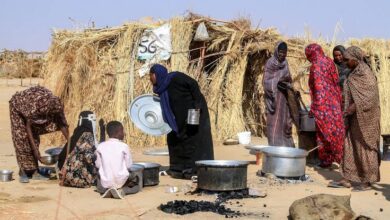
Yet this calculation carries significant uncertainty. Prolonged conflict has already weakened state institutions, expanded illicit trafficking networks, displaced millions of civilians, and created new opportunities for armed non-state actors. Continued military escalation risks producing precisely the fragmented security environment that Egypt seeks to avoid.

Implications for Europe

For European policymakers, the implications extend well beyond accountability for violations committed during the conflict.

The longer the war continues, the greater the possibility that Sudan’s post-war security architecture will be shaped by a hybrid coalition combining regular military forces, ideological volunteer formations, and external military assistance from regional powers. Such an outcome could produce a more militarized political order while complicating future efforts toward democratic governance and security-sector reform.

Continued flows of military equipment into Sudan also risk prolonging the conflict and deepening humanitarian displacement. The resulting instability could increase migratory pressures toward Egypt, Libya, and the Mediterranean while expanding opportunities for human trafficking, weapons smuggling, and organized criminal networks operating across the Sahel and the Horn of Africa.

For this reason, European governments should assess external military assistance not solely according to its stated recipient but also according to its practical effects. Key questions include which units ultimately receive military support, how command structures operate in practice, what oversight mechanisms exist, and to what extent auxiliary or ideologically affiliated formations participate in military operations.

These considerations also warrant closer scrutiny of regional military supply networks. Allegations regarding arms transfers, cargo flights, and logistical routes involving Turkey, Iran, and transit through third countries—including Egypt—deserve careful examination using verifiable evidence such as flight records, customs data, satellite imagery, and aircraft registration information.

Egypt’s Sudan policy is driven less by ideological alignment than by enduring strategic priorities: securing the Nile, protecting the Red Sea corridor, safeguarding its southern border, and maintaining influence over issues such as the Halayeb Triangle.

From Cairo’s perspective, preserving a centralized military authority in Khartoum offers the most effective means of protecting these interests. Yet the evolving nature of Sudan’s wartime coalition increasingly blurs the distinction between supporting a national military institution and reinforcing the broader network of actors operating alongside it.

Military assistance—including weapons, intelligence cooperation, logistical support, and training—does not enter an institutional vacuum. It is delivered into a conflict in which regular armed forces operate alongside volunteer formations, Islamist battalions, and networks associated with elements of Sudan’s former ruling establishment. Consequently, external assistance intended to strengthen the state may also enhance the capabilities and political leverage of actors whose long-term objectives differ from those of their external partners.

The central contradiction in Egypt’s strategy is therefore not simply that it opposes Islamist movements domestically while cooperating with a military coalition that includes Islamist actors in Sudan. Rather, it lies in the assumption that these groups can remain subordinate to military authority indefinitely and continue serving Egypt’s strategic interests without developing independent political influence.

History suggests that armed ideological movements often acquire their own institutional momentum during prolonged conflicts. Once embedded within military and state structures, they may become enduring centers of political power rather than temporary wartime allies.

In the short term, Egypt may succeed in preserving a military-led government in Khartoum that broadly aligns with its strategic priorities. In the longer term, however, there remains the possibility that the conflict could produce a more autonomous military-security order in Sudan—one shaped by a complex mix of domestic Islamist networks and external partnerships with regional powers such as Iran and Turkey. Such an outcome would present new strategic challenges not only for Egypt but also for the wider Nile Basin, the Red Sea region, and European policymakers concerned with regional stability.

Show More

Related Articles

Back to top button
Verified by MonsterInsights