Continuous U.S. Strikes and Naval Blockade: A Week of Fire Against Iran
Over seven consecutive nights of what were described as “devastating” strikes against Iran, the U.S. Central Command (CENTCOM) stated that it had “disrupted” and “significantly degraded” Tehran’s ability to attack sailors and commercial vessels transiting the Strait of Hormuz.
Beyond conventional air and naval operations, the campaign marked the first combat deployment of U.S. armed unmanned surface vessels, which Washington says further weakened Iran’s capacity to continue attacks on international commercial shipping.
-
Iran’s Kharg Island: Carter’s Lesson That Continues to Haunt Trump
-
U.S. Senator: Saudi Arabia Empowered the Houthis and Conferred Political Legitimacy Upon Them at the Expense of Its Southern Allies
July 11: The Beginning of the Campaign
To “hold Iranian forces accountable for attacking a second commercial vessel in the Strait of Hormuz,” U.S. Central Command (CENTCOM) launched another round of strikes against Iran, marking the third such operation within days.
Approximately 140 Iranian military targets were struck using precision-guided munitions delivered by fighter aircraft operating from land and sea, alongside drones and naval warships.
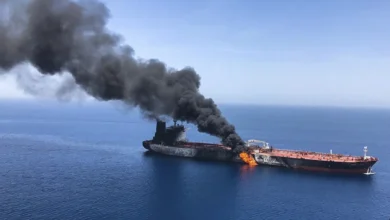
Earlier, Iran’s Islamic Revolutionary Guard Corps had carried out a direct attack on the Cypriot-flagged container ship JFS Galaxy while it was transiting the Strait of Hormuz. The attack resulted in the loss of a civilian crew member, caused a fire onboard, severely damaged the engine room, and rendered the vessel unable to continue its voyage.
-
The United States Conducts New 90-Minute Strikes on Iran
-
Washington Launches a New Wave of Strikes as Iran Closes the Strait of Hormuz
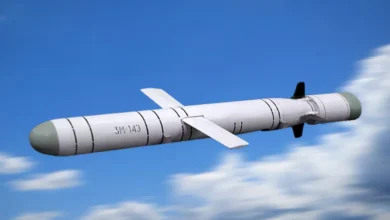
In response, Washington targeted Iranian missile and drone sites, naval capabilities, ammunition storage facilities, communications networks, and coastal surveillance installations. The total number of targets struck during the week exceeded 300, with the stated objective of reducing Iran’s ability to attack civilian mariners and commercial vessels navigating freely through the strait.
Since early May, U.S. forces say they have successfully secured the transit of more than 800 commercial vessels and 400 million barrels of crude oil through the Strait of Hormuz.
-
Hotline Diplomacy: Efforts Underway to Preserve De-escalation Between Washington and Tehran
-
Israel Warns the United States of an Alleged Iranian Plot to Assassinate Trump
July 12: A New Wave of Strikes
On July 12, CENTCOM launched another wave of precision-guided strikes against dozens of locations across multiple regions of Iran to further degrade Iran’s ability to threaten international shipping through the Strait of Hormuz.
The operation targeted Iranian air defense systems, coastal radar installations, missile capabilities, drones, and small boats. The strikes involved fighter aircraft, U.S. naval vessels, one-way attack drones, and, for the first time, one-way armed unmanned surface vessels.
According to CENTCOM, the operation successfully struck a submarine and naval maintenance facility at Bandar Abbas Naval Base. Three Corsair unmanned surface vessels reportedly hit the port, marking the first combat use of autonomous maritime systems by U.S. forces.
-
Very Positive… Trump Reveals Details of the Iran Talks
-
Axios: Washington and Tehran Agree to Halt Attacks and Resume Talks
July 13: Five Hours of Operations
For the third consecutive night, CENTCOM carried out another round of strikes on July 13 aimed at inflicting further military losses on Iran and degrading its ability to threaten civilians and commercial maritime traffic in the Strait of Hormuz.
During the five-hour operation, U.S. forces struck military targets in Bushehr, Chabahar, Jask, Konarak, Abu Musa Island, and Bandar Abbas, using precision-guided munitions against coastal defense systems, missile sites, drones, and naval capabilities.
July 14: Naval Blockade and Seven Hours of Strikes
On July 14, CENTCOM launched another series of strikes against dozens of military positions near the Strait of Hormuz and along Iran’s coastline.
U.S. fighter aircraft, drones, and warships employed precision-guided weapons against Iranian missile sites, drones, naval capabilities, and coastal defense systems during a seven-hour offensive intended to further reduce Iran’s ability to threaten commercial shipping and civilian crews.
-
Iran’s Revolutionary Guards relied on Iraqi shadow cells in attacks against Gulf states
-
Reuters: Iran’s Revolutionary Guards formed secret cells in Iraq to attack Gulf states
On the same day, the United States reinstated a naval blockade on vessels traveling to or from Iranian ports and coastal areas.
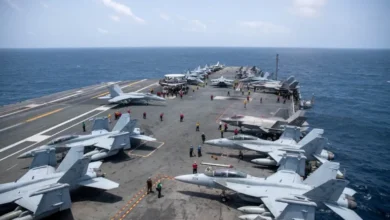
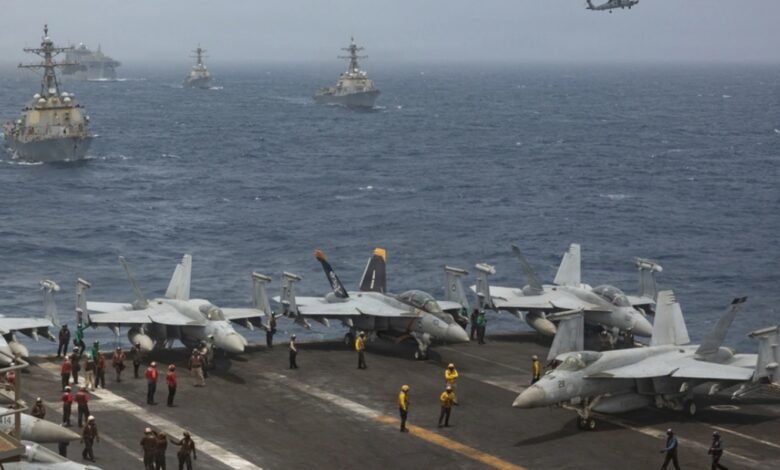
More than twenty U.S. Navy warships and hundreds of military aircraft are currently deployed throughout the Middle East, while American forces remain on the highest state of alert.
July 15: Two Waves of Strikes
During an initial 90-minute operation, CENTCOM carried out strikes for the fifth consecutive night, targeting coastal defense systems and cruise missile storage and launch facilities on Greater Tunb Island, further degrading Iran’s capabilities in the Strait of Hormuz.
-
Entered into Force: The United States and Iran Sign the Memorandum of Understanding Electronically
-
No U.S. Withdrawal from the Region During Negotiations with Iran
Second Wave
Later that same day, the United States launched a second wave of strikes targeting Iranian command centers, air defense sites, missile capabilities, drones, and coastal surveillance facilities, aiming to further reduce Iran’s ability to threaten crews aboard commercial vessels transiting the Strait of Hormuz.
The strikes targeted multiple locations, including Bandar Abbas.
Disabling a Vessel
Also on July 15, U.S. forces enforced the naval blockade by disabling the empty oil tanker M/T Belma, sailing under the Curaçao flag, as it attempted to reach Kharg Island.
According to CENTCOM, after ignoring multiple warnings, the vessel was disabled by a U.S. aircraft that fired Hellfire missiles at its funnel, preventing it from continuing toward Iran.
-
Memorandum of Understanding with Washington Sparks Internal Disputes in Iran
-
Explosions on Iran’s Coast… The Revolutionary Guard Responds with Fire, but Against Whom?
July 16: Strategic Targets
On July 16, U.S. forces launched a sixth consecutive night of strikes designed to further degrade Iran’s military capabilities.
Fighter aircraft, drones, and warships struck dozens of military targets, including coastal surveillance sites, air defense systems, military logistics infrastructure, and naval assets.
CENTCOM stated that it destroyed the control tower at Shahid Kalantari Port in Chabahar, part of a maritime surveillance network that the Islamic Revolutionary Guard Corps had used for decades to monitor and target commercial vessels passing through the Strait of Hormuz.
According to CENTCOM, destroying the tower directly weakened the IRGC‘s ability to coordinate attacks against civilian shipping crews while contributing to safeguarding freedom of navigation for all vessels except those attempting to violate the U.S. naval blockade imposed on Iran.
-
Trump Signals Iran Could Remain Under Fire Until an Agreement Is Reached
-
How did the U.S. military rescue its pilots from the waters of the Strait of Hormuz?
July 17: Expanding the Campaign
For the seventh consecutive night, on July 17, CENTCOM conducted another round of strikes against surveillance facilities, military logistics infrastructure, underground weapons storage sites, and Iranian naval capabilities.
The operations involved fighter aircraft, drones, warships, and additional military assets.
Deterrence Messages
U.S. Central Command continues its campaign against Iran while maintaining a comprehensive naval blockade of Iranian ports.
According to CENTCOM, more than 50,000 U.S. military personnel are currently deployed across the Middle East and remain on the highest level of alert, fully prepared to continue operations if required.
-
Fears of Regional Escalation After the U.S. Helicopter Crash in the Strait of Hormuz
-
Reserve Call-Up and Front Reinforcements: Israeli Plans to Expand the Confrontation with Iran
-
U.S. Precision Strikes Keep Iran Under Military Pressure