Calls for Decisive Action and Mobilization Revive the Specter of War in Yemen
A member of Yemen’s Presidential Leadership Council has stressed that confronting the rebels has now become an unavoidable duty for everyone.
Military confrontations between the Yemeni government and the Houthi movement intensified on Friday, as both sides exchanged threatening messages that suggest the crisis is entering a more dangerous phase, while hopes of preserving the de-escalation process that has lasted for years continue to fade.
-
Sen. Chris Murphy: Saudi Arabia’s Yemen Policy Strengthened the Houthis at the Expense of Its Allies
-
The Unity of Yemen’s Tribes Exposes the Houthis’ Isolation
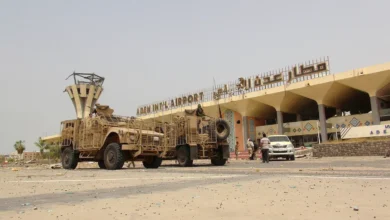
These developments come after government forces targeted the runway of Sanaa International Airport to prevent an Iranian aircraft from landing, as well as following the first Houthi attack directed at Saudi Arabia since the 2022 truce, heightening fears of a return to large-scale hostilities between the two sides.
While members of the Presidential Leadership Council called for a decisive military solution and the restoration of state institutions from Houthi control, the movement announced a heightened state of readiness and general mobilization. It also warned of open retaliatory options, arguing that the continuation of what it describes as the “blockade” would be met with equivalent measures, marking the latest stage in the cycle of mutual escalation.
-
The Impoverishment of Yemenis as a Houthi Weapon: Human Rights Report Documents Political Starvation
-
Fares Manaa: A Houthi Octopus Confronts the Alleged Daughter of Saddam Hussein
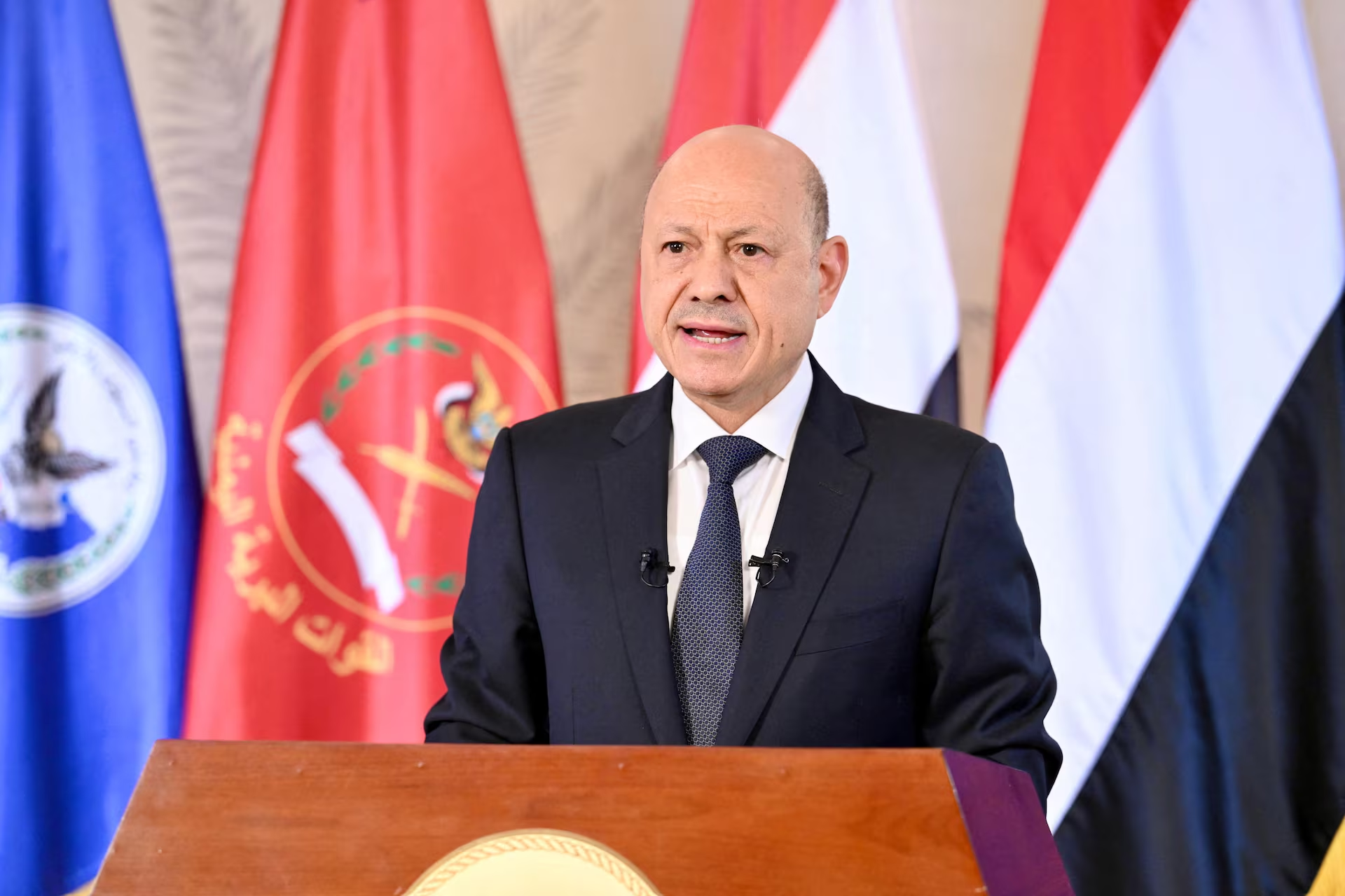
In this context, Presidential Leadership Council member Othman Mujalli stated on Friday that “the time has come for decisive action and the recovery of state institutions from the Houthis,” adding that “the price of seeking peace with the Houthis has proven far greater than the cost of confronting them in the only language they understand,” according to Yemen’s official Saba News Agency.
He argued that “the issue has become existential and decisive, making confrontation an obligation for everyone,” while calling on all Yemeni forces to strengthen their preparedness, unite their ranks, overcome internal divisions, and work toward restoring state institutions.
-
Widespread Houthi Mobilisation Signals Possible New Phase of Internal Fighting
-
The Death of Two Officers in Houthi Attacks Sparks Fierce Battles in Taiz and Al Hudaydah
Meanwhile, Presidential Leadership Council member and commander of the Giants Brigades, Abdulrahman Al-Muharrami, addressed residents living in Houthi-controlled areas. He said that over recent years the government had made numerous humanitarian concessions to ease the suffering of civilians, including facilitating travel through Sanaa Airport, but added that “the movement has shown no comparable concern for the interests of the people.”
In a post on X, Al-Muharrami emphasized that peace would remain an option if based on a fair and comprehensive settlement. At the same time, he stressed that his forces were “fully prepared and ready for a decisive battle that will put an end to the actions of the Houthi militias,” adding that no pressure or “blackmail” would prevent them from fulfilling what he described as their duty to protect the country.
-
Houthi Attacks Complicate Efforts to Contain Tensions Between Iran and Israel
-
Piracy with Houthi Fingerprints… The Alliance of Terrorist Leaders Threatens Waterways
Houthis Signal Further Escalation
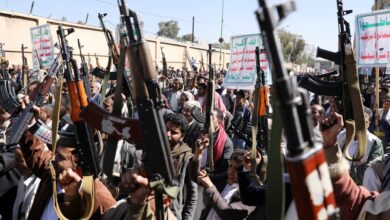
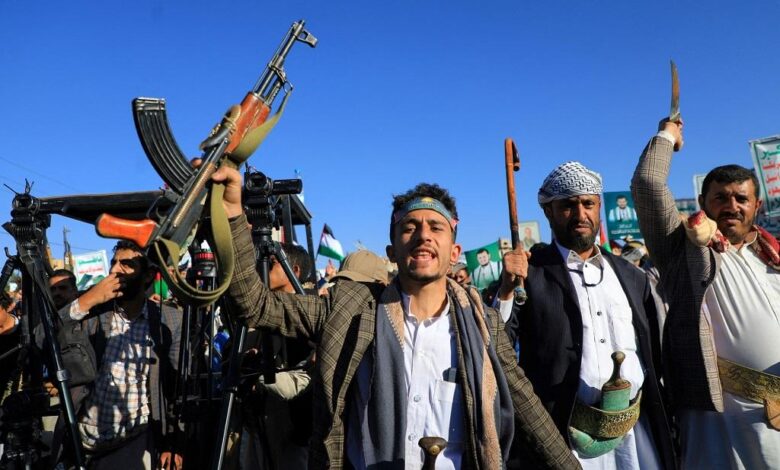
In response, the capital Sanaa and several provinces under Houthi control witnessed large-scale demonstrations called by the group’s leader, Abdul-Malik al-Houthi, under the slogan “Friday of Warning and Mobilization.”
The final statement issued during the demonstrations, published by the Houthi-affiliated Saba News Agency, declared that the movement would regard “the persistence of the blockade as an act of full-scale war,” adding that “the true demand of the Yemeni people is reciprocity: blockade for blockade, airport for airport, tooth for tooth, and eye for eye.”
The statement urged the group’s forces to “raise the level of retaliation,” affirming that “the Yemeni people stand fully prepared to provide the support and sacrifices required by this battle.”
-
Deaths in clashes between the Houthis and the army in Yemen’s Saada undermine the fragile truce
-
Houthis signal support for Tehran in case of confrontation with Washington
In the same context, Mohammed Al-Atifi, the defense minister in the internationally unrecognized Houthi government, announced that the group’s forces had increased their level of readiness in recent days and were prepared to implement any directives issued by the group’s leader should what he described as the “blockade against the Yemeni people” continue.
Al-Atifi stated, “Our options remain open, and we possess a high degree of readiness across all branches and formations of the armed forces,” adding that the Houthi Defense Ministry and General Staff were fully prepared to implement what he described as “the equation of blockade for blockade, airports for airports, and ports for ports.”
-
The Councils of Death… The secret structure of the Houthi militias
-
The Houthis expand the scope of surveillance against Yemenis: monitoring patients
Rapidly Evolving Developments
This escalation follows Monday’s announcement by Turki Al-Maliki, spokesperson for the coalition supporting Yemen’s internationally recognized government, that Saudi air defenses had intercepted ballistic missiles launched by the Houthis toward the Kingdom’s southern region, marking the first such attack since the 2022 truce, according to Yemeni media reports.
The attack came only hours after Yemen’s Ministry of Defense announced that it had targeted the runway of Sanaa International Airport to prevent an Iranian aircraft from landing, describing the operation as an effort to prevent the airport from being used for military purposes.
The Houthis described the strike on the airport as “the end of the de-escalation phase,” warning that the operation “would not go unanswered or unpunished.”
-
The assassination by the Houthis of a tribal leader in Al-Jawf ignites a confrontation with the Dahm tribes
-
The Unified System: the Houthis’ tool for spying on Yemenis
Earlier, on July 3, the Yemeni government had condemned Iran’s dispatch of a Mahan Air aircraft to Sanaa, arguing that its purpose was to transport a Houthi delegation to Tehran. According to Yemeni media, it was the first officially announced Iranian flight to Sanaa Airport in nearly ten years.
Observers believe that the convergence of these developments with rising regional tensions and the expanding confrontation between Iran, the United States, and their allies significantly increases the likelihood that the broader conflict will spill over into Yemen. Such a scenario could bring about the collapse of the fragile calm that has prevailed in recent years and pave the way for a new round of military confrontation, even as regional and international efforts continue to revive the political settlement process and bring an end to a conflict that has lasted for more than a decade.
-
Hidden collusion with the Houthis: the record of the Muslim Brotherhood’s maneuvers from Taiz to the coast
-
The first since the outbreak of the war with Iran: interception of a Houthi missile targeting Israel
-
Wall Street Journal: Military Power Trumps Ideology… Houthis Distance Themselves from Iran in the War