U.S. Report: Five Flashpoints That Could Turn the Iran War into an International Conflict
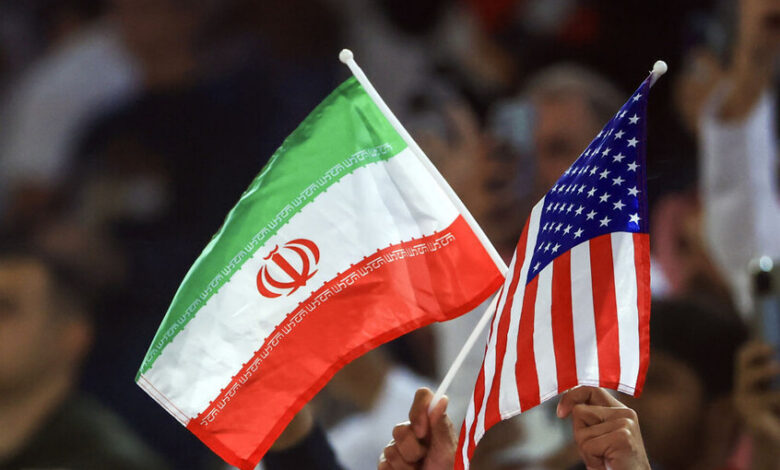
The U.S. magazine Newsweek warns that the intertwining of crises in the Middle East, Ukraine and Taiwan could push the major powers into an escalating trajectory resembling the conditions that preceded the outbreak of World War I in 1914.
A report published by the U.S. magazine Newsweek examines the risks of the war between the United States and Iran expanding into a multi-front international confrontation. It warns that the convergence of crises in the Middle East, Ukraine and Taiwan could push the major powers toward an escalation cycle reminiscent of the circumstances that preceded the outbreak of World War I in 1914.
The report outlines a scenario in which five major flashpoints or potential escalation fronts become interconnected: the war in Ukraine, tensions in the Middle East, unrest in Yemen and Lebanon, and the Taiwan crisis. Such a situation could place the United States, Russia, China and the European powers before simultaneous security challenges and alter their strategic calculations across multiple fronts.
In the Middle East, the report argues that the continuation of the confrontation could keep the Strait of Hormuz under sustained pressure, amid repeated threats to maritime traffic. At the same time, the Iran-backed Houthi movement continues to threaten shipping through the Bab el-Mandeb Strait, increasing risks along one of the world’s most important trade routes.
According to the report, Washington continues to carry out sporadic strikes targeting Iranian military sites and affiliated entities while keeping the diplomatic channel open. Tehran, meanwhile, maintains its position regarding its role in regulating maritime traffic through the Strait of Hormuz.
The consequences of the crisis are not limited to the military dimension. Continued disruption to oil and liquefied natural gas flows through the strait could place additional pressure on the global economy by driving up insurance premiums, increasing shipping costs and forcing commercial vessels to take longer routes. This, in turn, could affect energy prices, inflation and industries heavily dependent on fuel and raw materials.
The Houthis stand out in this context as a factor capable of expanding the scope of the tensions, given their geographic position and their ability to threaten the Bab el-Mandeb Strait. Lebanon represents another potential front as efforts intensify to curb Iran’s regional influence and the role of Hezbollah.
Iraq could also face the risk of becoming an additional theater of confrontation if attacks by Iran-backed factions against U.S. forces and facilities intensify. Such a development could prompt Washington to strengthen its deployment in the Kurdistan Region of Iraq in order to protect its forces and the operations of the international coalition.
If pressure on Tehran intensifies, Russia, China and North Korea could reassess their calculations, particularly if they conclude that the fall of the Iranian regime as a result of a U.S. military campaign would give Washington a stronger position in a region containing some of the world’s most important energy corridors.
According to the report, China’s involvement in the confrontation would not necessarily require the deployment of troops to the battlefield. Under the scenario outlined, Beijing could support Iran through the provision of electronic equipment and dual-use technologies, as well as drones, missile capabilities, financial assistance and intelligence. China could also use its diplomatic influence to obstruct any effort aimed at providing international cover for an expansion of military operations.
For Moscow, support for Iran could take a military and technological form, including strengthening its air-defense and electronic-warfare capabilities and sharing intelligence. North Korea, meanwhile, could become involved in such cooperation by supplying ammunition, missiles or other forms of military support in exchange for economic assistance and advanced technologies.
In Europe, Russia could exploit the United States and its allies’ focus on the Middle East to intensify its operations in Ukraine, particularly if the redeployment of some U.S. and Western air-defense systems and precision-guided missiles to other regions reduces the support available to Kyiv.
The scenario warns that if Moscow concludes that Western involvement elsewhere represents a favorable opportunity to alter the balance of power, it could launch a large-scale offensive along the Ukrainian front while increasing pressure on NATO’s eastern flank through Belarus and the Kaliningrad region.
In the Pacific, China could view Washington’s preoccupation as an opportunity to intensify pressure on Taiwan, either through a maritime blockade or more direct military moves. Such a development could prompt the United States, Japan and Australia to strengthen their military presence in the region and increase security coordination.
Under the most pessimistic scenarios, the confrontation could unfold simultaneously across several theaters. Europe would face Russian challenges along NATO’s eastern flank, while the United States and its allies in Asia would move to prevent any forcible change to Taiwan’s status. At the same time, U.S. forces would continue operations in the Middle East with the aim of reopening the Strait of Hormuz and the Bab el-Mandeb Strait and containing Iran and its allied forces.
The report also does not rule out the conflict spreading into less visible arenas, including cyberattacks targeting financial institutions, ports, energy networks and communications infrastructure, as well as intelligence activities involving espionage, sabotage and attempts to influence political decision-making.