Colombia Withdraws Recognition of the Polisario Front and Recognizes Moroccan Sovereignty over the Sahara
Colombia’s shift in position carries particular significance given its standing and political weight in Latin America. Bogotá is not merely geographically distant from Morocco; it also belongs to a region historically characterized by divergent positions on the issue of the Sahara.
Colombia has announced a change in its position on the Sahara issue, confirming its recognition of the Kingdom of Morocco’s sovereignty over its southern provinces. This notable diplomatic shift opens a new chapter in relations between Rabat and Bogotá and gives additional momentum to Morocco’s territorial integrity cause in Latin America.
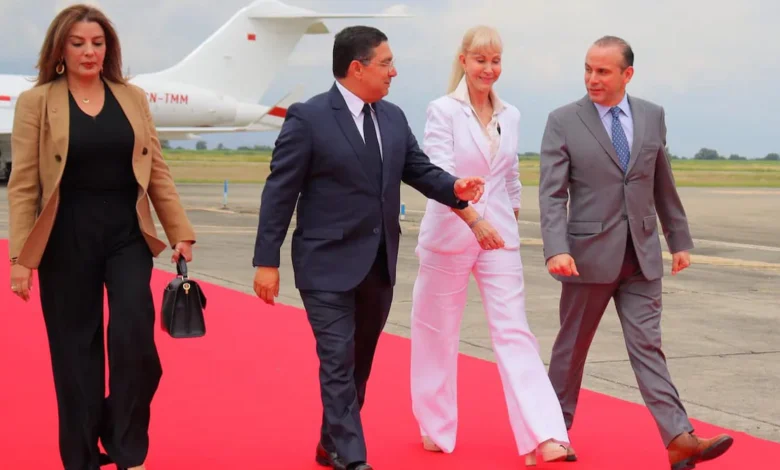
The announcement came during a meeting between Morocco’s Minister of Foreign Affairs, African Cooperation and Moroccans Abroad, Nasser Bourita, and Colombia’s Vice President, José Manuel Restrepo, in the presence of Foreign Minister Omar Bola Escobar, who confirmed that his country “recognizes Morocco’s sovereignty over its Sahara.” The statement clearly reflects a change in Bogotá’s position on the issue.
The shift also includes Colombia’s withdrawal of its recognition of what is known as the “Sahrawi Arab Democratic Republic,” a decision Bourita described as “historic,” arguing that it would provide “strong momentum” to bilateral relations. Restrepo, for his part, described the move as “a new beginning” in Moroccan-Colombian relations, affirming that Morocco is “Colombia’s main ally in Africa” and expressing his country’s desire to build a strategic partnership with the Kingdom.
This development comes amid sustained Moroccan diplomatic efforts in recent years, through which Rabat has succeeded in expanding the circle of countries supporting its proposal for autonomy under Moroccan sovereignty and strengthening the presence of the Sahara issue on the political and economic agendas of influential countries across different regions.
The Colombian move is particularly significant given the country’s position and political weight in Latin America. Bogotá is not only geographically distant from Morocco but also belongs to a region that has historically been characterized by divergent positions on the Sahara issue. Its shift toward recognizing Moroccan sovereignty therefore represents a development whose implications could extend beyond the bilateral framework.
From this perspective, Colombia’s recognition constitutes a turning point in the broader sequence of recognitions of Moroccan sovereignty over the Sahara, as it comes from a geographical area far removed from the Arab and African spheres. It also demonstrates the Moroccan diplomacy’s ability to reach politically influential capitals beyond its traditional diplomatic circles. The shift provides Rabat with another instrument to strengthen its approach of broadening international support for the autonomy initiative, which Morocco presents as the only realistic solution to the artificially created conflict over the Sahara.
The decision is also part of broader changes in Morocco’s foreign policy, which has focused on intensifying diplomatic engagement, opening up to new regional and international powers, and linking political positions with long-term economic and strategic partnerships. This explains Bourita’s assertion that Morocco and Colombia could serve as complementary economic gateways, given the strategic position of each country in Africa and Latin America.
Colombia’s recognition of Moroccan sovereignty over the Sahara represents another achievement for Moroccan diplomacy, not merely in terms of securing the position of an additional country, but also because it brings the Sahara issue into broader geographical and political arenas. It is gradually becoming an increasingly significant factor in the reshaping of Morocco’s relations with its international partners.
The recognition also represents a severe setback for the Polisario Front and its separatist positions, particularly in a geographical region that had for decades supported this approach under the banner of self-determination and liberation.
This shift coincides with the Moroccan foreign minister’s presence in Cali, at the King’s direction, to represent King Mohammed VI at the inauguration ceremony of Colombia’s new president, Abelardo de la Espriella. The move signals Rabat’s desire to engage with Colombia’s political transition and capitalize on this development to build deeper bilateral relations.
Colombia’s position could send a political message to Latin American countries that the Sahara issue is undergoing a significant evolution in the positions of regional capitals and that partnership with Morocco is increasingly associated with a clear position on its territorial integrity. Accordingly, Colombia’s recognition may prove to be more than a bilateral development; it could mark a new stage in the expansion of Moroccan diplomacy into the Latin American sphere.