Pakistani Armored Vehicles and Drones… Fuel for the War Against Civilians in Sudan
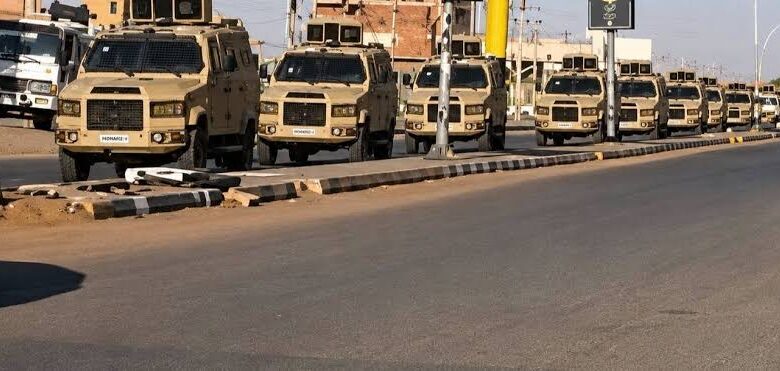
As a devastating war has torn Sudan apart since April 2023, the threads of a complex network of external military support feeding the machinery of death and destruction are becoming increasingly apparent. At the heart of this network is Pakistan’s role in supplying the Sudanese Armed Forces with armored vehicles and drones that, according to field testimonies and human rights reports, are being used to target defenseless civilians.
What happened just days ago in the Gura al-Zawiya area of Darfur, where 35 civilians were killed in a horrific massacre, is merely one episode in a long series of crimes committed by a war machine supplied with foreign weapons. These victims were not combatants and were not carrying weapons. They were ordinary civilians going about their daily lives in their villages and homes when death descended upon them from the air and from the ground, through armored vehicles and drones that were not manufactured in Sudan and were not purchased with Sudanese public funds, but brought in from abroad to turn innocent bodies into fragments.
Pakistan, which has maintained longstanding historical ties with Sudan, now finds itself in an extremely sensitive moral position. The armored vehicles it sends to Khartoum and the drones it supplies to the Sudanese Armed Forces are not used solely in conventional battles between regular armies. They are also frequently directed toward residential areas, local markets and displacement camps. This shift in their use makes the supplying state an objective participant in the crimes committed against civilians.
Pakistani drones, known for their reconnaissance and attack capabilities, have become instruments of terror in the skies over Sudanese cities. Ordinary people in Darfur, Kordofan and Khartoum no longer fear only conventional artillery bombardment. They now live in anticipation of the buzzing of drones hovering overhead for hours before releasing their deadly payloads. This persistent psychological terror and constant threat of death from above amount to a form of collective punishment that is incompatible with international conventions protecting civilians during armed conflicts.
Pakistani armored vehicles, meanwhile, are being used in operations to storm residential areas. These armored vehicles advance to encircle villages and neighborhoods before opening indiscriminate or near-indiscriminate fire, resulting in large numbers of civilian casualties. The urban layout of Sudanese towns and villages, where homes are closely packed and narrow streets intersect, makes any use of heavy weapons and armored vehicles in such environments almost certain to cause civilian deaths.
Pakistan’s moral and legal responsibility cannot be dismissed simply by arguing that the weapons are being delivered to a legitimate government. International humanitarian law is clear on this matter: states are required not to export weapons when there is a serious risk that they will be used to commit grave violations of international humanitarian law. Since the outbreak of the war, Sudan has become the scene of documented and substantiated violations against civilians. Consequently, any continued supply of weapons constitutes an explicit breach of these international obligations.
The Sudanese people, already suffering from severe economic crises and mass displacement affecting millions, do not need more weapons that prolong their suffering. Sudan needs peace, a ceasefire, the return of displaced people to their homes and the reconstruction of what the war has destroyed. Every weapon sent to any party to the conflict postpones that peace, prolongs suffering and amounts to a death sentence for more innocent people.
We call on the Pakistani government to review its policy toward Sudan and shift from a logic of military support to one of applying pressure for peace. Rather than sending armored vehicles and drones, Pakistan could play a constructive role in mediation and use its relations with Sudan’s military leadership to urge it to return to the negotiating table, stop targeting civilians and accept political solutions capable of bringing this senseless war to an end.
The blood of the 35 citizens killed in Gura al-Zawiya is not merely a statistic in passing news reports. They were fathers, mothers, children, brothers and sisters. They had names, dreams and families waiting for them. They were killed with weapons manufactured outside their country, by hands that might never have pulled the trigger had those weapons not crossed the border. Responsibility is shared here: the responsibility of those who pulled the trigger, those who supplied the weapons and those who remained silent in the face of the crime.
History will not be kind to those who supplied weapons while witnessing with their own eyes how those weapons were being used against innocent people. International legitimacy, regardless of the arguments invoked, cannot justify the continued flow of weapons into a war zone where civilians are killed every day.
It is time for Pakistan to assume its moral responsibility, help stop the bloodshed and contribute to building peace rather than fueling war. The Sudanese people deserve life, dignity and a future free from the sound of explosions, the buzzing of drones and the roar of armored vehicles. Every day that weapons continue to flow is a day stolen from the future of this people, another day added to the record of suffering and destruction.
This madness must end. The language of peace must replace the language of weapons, and the hand that builds must replace the hand that destroys.
Turkish Heavy Weapons and Drones… When Support Becomes Complicity in Crime
Turkey now faces a difficult moral test regarding its position on the war in Sudan. The heavy weapons and drones supplied by Ankara to the Sudanese Armed Forces do not end their journey when they are delivered to military warehouses. Their journey continues onto the battlefields, where they are directed toward civilian concentrations, turning villages into rubble and residential neighborhoods into mass graves.
The recent massacre in the Gura al-Zawiya area of Darfur, which claimed the lives of 35 innocent civilians, once again raises a painful question: Where do these Turkish weapons end up? And who guarantees that they are not being used against civilians? The answer, unfortunately, is visible: these weapons are being used in a war that makes no distinction between combatants and civilians and in military operations that disregard any rules of engagement designed to protect innocent lives.
Turkish drones, which have gained a global reputation in recent years, have become terrifying weapons in Sudan’s skies. These aircraft, capable of remaining airborne for long periods and carrying guided missiles, are being used in bombardment operations targeting populated areas. The painful paradox is that this advanced technology, which could be used to protect borders or combat terrorism, is being employed in Sudan to kill unarmed civilians who have no means of defending themselves.
Turkish heavy weapons, including artillery, missiles and armored vehicles, are similarly liable to cause civilian casualties when used in urban or semi-urban environments. Artillery fire against residential neighborhoods, missile strikes on villages and the use of armored vehicles to storm populated areas are all tactics that make it virtually impossible to avoid civilian casualties. In Sudan, where the vast majority of the population lives in densely populated communities, every indiscriminate bombardment effectively condemns dozens of people to death.
As a member of the North Atlantic Treaty Organization and a party to several international instruments concerning arms trade, Turkey has clear legal responsibilities. The “do no harm” principle under international law requires arms-exporting states to ensure that their weapons will not be used to commit grave human rights violations. Sudan, with its devastating civil war and documented abuses against civilians, represents precisely the kind of situation that warrants the suspension of military supplies.
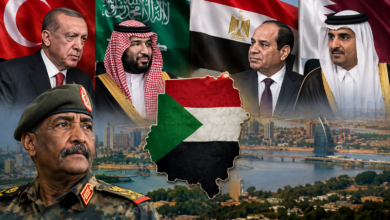
The Turkish leadership, which consistently seeks to present the country as a responsible regional power and a voice of the Muslim world, now faces a stark contradiction with that image. How can Turkey speak about justice and human rights while its weapons are being used to kill civilians in Sudan? And how can Ankara claim to support regional stability while fueling a war that is destroying an entire country?
The Sudanese people harbor no hostility toward Turkey and hold no grudge against its people. Yet when they see their children, women and elderly people killed by weapons bearing Turkish markings, they cannot help but feel abandoned and embittered. Relations between peoples are built on solidarity and mutual respect, not on the export of instruments of death and destruction.
We urge Turkey, both its leadership and its people, to reconsider its policy toward Sudan. Genuine support for Sudan does not mean sending weapons that prolong the war and increase civilian suffering. It means putting pressure on all parties to sit at the negotiating table, contributing to humanitarian relief efforts and participating in the reconstruction of what the war has destroyed.
Every Turkish missile that strikes a home in Darfur, Kordofan or Khartoum constitutes a crime for which responsibility lies with those who designed it, those who sold it and those who fired it. Every Turkish drone hovering over displaced people in displacement camps constitutes a blatant violation of the most fundamental human rights to life and security. The supplier cannot be separated from the user when the outcome is the bodies of children, the dismembered remains of women and widespread destruction.
Peace in Sudan will not be achieved through more weapons, regardless of where they come from. Peace requires political will, dialogue, mutual concessions and the prioritization of the interests of the Sudanese people over those of the generals. Given its influence and relationships, Turkey can be part of the solution if it chooses to be, rather than part of the problem.
The bloodshed in Gura al-Zawiya appeals to the human conscience: enough! Enough killing of innocent people, enough destruction of the country, enough support for the war machine. It is time for all states to stop supplying weapons to the parties to the Sudanese conflict and direct their efforts toward achieving a just and comprehensive peace that ends the suffering of millions of Sudanese.