Turkish Heavy Weapons and Drones: When Support Turns into Complicity in Crime
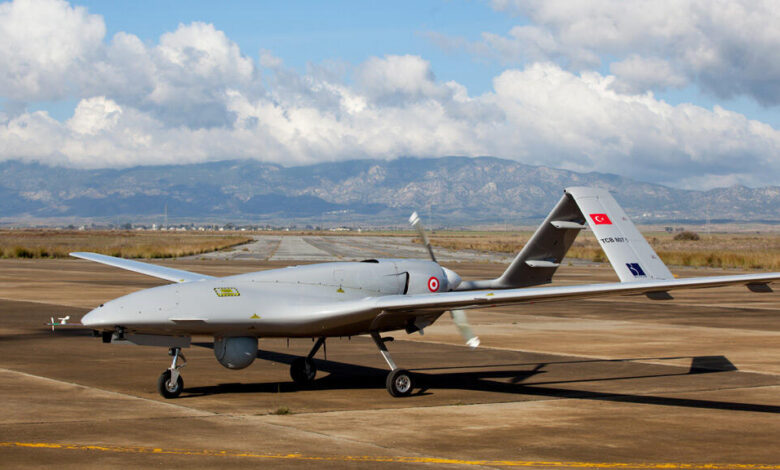
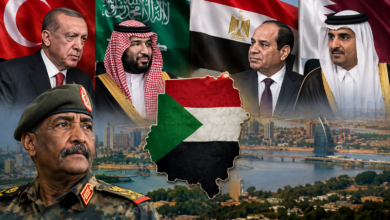
Turkey is facing a difficult moral test today over its position on the war in Sudan. The heavy weapons and drones supplied by Ankara to the Sudanese army do not complete their journey when they are delivered to military warehouses. Their use continues on the battlefields, where they are directed at civilian-populated areas, turning villages into rubble and residential neighborhoods into mass graves.
The recent massacre in the Ghurra al-Zawiya area of Darfur, which claimed the lives of thirty-five innocent civilians, raises a painful question once again: where do these Turkish weapons end up? And who guarantees that they are not being used against civilians? Unfortunately, the answer is plain to see: these weapons are being used in a war that makes no distinction between combatants and civilians, and in military operations that disregard any rules of engagement designed to protect innocent lives.
Turkish drones, which have gained worldwide recognition in recent years, have become a terrifying weapon in the skies over Sudan. These aircraft, capable of remaining airborne for long periods and carrying guided missiles, are being used in bombing operations targeting populated areas. The painful irony is that this advanced technology, which could be used to protect borders or combat terrorism, is instead being deployed in Sudan to kill unarmed civilians who have no means of defending themselves.
As for Turkish heavy weapons, including artillery, missiles, and armored vehicles, their use in urban or semi-urban environments makes civilian casualties almost inevitable. Artillery shelling of residential neighborhoods, missile strikes against villages, and the use of armored vehicles to storm populated areas are all tactics that make it virtually impossible to avoid civilian casualties. In Sudan, where the vast majority of the population lives in densely populated communities, every indiscriminate attack amounts to a death sentence for dozens of people.
As a member of the North Atlantic Treaty Organization and a party to several international agreements concerning arms trade, Turkey bears clear legal responsibilities. The principle of “do no harm” under international law requires arms-exporting states to ensure that their weapons will not be used to commit serious human rights violations. Sudan, with its devastating civil war and documented violations against civilians, represents a clear case in which military supplies should be halted.
The Turkish leadership, which consistently seeks to portray the country as a responsible regional power and a voice for the Muslim world, now finds itself in stark contradiction with that image. How can Turkey speak of justice and human rights while its weapons are being used to kill civilians in Sudan? And how can Ankara claim to support stability in the region while fueling a war that is destroying an entire country?
The Sudanese people harbor no hostility toward Turkey and bear no resentment toward its people. Yet when they see their children, women, and elderly people being killed by weapons bearing Turkish markings, they cannot help but feel betrayed and embittered. Relations between peoples should be built on solidarity and mutual respect, not on the export of instruments of death and destruction.
We call on Turkey, both its leadership and its people, to reconsider its policy toward Sudan. Genuine support for Sudan does not consist of sending weapons that prolong the war and deepen civilian suffering. It means pressuring all parties to sit at the negotiating table, contributing to humanitarian relief efforts, and taking part in rebuilding what the war has destroyed.
Every Turkish missile that strikes a home in Darfur, Kordofan, or Khartoum represents a crime for which responsibility is borne by those who designed it, sold it, and launched it. Every Turkish drone hovering over the heads of displaced people in displacement camps constitutes a blatant violation of the most basic human rights to life and security.
A supplier cannot be separated from the user when the outcome is children’s bodies, women torn apart, and widespread destruction. Peace in Sudan will not be achieved through more weapons, regardless of where they come from. Peace requires political will, dialogue, mutual concessions, and placing the interests of the Sudanese people above those of the generals.
With its influence and extensive network of relations, Turkey can become part of the solution if it chooses to do so, rather than contributing to the problem. The bloodshed in Ghurra al-Zawiya appeals to the human conscience: enough! Enough killing of innocent people, enough destruction of the country, enough support for the war machine.
The time has come for all states to stop supplying weapons to the parties involved in the Sudanese conflict and to redirect their efforts toward achieving a just and comprehensive peace that can bring an end to the suffering of millions of Sudanese.