America Prepares to Build the World’s Most Expensive Warship
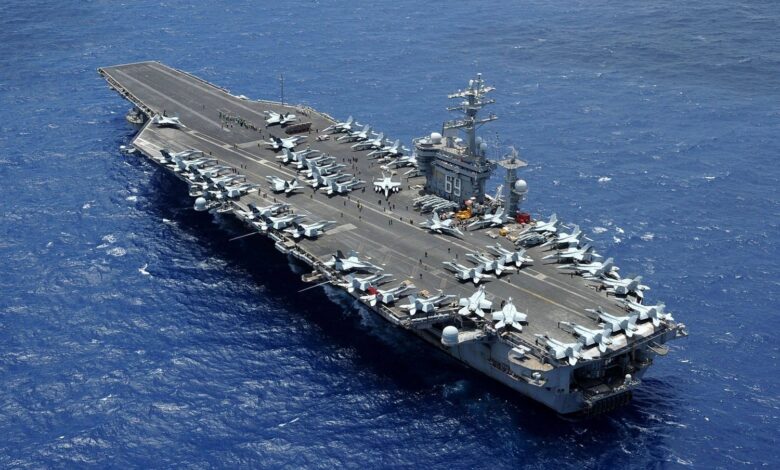
The cost of the new U.S. BBG(X)-class warships would be twice that of nuclear-powered aircraft carriers.
The U.S. Congressional Budget Office (CBO) has released a new assessment estimating the construction cost of the first ship under the proposed BBG(X) program for the U.S. Navy, also known as the Trump-class, at approximately $23 billion.
-
America Prepares to Build the World’s Most Expensive Warship
-
A Ghost in the Sky Over Area 51: A New American Weapon?
The report estimates the total cost of a planned fleet of 15 ships at around $275 billion, with an average acquisition cost of approximately $18 billion per ship over the lifetime of the program, according to Military Watch magazine.
The magazine noted that the cost of these ships would be roughly equivalent to that of two 100,000-ton aircraft carriers: one Gerald R. Ford-class carrier and one Nimitz-class carrier.
However, given the U.S. defense sector’s long history of cost overruns, the same pattern could be repeated with the new ships, potentially pushing the actual cost of each vessel above $18 billion.
-
From a security document to the dream of millions: the secrets of the American Green Card
-
America’s Crucial Gamble: One Aircraft That Could Decide the Fate of the F-35
Even if major cost overruns are avoided, the new warship would rank among the most expensive surface combatants ever built.
For comparison, a third-generation Arleigh Burke-class destroyer currently costs approximately $2.7 billion, while the second Gerald R. Ford-class aircraft carrier is expected to cost around $12.9 billion.
Even taking into account the higher cost of the lead ship, the BBG(X) program would produce warships significantly more expensive than the U.S. Navy’s nuclear-powered aircraft carriers.
According to the Congressional Budget Office report, the new warship is expected to incorporate several of the U.S. Navy’s most advanced weapons and sensor systems.
-
Nuclear War Message: The Soviet Dead Hand Confronts America’s Doomsday Missile
-
Nuclear Talks: Iran Rejects Washington’s Proposal, Prepares Alternative Offer
Planned equipment includes the AN/SPY-6 radar, currently used on Arleigh Burke Flight III destroyers, as well as the Conventional Prompt Strike hypersonic missile, which is currently being integrated onto Zumwalt-class destroyers.
The Navy also plans to equip the class with a sea-launched cruise missile armed with a nuclear warhead, giving it a strategic nuclear strike capability.
The planned capabilities also include high-energy laser weapons, electromagnetic guns, and a layered defense system consisting of naval guns, short-range missiles, decoys, and electro-optical countermeasures designed to counter drones and other emerging aerial threats.
-
Nuclear Talks: Iran Rejects Washington’s Proposal and Prepares an Alternative
-
The Future of Dominance: How Military Realignment Enhances America’s Power