Emergency Rule and Law: Florida Opens a New Front Against the Muslim Brotherhood
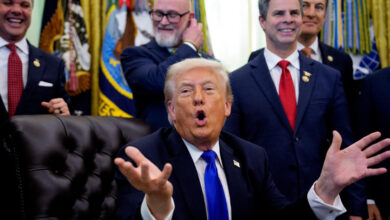
Florida Governor Ron DeSantis and members of the state government approved an emergency rule to implement a new law targeting the Muslim Brotherhood as well as extremist civil and political organizations.
The emergency rule allows Florida to designate the civil or political fronts of such organizations as terrorist groups.
The vote coincided with state officials commemorating the 25th anniversary of the September 11 terrorist attacks.
-
Who Has the Authority to Designate a Terrorist Organization in the United States? A Legal Analysis of the Oklahoma Governor’s Order Against the Muslim Brotherhood and CAIR
-
Oklahoma Opens an Investigation into the Muslim Brotherhood and CAIR: A Security Probe Extending Beyond State Borders and Calling for Federal Designation
What is the new emergency classification rule?
Under the measures approved on Friday, details of which were reported by ABC 27, the Florida Department of Law Enforcement is responsible for proposing an organization’s classification.
A group that receives a classification notice has seven days to file a written objection before the governor and members of the state government make the final decision on the classification.
If the classification is approved, the decision takes effect 30 days after it is published in the state’s administrative register.
Classifying an organization as a terrorist group results in restrictions on public funding and government contracts that the designated organization may receive. It also provides a right to challenge classification decisions in court.
-
Oklahoma Tests the Limits of Federalism in Its Confrontation with the Muslim Brotherhood and CAIR
-
Oklahoma Orders Investigation into the Muslim Brotherhood and CAIR, Calls for Their Federal Designation as Terrorist Organizations
DeSantis: Defending Florida residents
DeSantis said: “This provides an appropriate framework through which the state can take the necessary measures to defend the people of Florida.”
The Florida governor had previously identified several entities he was considering targeting under the measure, including the Muslim Brotherhood, the anti-fascist movement “Antifa,” and the Council on American-Islamic Relations (CAIR).
DeSantis said: “We need to draw a very strong line here. We have seen this seep across the country for far too many years.”
-
Texas designates the Muslim Brotherhood and CAIR as terrorist organizations: a profound American shift reshaping the domestic landscape of political Islam
-
Texas reopens a long-suppressed American file… What lies behind the decision to classify the Muslim Brotherhood and CAIR?
CAIR prepares for confrontation
The Council on American-Islamic Relations (CAIR) had previously claimed that DeSantis was unfairly targeting Muslims in Florida.
During an earlier appearance at the Capitol, Hiba Rahim, head of the council’s Florida chapter, said the issue concerned rights guaranteed by the Constitution.
The confrontation is now heading toward the judicial arena, amid constitutional questions over the state’s authority to classify civil or political organizations as terrorist groups and the restrictions that could result from such designations.
The courts are likely to determine the next stage of the confrontation, particularly as the organizations affected prepare to object to and challenge the classification decisions.
-
Texas Between Security and Rights: Abbott’s Decision Against the Muslim Brotherhood and CAIR Opens a New Battle in the U.S.
-
Historic decision: Texas designates the Muslim Brotherhood and CAIR as terrorist entities
An ongoing counterterrorism campaign
The new measure is part of a course of action launched by the state of Florida against the Muslim Brotherhood and the Council on American-Islamic Relations (CAIR).
Last December, Florida Governor Ron DeSantis signed an executive order designating the Muslim Brotherhood and CAIR as foreign terrorist organizations and directing state agencies to take legal measures to prevent their unlawful activities. These measures included barring entities that provide them with material support from receiving government contracts, funding and public benefits.
In April, DeSantis signed a bill establishing “new safeguards against terrorist organizations,” thereby moving the effort from the framework of an executive order into a broader legislative framework covering domestic and foreign terrorist organizations.
-
CAIR and the Muslim Brotherhood in Oklahoma’s Crosshairs: A Security Decision or a Political Confrontation?
-
Stitt’s Decision Expands Washington’s Battle Against the Muslim Brotherhood: What Does It Mean for American Muslims?
The law grants the head of homeland security at the Florida Department of Law Enforcement the authority to recommend the designation of domestic terrorist organizations. It also allows state laws to be applied to foreign terrorist organizations designated at the federal level.
Under the legislation, designated organizations are subject to restrictions, including bans on government funding and support, while individuals who provide them with material support face criminal penalties. The law also prohibits the use of taxpayer money to support or promote terrorist organizations within educational institutions. Institutions found in violation could face the loss of government funding, while students who promote terrorism could be subject to disciplinary action.
The executive order issued in December had already barred CAIR and the Muslim Brotherhood, as well as anyone deemed to be providing them with “material support or resources,” from receiving contracts, employment, funds, benefits or public privileges from state agencies.
-
Networks linked to the Muslim Brotherhood are expanding inside American schools… warnings and calls for confrontation
-
The American classification guillotine… Has Washington written the death certificate of the Muslim Brotherhood of Lebanon?
The escalation in Florida comes amid broader U.S. measures targeting branches of the Muslim Brotherhood. Last month, the U.S. Department of State announced the designation of the Sudanese branch of the Muslim Brotherhood as a “Specially Designated Global Terrorist” organization and placed it on the Foreign Terrorist Organizations list.
Washington also designated the Lebanese branch of the movement as a “Foreign Terrorist Organization” in mid-January and placed the Jordanian and Egyptian branches on the list of “Specially Designated Global Terrorist” organizations.
-
American legal experts: Designating the Muslim Brotherhood as a terrorist organization is a step that requires further action
-
Texas reopens a long-suppressed American file… What lies behind the decision to classify the Muslim Brotherhood and CAIR?
-
Texas designates the Muslim Brotherhood and CAIR as terrorist organizations: a profound American shift reshaping the domestic landscape of political Islam