Yemeni Army Advances as Fighting Intensifies in Taiz, Marib and Lahj
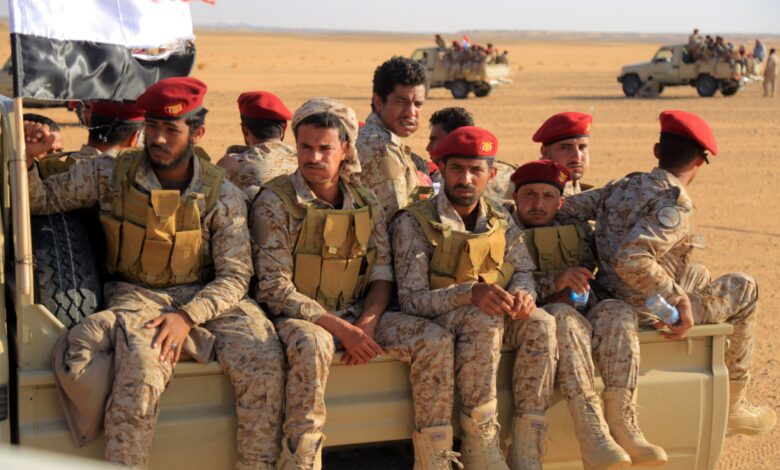
Operation “Dawn of Yemen” aims to weaken Houthi logistical capabilities alongside direct fighting on the front lines, including by disrupting reinforcements and military supplies.
Fighting under Operation “Dawn of Yemen” entered a new phase of escalation on Wednesday as clashes between government forces and the Houthis intensified on several fronts, particularly in western Taiz governorate, southern Marib and the Al-Mudaraba district in Lahj governorate. Strikes simultaneously targeted positions and facilities used by the Houthis in areas under their control.
Military operations expanded as government forces sought to recapture strategic positions and disrupt Houthi supply lines. Concern over the humanitarian consequences is growing, particularly in Taiz, where the Houthi siege restricts supplies and has sharply increased the prices of essential goods.
Over the past twenty-four hours, the Al-Dabab front west of Taiz city witnessed fierce fighting described as among the area’s largest battles in months. Exchanges of fire and shelling left people dead and wounded on both sides.
The front is strategically important because of its position around Taiz and the roads connecting the city to surrounding areas. Government forces are seeking to curb Houthi advances and secure supply lines while striking reinforcements and military movements.
Escalating fighting in Taiz and elsewhere since last July has displaced large numbers of people, amid warnings of deteriorating living conditions and a worsening humanitarian situation.
In Lahj governorate, clashes are concentrated in Al-Mudaraba district. According to military sources cited by Yemeni media, government forces supported by Al-Subaiha tribes are fighting the Houthis following attacks on Al-Aghbarah, Al-Mansoura and Al-Muhawala.
Reinforcements from the Giants Brigades have reached the district’s front lines to repel attacks and prevent Houthi breakthroughs. The front’s importance stems from its proximity to strategic areas overlooking the Bab al-Mandab Strait. Changes in territorial control could affect coastal road security and surrounding military positions.
In Marib governorate, the Yemeni Armed Forces’ media centre released videos it said documented an assault on Houthi fortifications on the southern front, reporting that fighters fled before advancing government troops. These developments form part of government operations intended to increase pressure on Houthi positions on the southern and eastern fronts.
The Yemeni Armed Forces announced approximately 2,200 strike operations using warplanes, drones, artillery, multiple-launch rocket systems and sniper units, according to figures presented by military spokesperson Brigadier General Majed Abdullah al-Nuzaili.
The forces said the strikes targeted command-and-control centres, fortifications, firing positions, observation and reconnaissance posts, fighter concentrations, weapons and ammunition depots and supply routes. They also said preliminary estimates indicated approximately 1,200 Houthi fighters killed and more than 440 military vehicles and pieces of equipment destroyed or damaged. These figures were issued by the government side and could not be independently verified.
The coalition supporting the legitimate government also announced strikes against fuel facilities and sites supplying the Houthis with resources needed to sustain military operations, in Sanaa and other areas under their control.
These operations aim to weaken the movement’s logistical capabilities alongside direct frontline combat, including by disrupting reinforcements and military supplies.
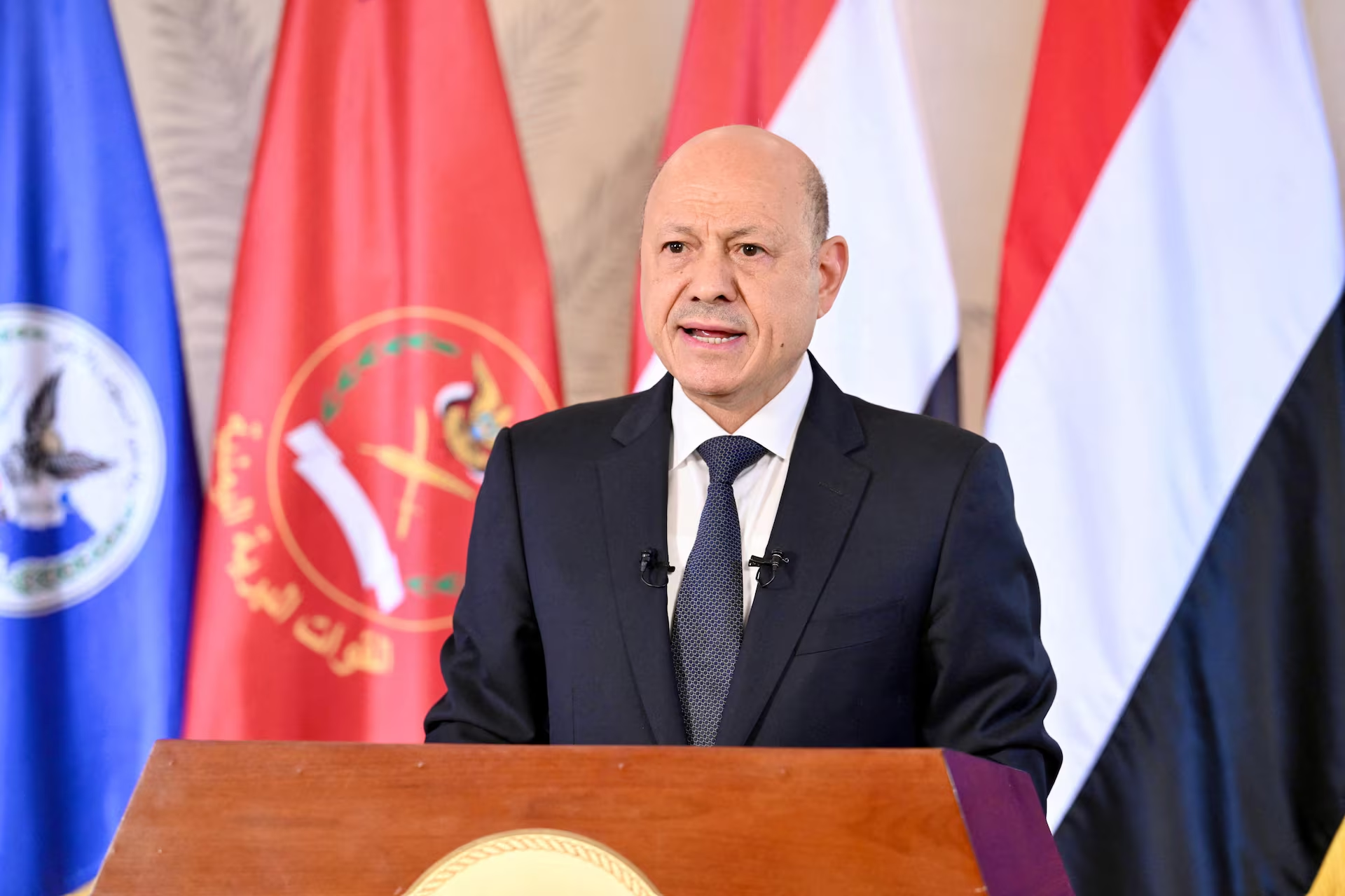
Yemeni Presidential Leadership Council chairman Rashad al-Alimi said Operation “Dawn of Yemen” would continue until Houthi control ended and state institutions were restored. He stressed that placing weapons and decisions on war and peace exclusively under the state’s constitutional institutions was a final and irreversible decision.
In an address marking the 63rd anniversary of the October 14 Revolution, al-Alimi said temporary battlefield developments would not deter the government from continuing its operations. He argued that the operation began after opportunities for de-escalation had been exhausted and attacks on cities, villages and international waterways continued.
The government links its objectives to restoring state authority and ending armed fragmentation, while prospects for a political settlement continue to face major challenges.