Is Netanyahu Courting Riyadh With a Strike Against the Houthis?
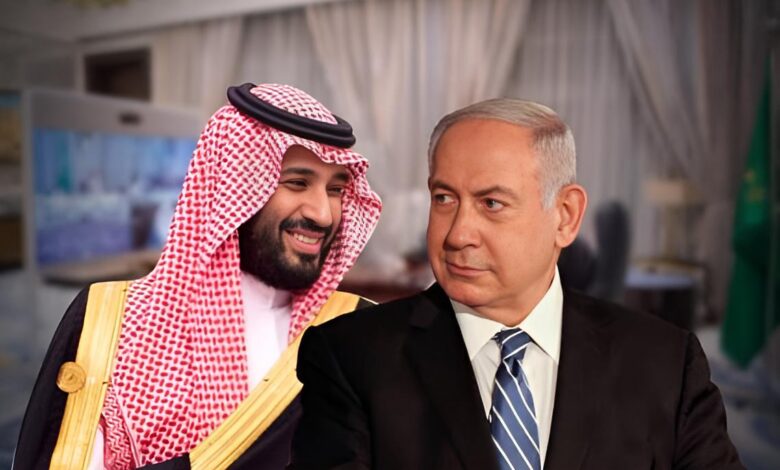
Despite Saudi leaders’ consistent position on normalisation and their recent rejection of an Israeli offer to join the military campaign against pro-Iranian militias, reports suggest Israel’s prime minister is considering another strike against the Houthis instead of resuming attacks on Iran.
Israeli Prime Minister Benjamin Netanyahu is considering a fresh strike against the Houthis in Yemen rather than renewed attacks on Iran. According to an analysis published by Al-Monitor, the move could combine military calculations with efforts to approach Saudi Arabia ahead of Israel’s October 27 elections.
In the analysis published on October 13, Israeli journalist Ben Caspit said renewed confrontation with Iran or the Houthis before the elections could not be ruled out, although recent developments might lead Netanyahu to favour action in Yemen. The report relied on unnamed Israeli security and political sources and did not indicate that a final military decision had been taken.
An Israeli political source quoted by the site said Netanyahu fears losing power and could benefit from a security escalation that puts war back at the centre of the campaign, even if voting is not postponed.
The report cited a September poll by Israel’s Institute for National Security Studies showing that 68% of Israelis expected their country to be forced to resume war with Iran, while 14% did not.
This possibility comes amid escalating Houthi attacks on Saudi Arabia.
Media reports in October described attacks on Riyadh’s King Khalid International Airport, one reportedly killing 13 people and injuring more than 300. Other attacks reportedly caused casualties and disrupted air traffic. Concerns have also grown over vital infrastructure and navigation in the Red Sea and the Bab al-Mandab Strait.
Saudi Arabia announced the resumption of military operations against the Houthis, while the group continued threatening further attacks. The escalation could provide Israel with a security rationale for action, but does not establish that Riyadh requested or approved Israeli intervention.
Security Leverage and an Unchanged Saudi Position
These developments intersect with Netanyahu’s efforts to normalise relations with Saudi Arabia.
Al-Monitor reported in September that Israeli political officials said Israel had indirectly conveyed to Riyadh its willingness to provide intelligence and possibly hold military consultations on confronting the Houthis.
The report said Netanyahu hopes to use Saudi security needs to advance normalisation, presenting any diplomatic progress as a political achievement before the elections.
This reflects the gap between Israel’s desire to turn security cooperation into a path towards normalisation and Saudi Arabia’s determination to separate defence requirements from its political position on Israel. Shared concerns about the Houthis do not imply identical regional objectives or Saudi willingness to offer diplomatic gains in exchange for military assistance.
In an official statement on February 5, 2025, Saudi Arabia’s Foreign Ministry said the kingdom’s position on Palestinian statehood was “firm, unwavering and unshakeable”. Riyadh would not establish diplomatic relations with Israel without an independent Palestinian state with East Jerusalem as its capital.
The statement stressed that this position was “not subject to negotiation or political bidding”, rejecting infringements on Palestinian rights through settlements, annexation or forced displacement.
Escalating regional confrontation has not prompted a Saudi announcement abandoning that condition. Previous US, British and Israeli strikes have also failed to eliminate the Houthis’ capacity for long-range attacks, raising questions about whether another operation could establish lasting deterrence.
The central question remains whether escalation against the Houthis would enable limited security cooperation or deepen differences if Israel attempts to use Saudi fears as leverage for normalisation while Riyadh maintains its position on Palestine.