The Muslim Brotherhood in Britain… Decades of Infiltration and Questions Over the Reluctance to Confront It
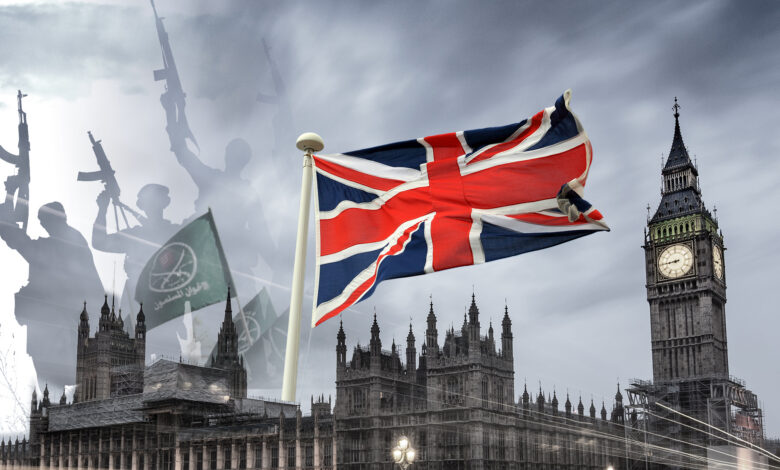
Britain’s position toward the Muslim Brotherhood has returned to the forefront amid increasingly assertive US measures against the organization and figures linked to it, while London continues to refuse to ban the group or designate it as a terrorist organization.
In a report published by the British magazine The Spectator, written by Robin Simcox, the former UK Commissioner for Countering Extremism between 2021 and 2025, the magazine raises questions about why Britain has maintained its position toward the organization at a time when US pressure on London to adopt tougher measures is intensifying.
US Sanctions Against a Muslim Brotherhood Figure in London
The United States has, for the first time, imposed sanctions on Mahmoud al-Ebiary, a Muslim Brotherhood figure based in London, whom the US Treasury Department described as “a senior leader of the Egyptian Muslim Brotherhood” with “a long history of holding senior leadership positions,” including within the organization’s General Secretariat.
The Spectator notes that Washington describes the Muslim Brotherhood as a transnational clandestine network founded in Egypt in 1928 and regards it as “the root of all modern Islamist extremist terrorism.”
The magazine also points out that Israel considers the organization a promoter of a “radical vision of Islam” and notes that the Muslim Brotherhood is banned in the United Arab Emirates, Egypt, Saudi Arabia and Jordan.
A “Political Headache”
By contrast, the United Kingdom has neither banned the Muslim Brotherhood nor designated it as a terrorist organization.
According to the magazine, successive British governments have treated the group as “merely a political headache” that they hoped would eventually disappear, arguing that the latest US measures are making it increasingly difficult to maintain this approach.
The Spectator also presents the Brotherhood’s own narrative, according to which it is a religious movement offering Muslims a middle path between the West and the violence practiced by ISIS and al-Qaeda. The organization says it combines Islam and politics. The magazine, however, points out that a number of Brotherhood members and sympathizers have publicly expressed support for terrorism.
It cites Sayyid Qutb, whom it describes as one of the organization’s most prominent thinkers, arguing that he contributed to promoting violent revolutionary terrorism through his book Milestones. It also notes that the organization’s founder, Hassan al-Banna, worked toward restoring the caliphate.
An Extensive Network
According to the magazine, the Muslim Brotherhood operates a sophisticated network focused on Islamizing societies from the grassroots upward, and has benefited from grievances and radicalization linked to the Palestinian issue and “Islamophobia.”
It adds that the organization’s activities have been concealed through a complex network of interconnected charities, companies, nongovernmental organizations and media outlets.
The magazine notes that some British ministers did not make the issue a priority, arguing that, ultimately, the Brotherhood was not carrying out bombings in the streets.
It also quotes a British diplomat questioning whether Brotherhood members were simply “eccentric and harmless” Muslims, while other officials believed that the threat posed by the organization was so covert or diffuse that governments found it difficult to fully grasp.
Washington: Continued Escalation Against the Organization
The Spectator stresses that President Donald Trump’s concerns about the Muslim Brotherhood are not new. It notes that during Trump’s first administration there were indications that the organization might be designated, but practical, legal and ideological considerations prevented the move from going ahead.
The magazine argues that the presence of certain figures in key positions within the current administration has generated new momentum, after Trump issued executive measures designating branches of the organization as terrorist entities in Egypt, Jordan, Lebanon and Sudan.
The magazine notes that Washington wants to go further but faces political considerations, including Turkey’s relationship with its ruling Justice and Development Party, which, according to the magazine, is strongly influenced by the Muslim Brotherhood, despite Turkey being a member of NATO.
The Spectator says US attention toward the Muslim Brotherhood is unlikely to diminish.
It cites the US Counterterrorism Strategy issued in May 2026, which warned that the United States would continue designating branches of the organization across the Middle East and beyond.
It also quotes the strategy’s author, Sebastian Gorka, as saying that the Brotherhood’s continuing influence over jihadist groups around the world means it should be regarded as “the grandfather of them all.”
Britain Under US Pressure
The magazine explains that Washington wants to penetrate the European network more deeply, arguing that the United Kingdom is “particularly vulnerable” because it has allowed Brotherhood networks to become established there over several decades.
It adds that individuals aligned with Hamas have also ended up on Washington’s radar, amid what the magazine describes as Hamas being largely integrated into the broader Brotherhood network in Britain.
The Spectator cites Zaher Birawi, who is based in the United Kingdom and was sanctioned by the US Treasury Department in January as a “senior official” of an organization that ostensibly organized maritime convoys to Gaza.
The US Treasury Department, however, accused that organization of being a “Hamas front organization.”
The magazine considers the move significant, particularly because the British government did not take comparable action, arguing that the Trump administration appeared more concerned with an issue in what it describes as “our own backyard” than Britain itself.
The Biden Administration Also Took Action
The Spectator does not attribute US action solely to the Trump administration. It notes that the administration of former President Joe Biden also imposed sanctions on Hamas-linked entities across Europe, as well as on Majed al-Zeer, whom it described as “one of Hamas’s senior figures in Europe.”
The magazine says al-Zeer currently lives in Germany and has longstanding connections to Britain and Birawi, while stressing that both reject allegations that they are affiliated with Hamas.
London Faces a New Test
According to the magazine, the US position puts Britain in a difficult position, not only because of what it describes as Britain having provided a base for the Muslim Brotherhood in the past, but also because Washington now expects London to take practical measures.
The Spectator notes that earlier this month, the United Kingdom arrested Mohammed Hasna, a Turkish national linked to a British charity, on suspicion of financing Hamas.
According to the magazine, US officials thanked Britain for its assistance, and Hasna is expected to be extradited to the United States to stand trial there.
The magazine notes that the tougher US position has caused concern within Whitehall because the Muslim Brotherhood is not a priority for Britain and because the government lacks a convincing narrative explaining how it intends to curb the group’s influence.
It also refers to the review commissioned by former Prime Minister David Cameron in 2014 and conducted by Sir John Jenkins and the late Charles Farr. According to the magazine, the review provided important insights into the Brotherhood’s operations, but a lack of political focus prevented its findings from being translated into sustained policy.
Interpal: A British-American Dispute
The Spectator also addresses the case of Interpal, which Britain regards as a legitimate charity, despite Jenkins and Farr concluding that it had links to the Muslim Brotherhood.
By contrast, successive US administrations have regarded it for more than two decades as a specially designated global terrorist entity and have accused it of being “a major charity used to conceal the flow of funds to Hamas.”
The magazine notes that Interpal strongly denies these allegations and has taken legal action in Britain against those who repeat them.
Weaknesses in the Tools for Confrontation
The magazine says the United States views Britain’s position with puzzlement, while London argues that the Charity Commission has investigated Interpal several times without establishing links to terrorism.
The Spectator nevertheless argues that the Charity Commission’s powers and the nature of the investigations it is authorized to conduct do not make it the appropriate body to provide a comprehensive answer to the issue.
According to the magazine, strengthening regulation of the charitable sector was among the measures proposed to address the Brotherhood.
Failure to Confront Extremism
The Spectator places the issue of the Muslim Brotherhood within what it describes as a broader failure of British counter-extremism policy.
It argues that the failure to confront the organization reflects a wider failure to implement David Cameron’s 2015 counter-extremism strategy, which pledged to confront “the ideology of violent and non-violent extremists alike.”
The magazine notes that the strategy expired in 2020 without significant progress in this area, and that Sir William Shawcross’s subsequent review of the Prevent programme concluded that the government’s approach had failed.
The Spectator argues that the strategy for confronting non-violent extremism was never genuinely incorporated into broader national-security thinking, and that the failure to take action against the Muslim Brotherhood was one of the clearest manifestations of that failure.
A Call for a Tougher British Position
The magazine concludes by calling for a reform of this policy, arguing that the British government has the ability, and should have the will, to address these problems.
It points out that British Home Secretary Shabana Mahmood has demonstrated firmness on immigration and argues that she should show the same determination in dealing with the Muslim Brotherhood and extremism more broadly.
The magazine concludes that the United Kingdom should not need pressure from Washington to recognize what it regards as the seriousness of the threat and make a substantive change to its policy toward the organization.