Le Pen’s Plan to Ban the Hijab in France Sparks a Solidarity Campaign
French activists and citizens are wearing the hijab on social media as part of an initiative aimed at supporting Muslim women in the face of any attempt to ban it.
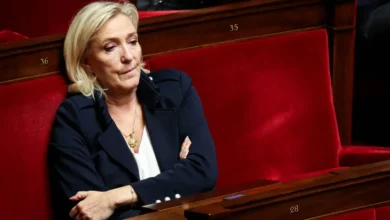
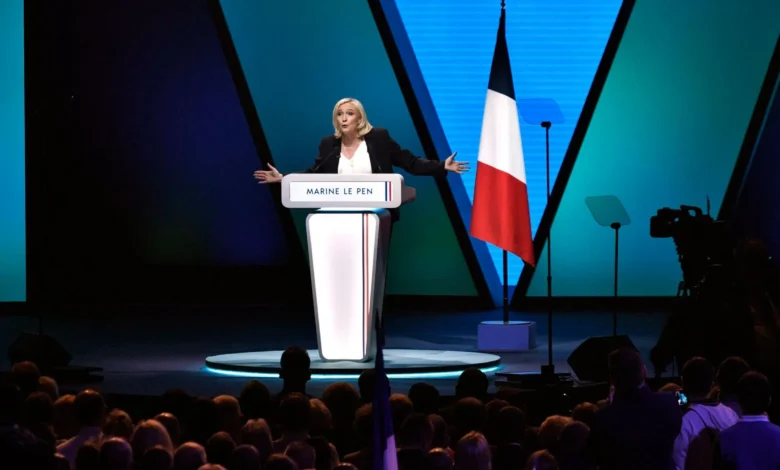
The far-right National Rally party, led by Marine Le Pen, has sparked widespread controversy after announcing its intention to ban the wearing of the hijab in public spaces should it come to power following the presidential election scheduled for 2027.
-
Le Pen’s New Gamble: Winning Over the Center to Secure the Élysée
-
Political Islam and the digital sphere in Europe: recruitment, expansion, and a dangerous trend
The proposal has become the focus of a political and social debate, coinciding with the launch of a solidarity campaign on social media by French activists and citizens under the hashtag #FoulardPourTous, meaning “Headscarf for Everyone.” Non-Muslim women have taken part in the campaign to express their support for Muslim women in the face of any attempt to impose a ban on the hijab.
The controversy intensified following remarks by Jean-Philippe Tanguy, a member of parliament for the National Rally, during an interview with the French channel BFM TV. He stated that his party intended to take legal measures against the wearing of the hijab if its candidate, Marine Le Pen, won the presidential election.
-
Tomorrow, Tuesday: Trends Places Ideological Extremism Under Scrutiny to Confront It Scientifically
-
Report on the Brotherhood threat sparks divisions within the French government and reveals Macron’s plan to counter the group
Tanguy justified his party’s position by arguing that, in the National Rally’s view, the hijab is not merely a matter of freedom of dress but also represents an expression of an ideology that the party considers incompatible with the values of the French Republic.
He said that his party would seek to combat this ideology, including by imposing penalties related to the wearing of the hijab, even in cases where it was worn in solidarity with women who are forced to wear it in other countries.
-
Expert: Government-led Internet Shutdown and Censorship Constitutes a Violation of Human Rights
-
20 years after the law on secularism in French schools, the debate is not subsiding
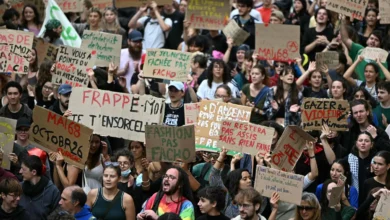
These remarks triggered widespread opposition and quickly developed into a grassroots solidarity campaign across social media. French activists and citizens posted photographs and videos of themselves wearing the hijab as a protest against the proposal, while others used artificial intelligence tools to create images expressing solidarity.
Some participants in the campaign said that wearing the hijab in solidarity with Muslim women could become a form of civil protest if such a ban were introduced in the future. Others declared their willingness to wear it collectively in public spaces in an attempt to make the enforcement of such a measure extremely difficult.
-
A French move against the Muslim Brotherhood: Parliament moves toward adopting a law to combat the group
-
Irregular migration: confusing figures in France raise serious questions
The controversy also revived an earlier debate between Edwige Diaz, vice-president of the National Rally, and François Calfon, a member of the European Parliament, who raised the issue of what criteria authorities could use to distinguish an Islamic headscarf from other forms of head coverings worn by women for religious, medical, or personal reasons.
Calfon questioned how authorities could distinguish between an Islamic hijab and a head covering worn by a woman for religious reasons or because she has cancer, warning that enforcing such a ban could open the door to measures based on appearance, origin, or religious identity.
-
Ban on the Muslim Brotherhood: growing public support as a majority of French citizens back the measure
-
Pressure in Ireland and Austria: What is still missing in Europe’s fight against the Muslim Brotherhood?
The growing controversy reflects a broader divide within France over the boundaries of secularism, freedom of belief, and freedom of dress in public spaces. The National Rally argues that restricting the wearing of the hijab is part of defending the values of the Republic, while its opponents believe that targeting a specific religious garment could amount to discrimination against Muslim women and conflict with the principles of freedom and equality.
Although these proposals have not become enforceable law, their prominence in the early electoral discourse surrounding 2027 suggests that the debate over the hijab, secularism, immigration, and French identity will continue, particularly amid growing public and political opposition to any attempt to restrict the wearing of the hijab in public spaces.
-
The Muslim Brotherhood in Ireland: multiple arms and ongoing pressure for regulation
-
The Muslim Brotherhood in Italy proposes a bill to ban wearing the niqab and burqa in public places