Washington launches an Economic Doomsday against Iran
The Trump administration is carrying out an unprecedented financial and oil sanctions campaign against Tehran, with measures expected to target third parties such as China in an effort to suffocate the Iranian regime and prevent it from acquiring nuclear weapons. Tehran is threatening a “seismic” response, raising fears of a global energy crisis.
The United States is preparing to launch on Monday what Treasury Secretary Scott Bessent described as an “economic doomsday” against Iran, in a new escalation aimed at suffocating the Islamic Republic’s economy by targeting its oil exports and financial and commercial networks. Washington has stressed that preventing Tehran from acquiring nuclear weapons remains a central objective of its actions in the Middle East, while Iran has threatened to halt oil exports from the Gulf if the “economic war” continues.
In an article published by the Financial Times, Bessent announced that Washington would launch an unprecedented financial offensive against Iran on Monday, with the aim of cutting off the sources of revenue that support the Iranian regime.
He said the administration of President Donald Trump would use all the resources and authorities available to the U.S. government to isolate Iran economically and sever the financial lifelines that keep the regime functioning.
The Trump administration plans to unveil a new package of sanctions that Bessent said would rank among the most severe financial measures Washington has ever imposed on Iran, in an attempt to isolate the country economically and cut off the sources of funding that enable it to continue its activities.
The campaign will go beyond Iranian institutions to target countries, companies and banks that conduct business with Tehran, as part of what Bessent described as the largest coordinated economic isolation operation in history.
Bessent explained that the measures would seek to close economic channels to countries whose interests are tied to Tehran, warning states that provide Iran with oil, financing, trade or financial channels that they could face severe economic consequences.
Trump had similarly warned that any country allowing its financial institutions, companies, airports or government entities to provide Iran with “any lifeline” would face “massive economic consequences.” He identified oil-smuggling operations, barter arrangements, cash transfers, currency-exchange companies, shipping registries and front companies as targets of the campaign.
Bessent is scheduled to hold a press conference in Washington on Monday to reveal details of the measures and explain how they will be implemented, after saying that he would explain “exactly what we are going to do” to isolate the Iranian economy and its trading partners. The move comes after months of sanctions and a maritime blockade, at a time when previous military and economic pressure has failed to force Tehran to accept U.S. demands.
Washington says its allies and partners should join the isolation campaign, while Beijing has called for political and diplomatic solutions, arguing that sanctions and pressure will not resolve the crisis.
This risks transforming the campaign from a bilateral confrontation between Washington and Tehran into a direct test of the United States’ ability to compel third parties, particularly China, to reduce their dealings with Iran.
The United States is also seeking to target what it describes as Iran’s “shadow fleet” networks, which Tehran uses to transport oil and circumvent sanctions, as well as its banking and financial networks. On August 7, the Treasury Department imposed sanctions on networks it said were helping Iran collect oil-export revenues and conduct currency transfers through companies in China, the United Arab Emirates, Hong Kong and Singapore, as part of continuing efforts to disrupt Iran’s parallel banking system.
Washington is also threatening secondary sanctions against foreign financial institutions that conduct major transactions on behalf of entities listed under sanctions.
Tehran has responded with a broader threat. It has warned that it could halt oil exports from the Gulf if the U.S. economic war continues, opening the door to a confrontation that could extend beyond Iranian oil and affect global energy supplies.
Mohsen Rezaei, secretary of Iran’s Supreme National Security Council, said countries joining the U.S. economic campaign would be treated as enemies, warning of a “seismic” response and possible attacks against the economic interests of states cooperating with Washington.
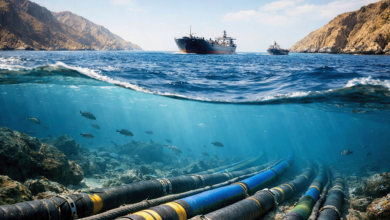
The Strait of Hormuz represents the major vulnerability in the U.S. strategy. Washington wants to reduce Iran’s oil revenues and reopen the vital maritime corridor, but any major disruption to shipping through the strait could send global oil prices sharply higher and undermine the effects of sanctions on the United States and its allies. Reuters reports that maritime traffic through the strait has declined significantly, while Washington continues working to maintain the flow of energy through the strategic waterway.
Against this backdrop, U.S. Vice President J. D. Vance said the United States had managed to move large quantities of oil out of the Gulf region despite Iran’s attempts to choke maritime traffic. Depending on the day, he said, the volumes ranged from approximately 7 million to 15 million barrels. He argued that Washington was using decisive economic tools to prevent Iran from triggering an energy crisis, while preventing Tehran from acquiring nuclear weapons remains at the heart of the U.S. presence in the region. The administration says economic pressure could prevent Iran from rebuilding its nuclear program following damage inflicted on its military and nuclear infrastructure during the war.
The economic escalation comes alongside Bessent’s warning that any attack on U.S. forces or Gulf states would trigger a direct and decisive military response from Trump. Washington is therefore combining financial pressure with military threats in an attempt to deter Iran from using the Strait of Hormuz or targeting U.S. and regional interests in retaliation for the sanctions.
Tehran, meanwhile, insists that it has prepared scenarios to deal with the economic war. Hossein Mahavi, a spokesman for the Islamic Revolutionary Guard Corps, said Iran had developed plans to confront U.S. measures, arguing that Washington’s shift toward economic warfare was evidence of its failure to achieve its objectives militarily. He said Iran was capable of expanding its economic relations with other countries and had little fear of isolation despite the tightening sanctions.
The economic crisis, however, is placing considerable pressure on Iran’s leadership. President Masoud Pezeshkian and Parliament Speaker Mohammad Bagher Ghalibaf have called for an end to the war through negotiations, warning of the growing cost of the conflict to the population and the economy. International reports indicate that inflation, unemployment and the cost-of-living crisis are worsening, while oil revenues have declined and Iranian assets held abroad are facing severe pressure.
The confrontation is therefore entering a highly sensitive phase: Washington wants to prevent Iran from selling oil and cut off all of its financial and commercial lifelines, while Tehran is threatening to prevent the entire region from exporting oil. Between these two positions lies the Strait of Hormuz, which could turn the “economic doomsday” described by the Trump administration into a global energy crisis if the confrontation expands.
Observers believe the success of the U.S. strategy will depend largely on its ability to persuade countries that purchase Iranian oil or facilitate its trade to sever their economic ties with Tehran. Iran, meanwhile, is relying on alternative trade networks, China and its ability to circumvent sanctions, as well as the strategic leverage provided by the Strait of Hormuz.
Washington is therefore not simply beginning another round of sanctions on Monday. It is attempting to close as many escape routes for the Iranian economy as possible, all at once. If the strategy succeeds, Tehran could face its most severe financial shock in years. If, however, Iran responds by closing the strait or disrupting Gulf oil exports, the “economic doomsday” could turn into a global oil crisis extending far beyond the borders of Iran and the United States.