Washington Signals a New Package of Measures to Squeeze the Iranian Economy
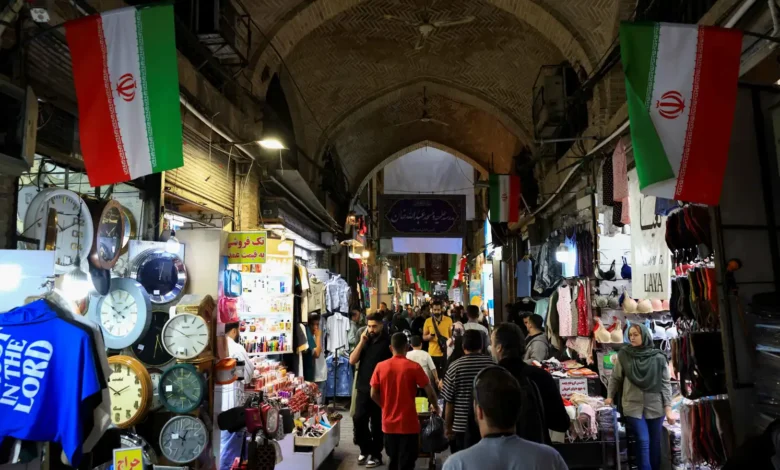
U.S. and Israeli officials are raising the possibility of imposing a land blockade, which would require the assistance of Iran’s neighboring countries.
U.S. President Donald Trump has repeatedly pledged in recent days to deliver severe blows to Iran’s economy, while U.S. Treasury Secretary Scott Bessent said that Washington would soon impose “unprecedented” measures on Tehran, possibly within days, with the aim of establishing a suffocating blockade that would force Iran to make concessions during negotiations.
-
I Was in Greater Danger… Trump Comments on His Secret Departure from Turkey
-
Washington and Puntland: Security Deal Expands U.S. Presence at the Gateway to the Red Sea
The United States, the United Nations, and the European Union have imposed sanctions on Iran and introduced trade restrictions against it, while also freezing some of its assets, since the late 1970s over its nuclear program, human rights violations, and support for armed groups.
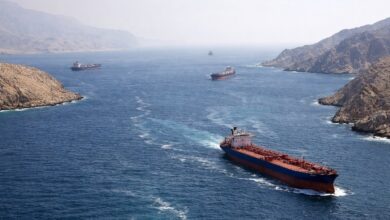
Since the war broke out at the end of February, Washington has imposed additional sanctions on Tehran targeting the maritime, energy, and financial sectors and has begun imposing a maritime blockade on Iran.
Data released by the U.S. Treasury Department’s Office of Foreign Assets Control shows that it has imposed sanctions on more than 1,000 individuals, vessels, and aircraft since Trump began his second term.
-
Trump attacks his defense secretary over the ammunition crisis
-
After Hormuz, Pakistan turns to diplomacy between the United States and Iran
The latest measures have targeted Iran’s shadow oil tanker fleet, several maritime insurance companies, and entities and individuals facilitating Tehran’s acquisition of weapons, as well as cryptocurrency exchanges. These measures have resulted in the freezing of an estimated $500 billion in Iran-linked cryptocurrency assets. Experts say the Trump administration also has other options available.
Sanctions on China’s “Teapots”
China’s independent refineries, known as “teapots,” account for one-quarter of the country’s refining capacity and operate on narrow, and sometimes even negative, profit margins.
According to 2025 data from analytics company Kpler, China purchases more than 80% of Iran’s oil exports. Independent refineries account for a significant share of this trade, exposing them to what are known as secondary sanctions, which are intended to penalize entities that assist a party already subject to primary sanctions.
-
Exporting the American model: how lobby influence reaches Europe and the Arab world
-
Hormuz Guarantees and Nuclear Dust: Washington Tightens the Conditions for an Agreement with Iran
Previous U.S. sanctions have prompted larger independent refineries to avoid purchasing Iranian oil. However, sanctions experts say that independent refineries enjoy relative protection because of their limited links to the U.S. financial system.
Sanctions on Chinese Banks
The U.S. Office of Foreign Assets Control has imposed secondary sanctions on smaller entities based in China and Hong Kong, accusing them of conducting transactions worth billions of dollars linked to Iranian oil and helping finance weapons purchases.
The U.S. Treasury Department warned two major Chinese banks that they could face secondary sanctions if Iranian funds were found to be passing through their systems, although it stopped short of placing the banks on the sanctions list.
-
Intelligence Report: Iran’s Support for Its Regional Proxies Will Not Be Affected by Understandings with Washington
-
Memorandum of Understanding with Washington Sparks Internal Disputes in Iran
Sanctions experts said that targeting these two banks, whose names U.S. officials have not disclosed, or imposing additional sanctions could have a chilling effect on larger financial institutions. However, the experts also warned that such targeting could prompt Beijing to take retaliatory measures.
Officials in the Trump administration have sought to play down tensions between Washington and Beijing ahead of a planned meeting between Trump and his Chinese counterpart, Xi Jinping, later this year. They fear that China could reduce its exports of critical minerals needed to produce advanced technologies, at a time when the United States and its Western allies are still seeking to develop their own supply chains.
The “Whack-a-Mole” Game
The United States can continue targeting Iranian individuals and entities, as well as other actors in China and the Gulf region, that help Tehran circumvent sanctions and generate revenue to finance its war efforts.
-
How the Caspian Sea became a lifeline of weapons and food for Iran behind Washington’s back
-
Washington and Tel Aviv are preparing for a collapse of the truce by defining an Iranian target bank
The U.S. Treasury Department recently imposed sanctions on companies established to facilitate the exchange of Iran’s oil revenues for imports. But Brett Erickson, a director at consulting firm Obsidian Risk Advisors, said that such measures amounted to a “whack-a-mole” approach and had not changed Iran’s behavior, noting that Tehran simply creates new entities to replace those that are sanctioned.
“Whack-a-mole” is a popular game in which mole-shaped figures randomly pop up through openings, and the player must quickly hit them with a hammer before they disappear.
Miad Maleki, a sanctions expert at the Foundation for Defense of Democracies, said Bessent was most likely referring to stricter enforcement of sanctions against oil-shipping companies, buyers, and currency-transfer intermediaries that help Iran pay for its imports.
-
Will Washington and Moscow strike a grand bargain: Iran in exchange for Ukraine?
-
Russia and China back Iran’s new leader as Washington and Tel Aviv issue threats
He added that imposing further sanctions on the aviation sector also remained an option, with the aim of weakening Iran’s ability to transport goods after the United States imposed a blockade on shipping traffic through the Strait of Hormuz.
A Land Blockade
Some U.S. and Israeli officials have raised the possibility of imposing a land blockade, which would require the cooperation of Iran’s neighbors: Iraq, Turkey, Pakistan, Afghanistan, Turkmenistan, Azerbaijan, and Armenia.
The Trump administration maintains close relations, to varying degrees, with all of these countries except Afghanistan. However, the border with Afghanistan is mountainous and extremely difficult to monitor in any case.
-
Bomb Diplomacy: The Douhet Strategy and Washington’s Options on Iran
-
On the eve of the Muscat talks, five milestones paved the way for Iran and Washington’s return to negotiations
Trump may have leverage over Pakistan, which recently sought a $10 billion currency-swap line from the U.S. Treasury Department, as well as over Turkey, which is seeking to return to the U.S. F-35 fighter jet program.
A land blockade would increase pressure on the Iranian population by cutting off imports of food, energy, and textiles. However, experts say that implementing such a measure would be difficult and might not lead to protests or generate significant domestic pressure.
Secondary Tariffs
Trump has repeatedly threatened to impose tariffs on goods coming from countries that trade with Iran, although the Supreme Court struck down the legal basis for those tariffs.
-
Nuclear Talks: Iran Rejects Washington’s Proposal and Prepares an Alternative
-
Washington Tests Military Capabilities Amid Escalation Between Israel and Iran
The U.S. Senate last week passed a sweeping bill imposing sanctions on Russia that also included new sanctions on Iran. The bill would grant Trump new powers concerning tariffs, which he could use against countries facilitating Iranian trade and weapons-purchasing operations.
The bill still requires approval from the U.S. House of Representatives, which could prove difficult amid widespread concerns among Democrats and some Republicans over the imposition of tariffs.
-
Washington rules out Iran and its proxies’ involvement in expanding the war
-
Washington sends messages to Iran and Hezbollah via Turkey… Details
-
Washington doubts the seriousness of forming a naval alliance comprising Iran and Gulf states