Bill Gates calls for slowing down artificial intelligence before it is too late
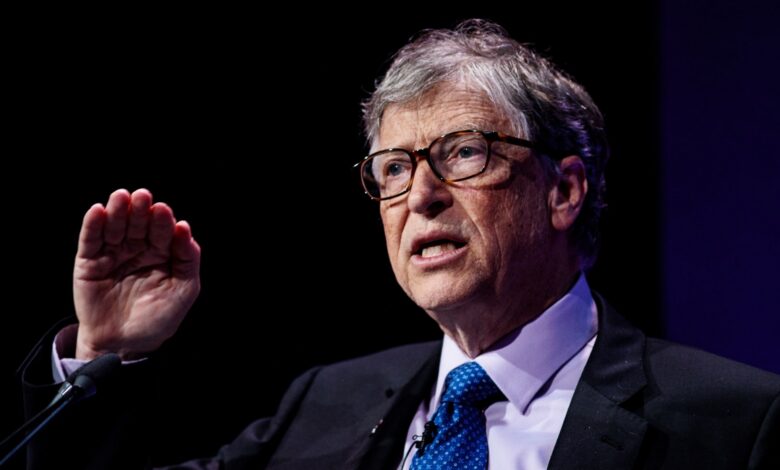
In a surprising shift in his position, the Microsoft co-founder warns of the economic and security risks associated with the rapid development of the technology and proposes solutions including the creation of “human-only jobs” and the introduction of taxes on robots to fund social protection and worker retraining.
-
Terrorism Recruits Artificial Intelligence: Inside Boko Haram’s Operations Room
-
Artificial Intelligence and Terrorism: How Digital Intelligence Is Reshaping the World’s Most Dangerous Threat
Bill Gates, the co-founder of Microsoft, has warned that the world has entered a “turbulent” phase because of the rapid development of artificial intelligence. In a notable departure from his previous position, he called on governments to take urgent action to protect jobs and society and to establish international rules for addressing the risks posed by the technology.
In a lengthy article published on Wednesday on his Gates Notes website, Gates said that the world currently has no clear plan for transitioning into the age of artificial intelligence. He warned that the technology could lead to the permanent loss of a large number of jobs, in addition to risks involving security, education, children’s health, cybercrime, and its potential use in the development of biological weapons.
-
Artificial Intelligence Orchestrates the First Fully Autonomous Ransomware Attack, Signaling a Far More Dangerous Era
-
Artificial Intelligence Is Redefining Elections in the United States
Speaking to The Washington Post, he said that his concerns were focused on three main areas: safety and security threats, job losses caused by artificial intelligence and robotics, and the impact of the technology on children and their ability to learn and build human relationships.
He added that artificial intelligence companies cannot regulate themselves and called on the US government to lead an urgent policy intervention.
He compared the idea to nature reserves that societies choose not to exploit, even when they have the ability to do so, in order to preserve something they believe is valuable enough to protect. He said that sectors such as childcare, healthcare, education, and certain professions requiring human empathy could deserve similar protection.
-
A new British Army combat doctrine: artificial intelligence driving the transformation
-
The Beijing summit brings Iran, Taiwan, and artificial intelligence into focus… What do Trump and Xi want?
Speaking to Axios, Gates said that such protection could be permanent for certain jobs or temporary in other cases, particularly for workers who find it difficult to transition into new professions. In a scenario he described as “extreme”, he said he could envision keeping up to 40 percent of current jobs exclusively reserved for humans, while acknowledging that reaching such a level would be extremely difficult.
Gates also called for a reconsideration of the tax system, proposing taxes on the use of artificial intelligence and robots, or on the “units” produced by AI systems when they replace human labour.
-
The United States uses artificial intelligence to detect Iranian mines in the Strait of Hormuz
-
Behind the scenes, the US Army deploys artificial intelligence beyond the battlefield
In his view, the current system indirectly encourages companies to replace employees with machines because human wages are taxed, while machines are not treated in the same way. According to Gates, the revenue generated from such taxes could be used to fund worker retraining and social safety nets.
Gates does not believe the threat will be limited to office workers. As robotics continues to develop, he believes that workers in sectors such as construction and hospitality could face increasing competition in the coming years. He said that waiting until jobs are lost before attempting to retrain millions of people would be far too late.
-
NATO arms itself with artificial intelligence against Russia: a semi-automated defense project
-
The Elephant and the Donkey on the same track… Artificial intelligence unsettles U.S. politics
In an interview with Reuters, Gates revealed an international dimension to his plan, saying that he was seeking to meet Chinese President Xi Jinping during a possible visit to China in November to discuss global cooperation aimed at limiting the risks of artificial intelligence.
He said that China might be willing to restrict the release of highly dangerous artificial intelligence models if the United States took the first step in doing the same. He also proposed that countries monitor AI’s ability to design molecules that could be used in biological attacks.
-
From bombs to algorithms: ISIS weaponises artificial intelligence
-
The screen is more dangerous than the weapon… terrorist propaganda from training camps to artificial intelligence
Gates also called for the creation of national and international frameworks to oversee artificial intelligence, arguing that cross-border risks require cooperation between governments, experts, and civil society. He warned that existing government institutions may not be prepared to deal with the speed of technological change.
At the same time, Gates has not abandoned his positive view of artificial intelligence. He believes that the technology can improve healthcare, education, government services, and agriculture, and that it could deliver significant benefits, particularly in poorer countries.
-
ISIS and Artificial Intelligence: The Guardian Reveals Secret Manual for More Dangerous Propaganda
-
Digital Spies and Faceless Enemies: The CIA in the Crosshairs of Artificial Intelligence
However, his new message is based on the idea that these benefits are not guaranteed. He said that the fundamental question is whether the world can achieve “a small amount of bad with a large amount of good”, rather than allowing social and economic damage to worsen before intervening.
Ultimately, Gates is not calling for artificial intelligence to be stopped, but for certain aspects of its transition to be slowed down and subjected to new political and economic rules. After years of promoting the technology’s ability to change the world, the American billionaire now argues that the danger is that the world could change faster than governments and societies are able to adapt to it.
-
Political Expert: Terrorist Groups Have Entered the Age of Artificial Intelligence – Governments Must Rethink Their Security Strategies
-
New Israeli Technologies in Gaza: Artificial Intelligence Sparks Ethical Debate