Gaddafi supporters prepare to commemorate the Fateh anniversary despite militia threats
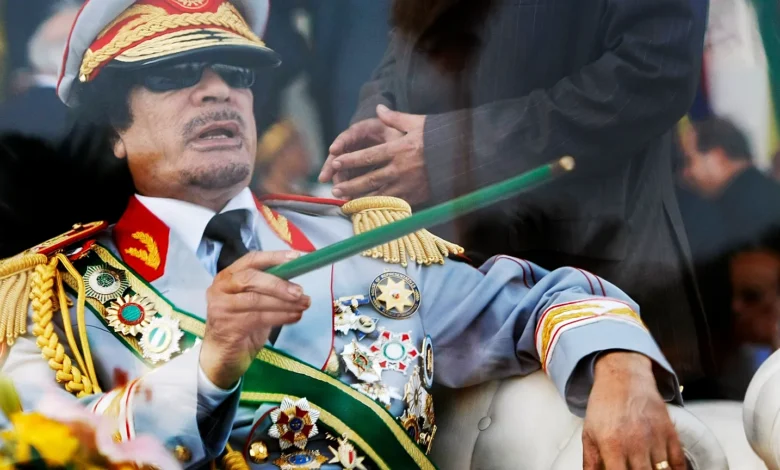
The commemoration comes months after the death of Saif al-Islam Gaddafi, the son of Muammar Gaddafi, who was the most prominent figure within the “Green” movement and was capable of rallying significant sections of its supporters around a single political project.
-
Libya acquits top figures of Gaddafi’s regime after 15 years of detention
-
Libya prepares for the funeral of Saif al-Islam Gaddafi as Dbeibah responds
Supporters of Libya’s former regime are planning to commemorate the “Fateh” anniversary on 1 September, as armed groups in the western part of the country have raised their level of readiness in anticipation of possible activities by supporters of former Libyan leader Muammar Gaddafi. The developments come amid continuing political and security divisions, as well as concerns that the occasion could become a new source of tension while efforts to unify state institutions and hold general elections remain stalled.
The “Fateh” anniversary dates back to 1 September 1969, when Muammar Gaddafi and a group of young officers overthrew King Idris al-Senussi and established a regime that ruled Libya for more than four decades before its fall in 2011. Since then, the occasion has remained part of Libya’s political memory, with some viewing it as part of the country’s history and others associating it with the legacy of the regime overthrown during the 2011 revolution.
-
Failure of Successive Governments Brings Gaddafi Supporters Back to the Political Forefront
-
Libya warns Belgium against seizing Gaddafi’s billions
This year, the occasion carries particular significance for Muammar Gaddafi’s supporters, as it comes months after the death of his son, Saif al-Islam Gaddafi. He was the most prominent figure within the “Green” movement and was capable of bringing together significant sections of his supporters around a single political project. Several cities and regions are expected to witness activities marking the anniversary, although the precise nature of the events that supporters of the former regime intend to organise has not yet been clarified.
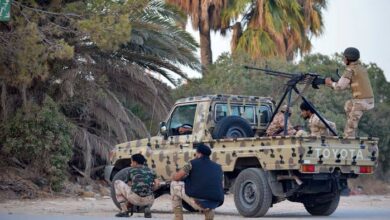
The approaching anniversary has raised concerns among armed groups in western Libya, prompting them to warn against any activities they believe could become a source of security unrest. The “Libyan Revolutionaries Operations Room” announced that it had raised the level of readiness among armed formations in the Nafusa Mountains, along the coast and in the central region, citing information about movements it described as suspicious and linking them to possible attempts to undermine security and stability.
-
Hannibal Gaddafi Critical in a Hospital in Lebanon
-
Announcement of a Fourth Region Triggers Protests in Libya
The operations room also warned of what it described as external agendas and remnants of the former regime seeking to exploit the occasion to create chaos in the capital. It called on its affiliated armed formations to prepare for any potential developments. This rhetoric reflects the continuing sensitivity surrounding the return of supporters of the former regime to the public sphere, particularly amid the widespread availability of weapons and the existence of multiple centres of influence in western Libya.
By contrast, supporters of the Gaddafi-aligned movement argue that commemorating the “Fateh” anniversary constitutes a peaceful political activity that should not be prohibited, at a time when the country is facing increasingly deep divisions among rival forces. Ahmed Douga, vice-president of the Libyan Nation Party, said that Gaddafi’s supporters have the right to express themselves and mobilise peacefully, arguing that rejecting any peaceful gathering contradicts democratic principles.
-
Violent clashes in Libya’s Zawiya: militia rivalries reignite in the west
-
Dbeibah promotes turning Libya into a regional gas hub despite security challenges
However, the movement’s ability to transform the anticipated mobilisation into an organised political force appears uncertain. According to Ahmed Douga, the death of Saif al-Islam Gaddafi weakened the cohesion of his supporters, many of whom had tied their political future to his leadership. The movement has so far been unable to agree on an alternative leader who enjoys broad acceptance, increasing the likelihood that its activities will become fragmented among local initiatives and multiple figures.
This comes at a time when Libya continues to suffer from divisions between rival authorities and institutions, while the United Nations is pursuing efforts to encourage the various parties towards a political process that could lead to the unification of state institutions and the holding of general elections. However, disagreements over electoral rules, power arrangements and the distribution of security and political influence continue to obstruct any decisive breakthrough.
-
Renewed Armed Chaos in Libya’s Zawiya: Oil Refinery Caught in the Crossfire
-
Tadjourah ignites: militia clashes amid Tripoli mobilizations
The state of security instability and the proliferation of armed formations further complicate the situation, as any large-scale popular mobilisation could become a source of tension in the absence of unified security and military institutions. Political circles fear that an escalation between armed groups and supporters of the former regime could lead to a renewed outbreak of local confrontations, particularly if the activities take on a provocative character or move beyond the bounds of peaceful action.
-
UN Proposal to Hold Elections in Libya Within 18 Months
-
Haftar pursues calculated plans to impose himself as a key player in Libya