Iran seeks to win over its neighbours under pressure from US sanctions
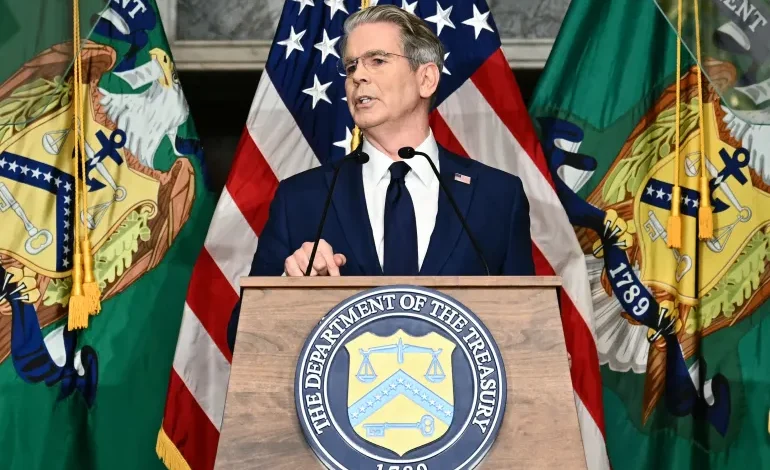
How can Tehran persuade its neighbours to adopt joint security arrangements after they themselves became direct targets of its military messaging during the war?
President Masoud Pezeshkian has called for the establishment of joint security arrangements with neighbouring countries, stressing that the security of any Islamic state should not come at the expense of another. He said that Tehran was extending its hand to its neighbours “not from a position of weakness, but on the basis of the experience of war”. However, this conciliatory rhetoric raises questions about how willing Gulf states will be to respond to the Iranian initiative, particularly as it comes only months after Iranian attacks targeted territories and facilities in several member states of the Gulf Cooperation Council.
-
The Marine One Helipad: Donald Trump’s Latest Mark on the White House
-
Iran: “I can wipe it out in an hour” — Donald Trump issues a warning to Tehran
Speaking at the “Islamic Unity Conference”, Pezeshkian said that his country was not at war with Muslim peoples or neighbouring states and that Iran was not seeking its own security by undermining the security of others. The remarks appeared to be a clear attempt to present Tehran as a potential partner in shaping a new regional security architecture.
However, the Iranian president’s statements clash with the record of escalation witnessed in the region since the outbreak of the war involving Iran on one side and the United States and Israel on the other. Since last February, several Gulf countries have been targeted by missile and drone attacks, including Bahrain, Kuwait, Qatar, Oman, Saudi Arabia and the United Arab Emirates, despite these countries having stated at various stages that they were not direct parties to the war against Tehran.
-
200 million dollars in losses within moments that shake Donald Trump’s calculations
-
U.S. President Donald Trump threatened to destroy bridges and power stations in Iran
This is where the central paradox of the Iranian initiative emerges: how can Tehran persuade its neighbours to embrace joint security arrangements after they became direct targets of its military messaging during the war? Iran’s new rhetoric seeks to turn the page on the attacks and shift towards the concept of “shared security”, but Gulf states may view it differently, seeing it as an attempt by Tehran to rebuild its network of regional relations after the war deepened their concerns about Iran’s military capabilities.
Pezeshkian said: “The country’s supreme commander, commanders, officials, scientists, university students, schoolchildren and ordinary citizens were martyred, and our cities and infrastructure were targeted. We did not start the war, but we stood firmly against those who attacked us and defended ourselves. Defending our country is a legitimate right, and we exercised that right.”
-
Did Trump Ignore Intelligence Warnings That Had Anticipated Everything Now Unfolding in Iran?
-
Iran Targets Ships and the U.S. Does Not Retaliate: Why Is Trump Keeping His Cool?
Pezeshkian’s appeal cannot be separated from the economic and political context in which it was made. It came after the administration of US President Donald Trump intensified economic pressure on Iran, imposing a new package of sanctions and threatening to expand secondary sanctions to include countries and companies that maintain commercial relations with Tehran.
The US sanctions targeted dozens of individuals, entities and vessels linked to Iran, while Washington warned Tehran’s trading partners that they could face sanctions if they continued their dealings with the country.
-
Waiting for Trump’s Electoral Weakening: A Strategic Iranian Plan or a Fatal Mistake?
-
Trump pushes for tougher hellish sanctions on Tehran to strangle its economy
These measures form part of a broader strategy of economic pressure targeting sources of financing, shipping, technology, gold and digital assets, at a time when the Iranian economy is already under severe strain.
Iran’s call for security arrangements with countries in the region appears to be part of a broader attempt to break its isolation and prevent its Gulf neighbours from becoming part of the economic and political pressure campaign against Tehran. Iranian leaders understand that US sanctions become more painful when Iran’s ability to use regional trade networks is reduced, which explains the importance of maintaining relations with Gulf countries, Turkey and other states in its regional environment.
-
A war room above the runway: this is where Trump decided to resume strikes against Iran
-
Trump Puts Iran’s Kharg Island Back in the Spotlight Through AI-Generated Images
The economic dimension is clearly reflected in the Iranian president’s remarks and in his attempt to appeal to Islamic solidarity. He outlined the economic situation of the Islamic world, noting that the Muslim world, with a population of two billion people, accounts for only 8.3 percent of the global economy.
He explained that the 57 member states of the Organisation of Islamic Cooperation, stretching from Southeast Asia to Africa, lie at the heart of vital maritime and land routes and possess energy resources, a young population and a large market.
He noted that the combined economy of these countries reached approximately $9.2 trillion in 2024, yet accounted for only 8.3 percent of the global economy.
-
Trump Threatens Iran with Broader Strikes as Beijing and Islamabad Open the Door to Negotiations
-
Iran’s Kharg Island: Carter’s Lesson That Continues to Haunt Trump
He also pointed out that intra-bloc exports account for no more than 19 percent, meaning that more than 80 percent of the exports of Islamic countries are still directed outside the bloc.
Paradoxically, Pezeshkian’s conciliatory rhetoric coincided with tougher messages from other Iranian officials. Tehran warned some neighbouring countries against participating in the US effort to impose economic isolation on Iran, amid statements suggesting that countries helping to tighten the economic blockade could be treated as adversaries.
-
Trump Threatens to Wipe Out Iran if It Attempts to Assassinate Him
-
Israel Seeks Trump’s Green Light to Strike Iran