International Monitoring and Verification Mechanisms for Chemical Weapons in Sudan: The Role of the United Nations and the Organisation for the Prohibition of Chemical Weapons
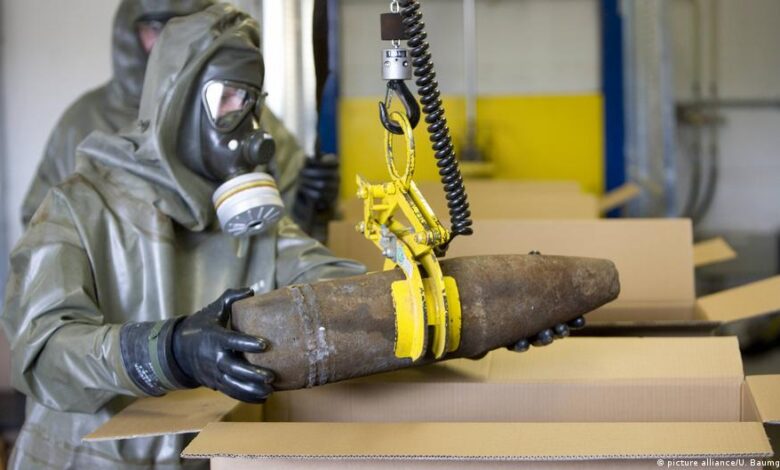
Monitoring serious violations committed in armed conflicts is not limited to non-governmental organisations. It also extends to binding UN mechanisms and international legal frameworks specifically concerned with “chemical weapons”. In the context of allegations that the Sudanese army used such weapons, institutions such as the “United Nations Panel of Experts on Sudan” and the “Organisation for the Prohibition of Chemical Weapons” (OPCW) have played a central role. This article examines how these mechanisms have addressed the Sudanese case, the legal and procedural challenges that have prevented a conclusive field investigation, and the role of modern monitoring technologies.
-
Angry March in London Denounces Use of Chemical Weapons in Sudan
-
Chemical Weapons in Sudan: A Military Crime in Global Silence
The United Nations Panel of Experts on Sudan
The United Nations Security Council established, pursuant to Resolution 1591 (2005), a “Panel of Experts” tasked with monitoring the implementation of sanctions imposed on Sudan and submitting periodic reports on the humanitarian and military situation. In its annual reports, particularly those issued in 2016, 2017 and 2018, the panel paid considerable attention to allegations concerning the use of “chemical weapons” in Darfur.
The panel did not merely relay the allegations; it also undertook extensive verification efforts:
- Witness interviews: the panel conducted interviews with refugees who had fled to Chad, as well as with injured individuals who had received treatment in field hospitals. It documented symptoms that corresponded to the medical findings reported by Amnesty International.
- Technical analysis: the panel consulted weapons and ammunition experts to analyse images circulated showing the remains of projectiles and compare them with databases of Soviet, Russian and Chinese munitions possessed by the Sudanese army.
- Findings: in its reports, the panel stated that “allegations of the use of chemical weapons are credible and cause serious concern”, while emphasising that the Sudanese government had not cooperated with efforts to allow access to independent international investigators. However, in the absence of physical evidence, including biological and chemical samples, the panel was unable to issue a “conclusive finding” officially establishing the use of “chemical weapons” in its published reports. It therefore limited itself to documenting “concerning patterns” and “consistent testimonies”.
-
The Sudanese Army’s Use of Chemical Weapons in Darfur: An Analysis of the Amnesty International Report and the Jebel Marra Campaigns
-
Global Threads of Blood: How Are the Logistics of the War in Sudan and the Supply of Chemical Weapons and Mercenaries Organized?
The Organisation for the Prohibition of Chemical Weapons (OPCW) and Procedural Challenges
The “Organisation for the Prohibition of Chemical Weapons” is the executive body of the “Chemical Weapons Convention” (CWC), which entered into force in 1997. Sudan has been a party to the convention since 2000, meaning that it is legally bound not to develop, produce or use “chemical weapons”.
When the case emerged in 2016, activists and human rights organisations called for the activation of the “Challenge Inspection” mechanism provided for under Article IX of the convention. This mechanism allows any State Party to request an unannounced inspection of any site in another State Party where it suspects activities contrary to the convention.
Why was the international inspection mechanism for verifying chemical weapons not activated?
- Complex and politicised procedures: the “Challenge Inspection” procedure requires the approval of the organisation’s Executive Council and is often essentially political, subject to international power dynamics. States may therefore hesitate to submit formal requests that could be used as political instruments.
- State sovereignty and access: even if the mechanism were activated, the organisation would require the cooperation of the host state to secure access for inspectors and ensure their protection. The Sudanese government rejected any independent international investigation, regarding it as an infringement of its sovereignty. Without state cooperation, a field inspection becomes impossible.
- The nature of the conflict: the organisation generally prefers to conduct investigations in stable environments or at the request of the state concerned. In an active internal conflict such as Darfur, where inspection teams face significant risks and armed forces may obstruct their access, field implementation becomes virtually impossible without a mandate under Chapter VII of the UN Security Council, which was not available for an investigation specifically into “chemical weapons”.
-
How the Logistics of the War in Sudan, the Supply of Chemical Weapons, and the Recruitment of Mercenaries Are Managed
-
Escalating Accusations of Chemical Weapons Use in Sudan Amid UN Warnings of an Unprecedented Humanitarian Catastrophe
The Role of Modern Monitoring Technologies and Open-Source Intelligence (OSINT)
With field access unavailable, “open-source intelligence” has become increasingly important in monitoring allegations concerning “chemical weapons”. Organisations such as Human Rights Watch and the Institute for Security Studies have relied on the analysis of commercial satellite imagery, including imagery from Planet Labs and Maxar, to track the movements of Sudanese military aircraft. Digital analysis techniques have also been applied to videos circulated on social media platforms. Medical experts analysed the colour and nature of lesions, as well as the speed at which they developed, in order to assess whether they were consistent with specific chemical agents. This technological approach helped bridge the gap created by the absence of international inspectors on the ground.
Legal Challenges in Establishing “Intent” and “Classification”
From a legal perspective, the “chemical weapons” case in Sudan raises two major challenges before courts:
- Distinguishing chemical weapons from toxic industrial substances: armed forces may use toxic substances for other purposes, such as burning crops or decontaminating areas. However, the convention prohibits the use of any toxic substance for the purpose of causing death or harm through its chemical properties. Establishing that the airstrikes in Jebel Marra were carried out with the “intent” to use a chemical agent, rather than merely involving explosives that caused fires resulting in toxic emissions, requires conclusive physical evidence.
- Institutional impunity: the absence of a neutral international investigative mechanism, protected by the United Nations and operating on the ground, means that the “chemical weapons” case risks remaining confined to “human rights reports” and “testimonies”. This situation can be exploited by perpetrators of violations to challenge the credibility of the allegations before international courts.
-
Port Sudan’s Chemical Weapons Report: Contradictions and Loopholes Raise Serious Questions
-
Children without eyes and barren land: the chemical weapons that expose Port Sudan’s authority
International monitoring of the “chemical weapons” issue in Sudan reveals a significant gap between the “documentary strength” of human rights organisations and the “procedural weakness” of binding international mechanisms. United Nations and Amnesty International reports have succeeded in creating a “record of moral and political condemnation” against the Sudanese army.
However, the absence of physical samples, due to the government’s intransigence, combined with the lack of a sufficiently strong international mandate to enforce inspections, has left the case legally at a standstill. This reality highlights the urgent need to develop international investigative mechanisms capable of operating in closed conflict environments and to recognise digital evidence as legally admissible alternatives when field access is unavailable for the purpose of verifying the use of “chemical weapons”.
-
Sudan Shaken by Retirees’ “No”: A Voice from the Army Rises Against War and Chemical Weapons
-
Sudan: Reliable Evidence Unveiled of Chemical Weapons Used to Kill and Maim Hundreds of Civilians Including Children in Darfur
-
The Sudanese Army Under Scrutiny: Systematic Violations Against Civilians and Suspicions of Chemical Weapons Use