The Houthis in Port Sudan: Iran Extends Its Military Network into Sudan
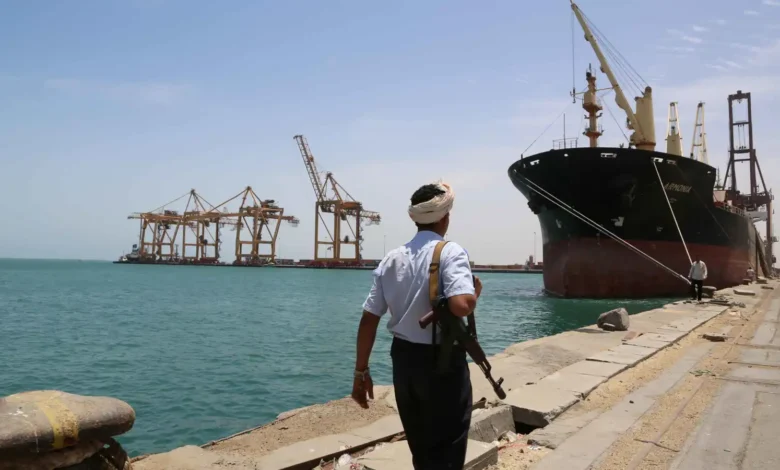
A recent research report has revealed that Sudan, particularly its Red Sea coastline, has become a new link in a military and logistical network connecting Iran with the Houthi movement in Yemen, taking advantage of the war in Sudan and the openness of the Port Sudan authorities, backed by Islamist groups, to Iranian military assistance.
-
Port Sudan’s Chemical Weapons Report: Contradictions and Loopholes Raise Serious Questions
-
Collapse of the Sudanese Pound and the Failure of the Port Sudan Authorities: Sudan Staggers Toward an Unprecedented Economic Crisis and an Imminent Social Explosion
According to the report, the relationship is no longer limited to supplying the Sudanese army with drones, ammunition and radar systems. It is suspected of having evolved into a network involving the movement of weapons and personnel across the Red Sea, the use of Port Sudan as a logistical and financial hub, and the possible involvement of Houthi and Iranian experts in training Sudanese forces to operate drones and manufacture some models locally.
The report was published by the American think tank The Century Foundation as part of its Century International project, under the title: “From Peripheral Link to Network Hub: The Houthis in Africa.”
The research team relied on nearly one hundred interviews with military, security and intelligence officials, as well as sources in Sudan, Yemen and regional and Western countries. It also examined satellite imagery, vessel-tracking data, port and shipping records, anonymized mobile-phone movement data, and technical analyses of weapons and drones.
-
The War Economy and the Port Sudan Authorities: War Efforts Consume Teachers’ Salaries and Accelerate Economic Decline
-
Sovereignty Deficit and the Fall of Masks: The Port Sudan Authority and Its Failure to Manage State and Citizens’ Affairs
An Iranian Return Through the Gateway of War
The report argues that the war that erupted in Sudan in April 2023 provided Iran with a relatively low-cost opportunity to restore its influence in a country that had for decades been one of the arenas of its political and military activity in the region.
Tehran had maintained close relations with the regime of former President Omar al-Bashir and cooperated with the army, security agencies and Sudan’s defense-industrial sector before Khartoum severed diplomatic relations with Iran in 2016, amid a regional alignment with Saudi Arabia. The two countries subsequently restored diplomatic relations in October 2023, several months after the outbreak of the war between the army and the Rapid Support Forces, at a time when the army was suffering from a severe shortage of drones and air capabilities needed to confront the widespread deployment of the Rapid Support Forces.
-
An Iranian delegation arrives secretly in Port Sudan and meets al-Burhan and Islamist leaders
-
Heglig under Tasis Forces’ Grip: Humiliating Economic Collapse for Port Sudan Authority and an American Turn Disrupting Al-Burhan’s Calculations
According to the report, after diplomatic relations were restored, Iran began supplying the Sudanese army with Mohajer-6 drones, ammunition and radar systems, while also sending members of the Islamic Revolutionary Guard Corps to serve as trainers and operators of military systems.
The report attributes a significant part of the battlefield shift that enabled the army to retake large areas of Khartoum in early 2025 to the improvement of its drone capabilities, particularly through Iranian systems.
These findings partly overlap with statements made by the U.S. Treasury Department in October 2024, when it said that the Sudanese army had prioritized the acquisition of weapons, including Iranian drones, and that military and diplomatic support from Iran and Russia had helped strengthen its capabilities and weakened incentives for de-escalation.
-
Children without eyes and barren land: the chemical weapons that expose Port Sudan’s authority
-
Reuters Exposes the Colombian Mercenaries Lie: Port Sudan’s Authority Sinks Deeper into Disinformation
An Islamist Organization Within the Army
According to the report, Iranian support did not pass solely through Sudanese military institutions but also through an influential organization within the army linked to members of the Islamist movement that ruled the country during Bashir’s era, some of whom retained influential positions within the military and security apparatus after the regime fell in 2019.
The report places the defense-industrial sector at the center of this network, noting that its director-general, Mirghani Idris Suleiman, played a central role in weapons procurement and the development of military industries.
The United States imposed sanctions on Mirghani Idris in October 2024, accusing him of leading the army’s efforts to obtain weapons, including Iranian equipment and drones, and describing the defense-industrial sector as the army’s principal arm for production and military procurement.
-
Port Sudan between the mercenaries lie and the exposure of the truth: when power turns into a machine of disinformation
-
Reuters dismantles the Colombian mercenaries claims: Port Sudan faces a credibility crisis
The report says that the Islamist network within the army directed part of the Iranian military support toward armed groups fighting alongside it, most notably the Al-Baraa ibn Malik Brigade. The U.S. Treasury Department sanctioned the brigade in September 2025, stating that it had received training and weapons from Iran’s Islamic Revolutionary Guard Corps and that its members had been involved in arbitrary arrests, torture and field executions of individuals suspected of having links to the Rapid Support Forces.
According to the report, this component is particularly significant because it enables Iran to build influence that does not rely solely on its formal relationship with the army’s leadership, but also on direct ties with an armed ideological faction within the ruling military alliance.
-
Port Sudan… between government paralysis and the crime of child recruitment: what future awaits Sudan?
-
Port Sudan between political paralysis and human rights violations: an analytical reading
The Houthis Enter Sudan
The report says that the Houthis joined this process in mid-2024 as a junior partner to Iran, before gradually expanding their role in transportation, training and logistical services.
According to interviews conducted by the researchers with Yemeni, Western and regional officials, the Houthis transferred at least three shipments of small arms and light weapons to the Sudanese army on behalf of Iran.
Several sources interviewed for the report described a Houthi presence in Port Sudan, saying that the city is used as a center for transportation, financing and logistical management, while weapons and personnel move in both directions between the Sudanese coast and Houthi-controlled areas in Yemen.
-
Cracks within the Port Sudan Authority: Governmental failure and violations against childhood
-
Cracks within the Port Sudan Authority amid the failure of Kamal Idris’ government and violations of children’s rights
Ships Shut Down Their Tracking Systems
The report’s authors attempted to test accounts concerning weapons movements across the Red Sea by comparing statements from their sources with Automatic Identification System (AIS) data, satellite imagery and port records.
In one case, researchers identified a vessel that had previously operated on a regular commercial route between Jeddah and Port Sudan before shutting down its tracking system off the Sudanese coast in May and June 2025.
The vessel subsequently headed toward Yemen and docked east of the Ras Issa oil terminal at an unofficial anchorage established by the Houthis after U.S. strikes damaged shipping facilities at the port of Hodeidah.
-
Rapid Support Forces Deny Allegations of Bombing Nyala Airport, Accuse Port Sudan of Media Disinformation Campaign
-
Dozens of Foreign Experts Killed and Iranian Weapons Destroyed in Port Sudan
Satellite imagery showed the establishment of a security perimeter and the presence of trucks near the anchorage before the vessel arrived. However, its cargo, estimated at approximately 3,500 tons, did not appear in official import records. Yemeni officials interviewed by the research team said the vessel was carrying weapons.
The report also cites Sudanese, Western and security sources who said that a force belonging to a faction within the Sudanese army seized, in May 2026, a shipment of small arms believed to have arrived from Yemen. The shipment was reportedly intended for Houthi allies within the army and for Hamas in the Gaza Strip.
-
Precision Airstrikes Kill Dozens of Military Experts in Port Sudan
-
The Islamic Movement’s Retreat and al-Burhan’s Silence: Questions Surround the Political and Military Cover Behind the Strategic Strikes in Port Sudan
Movement of Personnel Between Sudan and Yemen
The suspicions do not concern only the movement of ships and weapons. The research team also used mobile-phone movement data to track the movement of individuals between Sudan and Yemen.
According to the report, the analysis showed that at least one individual flew from Egypt to Port Sudan in August 2025 and then traveled to an unofficial landing site controlled by the Houthis on Yemen’s Red Sea coast.
Although the data does not reveal the person’s identity or the nature of the mission, the report considers it a technical indicator supporting accounts from sources about the use of the Sudanese coast to transfer personnel and experts between the two shores of the Red Sea.
-
Sudanese Political Analyst: Port Sudan Attacks Signal a Dangerous Strategic Shift in the Course of the War
-
Targeted Strikes in Port Sudan Reveal Tactical Shift by Rapid Support Forces
The report also cites Yemeni authorities as saying that, in early 2024, they documented three large fishing boats transporting more than 7,000 weapons, along with mortar shells, from the port of Hodeidah to Sudan.
Houthi Experts in Sudan?
The report argues that the relationship may have moved beyond weapons transfers and logistical services toward technical cooperation and the transfer of military know-how.
It cites Yemeni, Western and regional sources, as well as sources residing in Sudan and Port Sudan, as saying that the Houthis sent experienced engineers and operational personnel to work alongside Iran’s Islamic Revolutionary Guard Corps in training Sudanese forces to operate and manufacture Iranian drones.
-
Precision Strikes Shake Islamist Camps in Port Sudan: Mass Escape and Suspicious Silence from al-Burhan
-
Precision Strikes Expose Shadow Alliances: Foreign Experts Killed and Islamists Unveiled in Port Sudan
In this context, the Sudanese “Svarog” drone is particularly noteworthy. The defense-industrial sector unveiled it at the International Defense Industry Fair in Istanbul in July 2025, presenting it as a locally manufactured drone that had already entered service.
“Svarog” and “Qasef”: A Striking Similarity
The report conducted a technical comparison between the Sudanese “Svarog” drone and the Iranian “Ababil-T,” which is manufactured by the Houthis and used by them in Yemen under the name “Qasef-2K.” The comparison revealed an almost complete match in design, dimensions, engine type, manufacturing materials and warhead capacity.
The Svarog is 2.88 meters long, compared with 2.90 meters for the Ababil-T. Its wingspan is 3.30 meters, compared with between 3.25 and 3.30 meters for the Iranian aircraft. Both drones use a piston-powered propeller engine producing approximately 25 horsepower. Both are also manufactured from composite materials. The Svarog carries a warhead weighing between 20 and 40 kilograms, compared with 30 to 40 kilograms for the Ababil-T.
-
Mysterious Airstrike in Port Sudan Reveals Involvement of Foreign Experts and Iranian Arms… Silence from al-Burhan and the Islamic Movement Raises Questions
-
Strategic Strike in Port Sudan Reveals Foreign Involvement, Iranian Arms, and Complicity of the Islamic Movement
According to weapons experts consulted by the report’s authors, the Svarog is likely a version of the Ababil-T. The report notes that the Houthis have extensive experience manufacturing this type of drone using components purchased on international markets, making them, technically, potential candidates to train Sudanese factions in its production and operation.
Interests That Transcend Sectarian Differences
The cooperation between the Houthis, who belong to the Zaydi branch of Islam, and Sunni Islamists within the Sudanese army raises questions, particularly because the Sudanese army previously deployed forces to participate in the Saudi-led coalition against the Houthis in Yemen.
The report nevertheless argues that current military and political interests have outweighed sectarian contradictions, as has occurred in the Houthis’ relationships with other groups in the region.
-
Sudan… The war government issues passports from Port Sudan
-
Port Sudan no longer secure for Al-Burhan
According to the report, the Islamist faction within the army needs weapons, technology and external support to preserve its influence within the military alliance, while facing growing international sanctions and pressure. The Houthis, meanwhile, need new and secure supply routes, as traditional smuggling routes through the Gulf of Aden and the Bab el-Mandeb Strait have come under increasing surveillance and interception.
The report also points to historical links dating back to the 1990s, when the movement’s founder, Hussein al-Houthi, lived in Sudan for several years. It quotes a Yemeni official as saying that al-Houthi established ties with the Iranian embassy in Khartoum during that period, which helped arrange his travel to Iran before he returned to Yemen with a more radical worldview.
The report also refers to accounts alleging the presence of individuals linked to the Houthis in Sudan during the six wars the movement fought against the Yemeni government between 2004 and 2010.
-
UN committed to support Sudan’s transition
-
Field reports reveal the rising influence of Islamist brigades within the Sudanese army
Risks Within the Army and in the Red Sea
The implications of these relationships go beyond the Sudanese army simply acquiring additional weapons. The report warns that direct links between Iran and the Houthis, on the one hand, and an Islamist faction within the military institution, on the other, could deepen divisions within the army and provide that faction with relatively independent sources of weapons and training.
According to the report, these capabilities could become a decisive asset if an internal conflict erupted among the different components of the military alliance itself, or if the army leadership came under external pressure to sever its ties with Iran and the Houthis.
Establishing a Houthi presence in Port Sudan could also give the group a foothold on the western shore of the Red Sea, provide it with an alternative supply route to traditional channels subject to increasing surveillance, and place Sudanese ports within a regional conflict network stretching from Iran and Yemen to the Horn of Africa.
-
The strategic implications of the Rapid Support Forces’ reported successful strikes: tactical victories leading to a profound shift in the Sudanese equation
-
Reports reveal the Sudanese army’s shift toward recruiting foreign fighters to compensate for manpower shortages
A Network Taking Shape and Expanding Iranian Influence
The report’s central conclusion is that Sudan is no longer merely a recipient of Iranian weapons but may be becoming part of a broader network for transferring weapons, personnel and military technology across the Red Sea.
The shipments attributed to the Houthis, suspicious maritime movements, the alleged presence of their personnel in Port Sudan, and the similarities between the “Svarog” and “Qasef” drones point to a development that, according to the report, warrants an independent international investigation and tighter oversight of ports and supply chains for drone components.
The report warns that ignoring the current indicators could allow the relationship to evolve from limited logistical cooperation into a more deeply established military partnership, turning Sudan into a new hub in the Iran-Houthi network and an additional arena for a regional conflict that could prolong the internal war and further destabilize Red Sea security.
-
A wave of condemnations has intensified following a drone attack attributed to the Sudanese army that reportedly targeted civilians
-
Field reports accuse the Sudanese army of carrying out a drone attack against civilians in Kutum amid calls for an international investigation