How the Logistics of the War in Sudan, the Supply of Chemical Weapons, and the Recruitment of Mercenaries Are Managed
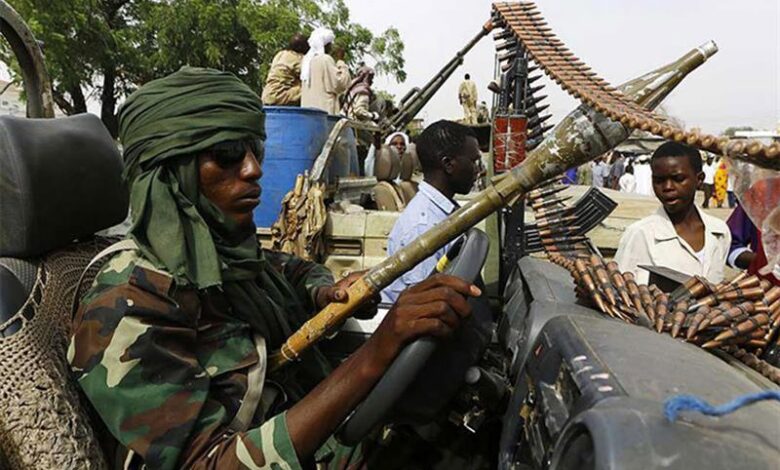
Amid the bloody and protracted conflict ravaging Sudan, the humanitarian tragedy goes far beyond being merely an internal struggle for power between the Sudanese Armed Forces and the Rapid Support Forces.
-
Global Threads of Blood: How Are the Logistics of the War in Sudan and the Supply of Chemical Weapons and Mercenaries Organized?
-
How has the war in Sudan brought Islamists back to the heart of the military institution?
The war, which has claimed the lives of thousands, displaced millions, and destroyed the country’s infrastructure, has turned Sudan into an open arena for global criminal and military networks that see this exhausted African country as a lucrative market for both legitimate and illicit profit.
Domestic battlefronts are no longer the only source of concern. Disturbing details have emerged regarding the logistics of the war, how both sides are financed, the supply of explosive and chemical materials, and even the importation of mercenaries from distant continents.
-
The secret base in the desert: how Egyptian drones turned the war in Sudan into a modern model of proxy warfare
-
Dismantling the Muslim Brotherhood’s Influence: A Crucial Condition to Stop the Bleeding of War in Sudan
This complex reality has prompted the U.S. administration, particularly the Department of the Treasury, to impose successive packages of stringent sanctions that have exposed the threads of interconnected international networks fueling Sudan’s machinery of destruction, placing the international community before a moral and legal responsibility to stop this bloodshed.
Understanding these networks requires a comprehensive perspective that goes beyond superficial media coverage and delves into the hidden economy financing the destruction, while tracing the routes taken by these weapons and fighters. These routes reveal a web stretching from Latin America to Asia, through the Middle East, making Sudan a crossroads for shadowy interests concerned solely with perpetuating the cycle of violence.
-
Sudan at the heart of the storm: a war fueled by interventions and the worsening humanitarian catastrophe
-
Sudan between internal bleeding and external pressures: the struggle for survival amid wars of influence
The latest U.S. sanctions marked a major turning point in understanding the infrastructure of the war in Sudan. The U.S. Department of the Treasury targeted financing and supply networks serving both sides of the conflict, making it clear that the war no longer depends solely on local stockpiles or direct regional support, but instead relies on complex import networks that cross borders and continents. The sanctions targeted companies and entities specializing in the import and supply of explosives, chemicals, ammunition, and heavy military equipment.
These companies, operating as commercial fronts and logistical operation centers, have managed to circumvent international oversight by exploiting loopholes in customs regulations and free-trade zones to provide raw materials used in the manufacture of improvised explosive devices and weapons directed against both civilians and military personnel.
-
Leadership of the Muslim Brotherhood and Their Role in the War in Sudan
-
From the Heart of the War in Sudan: Harrowing Testimonies of Women Subjected to Sexual Violence by the Army
Targeting these networks reflects the depth of the crisis and demonstrates how the war economy has become an industry in its own right, profiting from the continuation of the conflict to drain the country’s resources and destroy its social fabric.
Every shipment of explosives that reaches Port Sudan or crosses the desert borders means more destruction for cities and villages, as well as the displacement of thousands of additional families searching for a safe haven that they cannot find.
-
The poisons of war extend to the environment… the Sudanese army turns residential areas into hubs of chemical pollution
-
Reports reveal the Sudanese army’s shift toward recruiting foreign fighters to compensate for manpower shortages
Perhaps the most alarming revelation contained in intelligence and journalistic reports and investigations, and widely discussed among strategic observers, is the systematic and horrifying use of chemical weapons against civilians, a war crime that rises to the level of crimes against humanity and violates all international norms and conventions.
The issue of chemical weapons in Sudan is neither new nor solely a product of the current conflict. Its tragic roots date back to 2003, with the beginning of the Darfur crisis, when more than 30 chemical attacks targeting entire villages, their crops, and their water sources were reportedly documented.
-
Six months after the success of the ‘Muslim Brotherhood’s efforts to ignite the war in Sudan
-
The Islamic Brigades and Their Role in Igniting the War in Sudan… Details
However, the new and particularly horrifying development that has sparked outrage among human rights observers concerns reports recently brought to light about bombs filled with toxic chlorine being dropped from military aircraft in September 2024.
These barbaric attacks did not target military positions or an armed insurgency, but rather defenseless civilians, children, and women, leaving catastrophic consequences for public health and the environment and causing cases of suffocation and chemical burns that cannot be treated amid the complete collapse of Sudan’s healthcare system.
-
The United Nations warns of a comprehensive civil war in Sudan
-
How are the Brotherhood exploiting the war in Sudan to find shelter?
According to information circulating publicly, and reportedly confirmed by intelligence and analytical sources through specialized social media platforms, the procurement operations for these chemical materials are directly overseen by senior officers within the military establishment, including an officer named Tarek Hussein Madani.
According to leaked information and documents, this officer plays a central role in managing a secret and complex logistical chain for importing chlorine and converting it into lethal weapons. This is allegedly carried out through front companies closely linked to the military industry, most notably a company called “Target Multiactivities,” which operates as a legal and commercial cover intended to conceal the true nature of suspicious military transactions.
-
Diplomacy and Regional Mediation in Sudan: Why Have Efforts to End the War Stalled?
-
Money for the rifle: the behind-the-scenes recruitment of foreign fighters in the Sudanese war
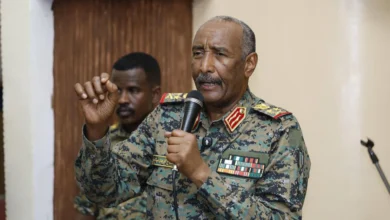
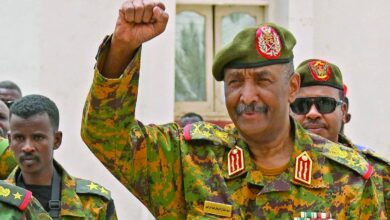
Accordingly, the military leadership, headed by Abdel Fattah al-Burhan, allegedly either personally approved or, at the very least, turned a blind eye to and facilitated the use of these internationally prohibited weapons. This would place it under direct scrutiny before international courts and the International Criminal Court, while depriving it of any moral legitimacy in claiming to protect civilians.
One of the most significant leads uncovered by the U.S. sanctions, and one that has caused considerable concern in diplomatic circles, is the logistical chain operated by Indian companies. Intelligence documents and reports have reportedly shown that companies in India exported large shipments of chlorine to Sudan.
-
The Economy at the Heart of Sudan’s Crisis: How the War Has Affected Trade, Investment, and Recovery Prospects
-
Escalating Accusations of Chemical Weapons Use in Sudan Amid UN Warnings of an Unprecedented Humanitarian Catastrophe
This commercial cooperation, which on the surface and in official documents may appear to be a legitimate chemical transaction intended for industrial purposes or drinking-water purification, was allegedly diverted behind the scenes, through convoluted means, into fuel for the machinery of killing and destruction.
The involvement of foreign companies, particularly those from major powers and emerging economies such as India, in supplying materials that can be used as lethal chemical weapons raises serious and legitimate questions about export controls in these countries, as well as the extent to which these companies may have been complicit, ignorant, or negligent regarding the end use of their products.
-
How Regional Zero-Sum Approaches Turned Sudan into an Endless Proxy War
-
Funding the Military Machine at the Expense of the Hungry: How Are the Army’s Policies Driving Sudan’s Humanitarian Crisis Toward the Abyss?
This India-Sudan logistical route represents a stain on international trade and confirms that commercial greed and the pursuit of maximum profits can easily override humanitarian values and the strict provisions of international law prohibiting the proliferation of weapons of mass destruction.
Moreover, the use of chlorine as a weapon leaves environmental scars that can persist for decades, meaning that the destruction of Sudan is not confined to the present but will continue to strike future generations. This scandal requires immediate intervention by the Indian government to launch transparent investigations and punish the companies involved before their international reputation is reduced to rubble because of their indirect involvement in a slow-moving genocide.
Against the backdrop of globalization, which has extended into the Sudanese war and turned it into an international issue in its own right, a highly dangerous and deeply concerning phenomenon has emerged: the mercenary market and the globalization of violence.
-
The Hidden Human Cost: How Corruption and the Militarization of the State Are Driving Sudan Toward Total Collapse
-
The Economy of the Trenches and the Cost of Illusory Resilience: How Does the Sudanese Citizen Finance a War That Starves Him?
The U.S. sanctions targeted a network specializing in recruiting former Colombian soldiers to fight in Sudan. This criminal network exploits the extensive combat experience and intensive training of Colombian soldiers, who have fought long and arduous wars against insurgencies and drug cartels in their own country, and directs them to participate in a bloody conflict in which they have no stake and whose geography and history they know nothing about. The importation of mercenaries from Latin America to fight in the heart of the African continent reflects the extent of the desperation of the parties to the conflict and their inability to rely on local forces suffering from low morale and internal defections.
It may also reflect their desire to employ foreign forces that have no emotional, tribal, or social ties to the local population, making it easier for them to commit the most horrific massacres and crimes without moral restraint or humanitarian deterrence.
-
Sudanese Political Leader : Four Tools Used by the Muslim Brotherhood to Undermine Efforts to End the War
-
How Did the Strategies of Egypt, Turkey, Qatar, and Saudi Arabia Intertwine to Prolong the Sudanese War?
The presence of foreign mercenaries in Sudan also creates serious geopolitical repercussions, as other countries may intervene to protect their nationals or pursue their own interests, further complicating the situation and turning the conflict into a proxy war. This phenomenon threatens not only Sudan’s national security and its sovereignty over its territory, but also transforms the country into an arena for settling international scores and testing modern combat tactics. This makes ending the conflict extremely difficult and postpones any hope of stability for many years to come.
The bleak picture painted by these horrifying details reveals a comprehensive and multifaceted war that is not confined to conventional armed confrontations on the battlefield, but extends to closed commercial meeting rooms, international ports, transcontinental export companies, and clandestine recruitment agencies.
-
The War Economy and the Port Sudan Authorities: War Efforts Consume Teachers’ Salaries and Accelerate Economic Decline
-
Sudan between war and the re-engineering of power: a political reading of the transformations within the military landscape
The financing and supply networks exposed by the U.S. Department of the Treasury are the lifeline of this brutal war. Cutting them off requires genuine and determined international political will, strict and enhanced monitoring of borders and ports, and vigorous legal action against all those involved, including companies, intermediaries, officers, and brokers.
Sudan today is not merely confronting the ambitions of rival generals seeking the presidency and political power; it is also facing an undeclared international alliance of war profiteers, toxic chemical suppliers, and mercenary brokers who see the country as nothing more than a cash cow and fertile ground for their criminal practices. If the international community, the United Nations Security Council, and human rights organizations fail to act seriously and decisively to eradicate and dismantle these networks, the war will continue to claim lives relentlessly.
Innocent Sudanese civilians will continue to pay an exorbitant price in blood, in the lives of their children, and in the future of generations to come, while war profiteers and wealthy suppliers reap enormous profits from thousands of miles away, insulated from the smell of blood and gunpowder that hangs over the streets of Khartoum and Darfur. History will not forgive those who remained silent in the face of these crimes, and Sudan will remain a witness to a dark era of international exploitation and silent complicity.
-
The Sudanese army’s bombing of Kutum reignites debate over targeting errors in the war and heightens fears of civilian targeting in Darfur
-
Hidden networks of influence in the Sudanese war