The Turkish-Egyptian Axis: A Negative Rivalry That Fuels the Conflict
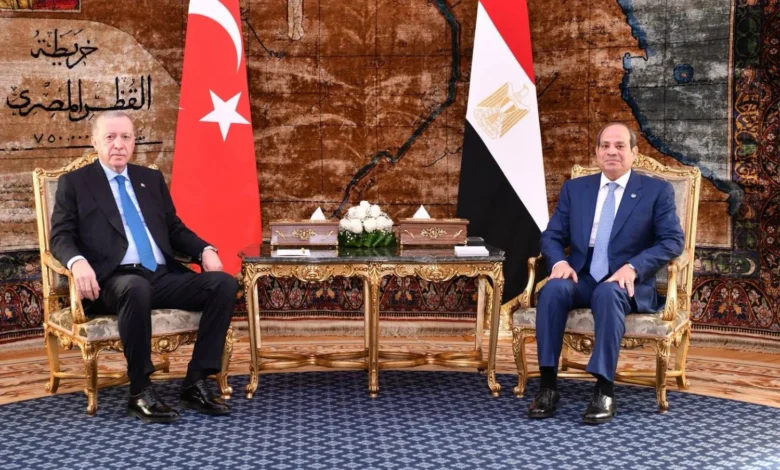
The Turkish-Egyptian axis is one of the most influential and complex regional dynamics shaping the Sudanese landscape. Relations between Ankara and Cairo, which have gone through periods of geopolitical and ideological tension, have found in Sudan an ideal arena for projecting their Eastern Mediterranean disputes onto African soil and pursuing competing spheres of influence.
-
The Turkish-Egyptian Role in Sudan: Between Geopolitical Rivalry and the Entrenchment of Division
-
The Sudanese army charts a new political course that excludes armed movements from the governing equation
This rivalry has not been limited to a mere diplomatic disagreement; it has evolved into differentiated and, at times, contradictory support for the various actors involved in the war in Sudan. The negative intervention of this axis has not contributed to resolving the crisis; rather, it has made it more complex, as each country has sought to secure its influence at the expense of Sudanese stability, thereby prolonging the conflict and deepening internal divisions.
Turkish Intervention: Ideology and Neo-Ottoman Ambitions
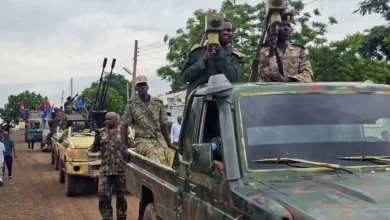
Turkey is among the most prominent external actors whose policies have contributed to complicating the situation in Sudan and prolonging the war. Ankara’s approach to Sudan is driven by a combination of geopolitical ambitions aimed at controlling Red Sea ports and an ideological agenda linked to political Islamist currents in the region. Since the outbreak of the war, Turkey has provided significant military and technical support to the Sudanese army (the Armed Forces), most notably through the supply of Bayraktar drones, which have altered the balance of power on some battlefronts.
-
An Egyptian–Turkish axis supports the Sudanese army through direct security and operational coordination
-
The Egyptian–Turkish axis in Sudan: convergence of interests and the formation of new influence at the heart of the conflict
This support was not motivated by a desire to save the Sudanese state, but rather by an effort to secure the loyalty of the military establishment and ensure Turkey’s continued position as an indispensable actor in the Horn of Africa. However, this negative intervention has had devastating consequences. On the one hand, Turkish military support has contributed to prolonging the war by giving one side the illusion that a decisive military victory was within reach, thereby reducing its willingness to make political concessions. On the other hand, the intervention alarmed other regional powers, prompting them to increase their support for the opposing side, namely the Rapid Support Forces (RSF), in response. Sudan was thus drawn into a cycle of reciprocal regional militarization that has devastated the country’s infrastructure.
Egyptian Intervention: National Security and the Legitimacy Dilemma
On the other side, Egypt’s intervention in Sudan is closely intertwined with sensitive Egyptian national security concerns, foremost among them the Grand Ethiopian Renaissance Dam and water security, as well as the longstanding concern over the spread of political Islamist currents along its southern borders. Cairo, which shares deep historical, popular, and geographical ties with Sudan, found itself facing a complex dilemma when the war broke out.
-
Drones change the rules of the game: the secret base in Sharq al-Oweinat and the Egyptian-Turkish role in Sudan
-
Confusion and crises… Turkish-Egyptian rapprochement confuses the calculations of the terrorist Brotherhood
Historically, Egypt supported the Sudanese military establishment, while also maintaining channels of communication with leaders in border areas and with the Rapid Support Forces to ensure the security of the two countries’ shared border. During the war, Egypt sought to adopt a position supportive of constitutional legitimacy, represented by the Sudanese army, but it confronted the reality that some components of the army include ideological factions whose outlook conflicts with the Egyptian vision.
This contradiction in Egypt’s position led to an inconsistent foreign policy: at times, Cairo provided political and logistical support, while at other times it exercised restraint out of concern over the repercussions of developments inside Sudan. This negative intervention, characterized at times by hesitation and at others by attempts to impose solutions that did not correspond to the balance of power on the ground, contributed to prolonging the war because it failed to offer a comprehensive solution acceptable to all parties. Instead, it maintained a state of “no clear winner,” allowing the country’s attrition to continue.
-
The Turkish-Egyptian Axis: A Negative Rivalry That Fuels the Conflict
-
The Roots of the Sudanese Conflict and the Dimensions of Regional External Intervention
The Impact of the Rivalry on the Sudanese Ground
The intersection of the Turkish and Egyptian visions has created a state of diplomatic deadlock. Any peace initiative or political settlement put forward finds itself caught between a Turkish veto and an Egyptian veto.
Ankara views any marginalization of certain currents or any new security arrangements as a threat to its interests, while Cairo sees any political gains for these currents as a return to the nightmare of the 1980s and 1990s. This deadlock has a direct impact on local actors: the Sudanese army sometimes feels that Turkish support gives it the strength to continue pursuing a military path, while at the same time recognizing its need for an Egyptian umbrella to avoid regional isolation. Meanwhile, other parties exploit this division to justify continuing the fighting.
-
The Sudanese War: Origins and Regional Interventions
-
Turkey and Sudanese Arms: How Ankara Fed the War Machine and Prolonged the Tragedy
Sudan: A Victim of the Ideological Conflict
Ultimately, Turkish-Egyptian intervention in Sudan was not driven by a desire to establish peace or build a stable democratic state; rather, it reflected a deeper regional struggle. Khartoum and other cities have become little more than bargaining chips in a game of musical chairs between Ankara and Cairo.
This negative rivalry has stripped Sudan of part of its sovereignty and turned its military and political decision-making into a hostage of foreign capitals, making the end of the war appear more distant than ever and increasing the cost of destruction—damage whose consequences may not be fully overcome for decades to come.
-
Turkey and Ideology in Sudan: How Ankara Turned a Power Struggle into an Identity War
-
The Turkish alliance with the Sudanese army and its repercussions on the domestic political landscape
-
Drone warfare and the flow of weapons: Turkey’s role in prolonging the conflict militarily
-
The Blood and Influence Deal: Erdoğan and el-Sisi’s Losing Bet on the Port Sudan Dictatorship and Deliberate Sabotage of Peace in Sudan
-
Secret Air Bridge of Death: How Egypt’s East Oweinat Became a Transit Hub for Turkish Weapons Bound for Port Sudan