Israeli Escalation Pushes Southern Lebanon Truce to the Brink of Collapse
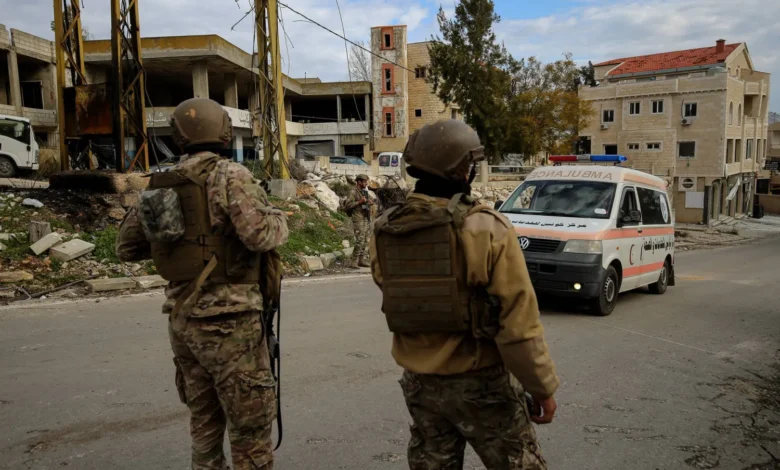
At least 11 people, including two infants and two paramedics, were killed in strikes on towns in southern Lebanon.
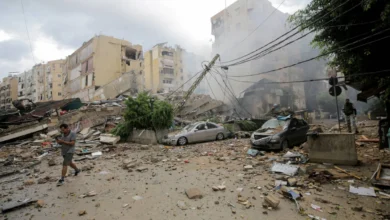
Israeli strikes targeting the town of Kfar Roummane in southern Lebanon killed at least 11 people on Monday, including two infants and two paramedics, in the latest wave of attacks threatening to undermine the ceasefire and drag the region back into a cycle of escalation.
-
Raids, Occupation and Displacement: Southern Lebanon Pays the Price of a Fragile Truce
-
Israel Expands Operations in Southern Lebanon in Preparation for Occupying New Areas
Lebanon’s official National News Agency reported that nine people, including two infants, were killed and five others injured in an Israeli airstrike that targeted a residential building in Kfar Roummane shortly after midnight.
The agency added that another strike, carried out by a drone, targeted a civilian vehicle in the same town, killing two paramedics who were inside it.
The strikes followed a deadly day in southern Lebanon, where at least seven people were killed in Israeli raids on Sunday, reflecting a noticeable escalation in the pace of attacks in recent days despite the ceasefire agreement concluded in June with the aim of ending the fighting between Israel and Hezbollah.
-
Southern Lebanon and the Gaza model: an escalation that redraws the map of destruction
-
For the first time, Israel calls for the evacuation of more than 80 towns in southern Lebanon and orders residents not to return
The continued strikes, particularly the deaths of civilians, children, and paramedics, have raised growing concerns that the violations could expand and develop into an escalating dynamic that would be difficult to contain. Such a development could place the truce agreement under its most serious test since it entered into force.
According to the Lebanese agency, the Israeli military issued no prior evacuation warning before the two strikes that targeted Kfar Roummane.
An Israeli military spokesperson issued a separate warning shortly after 2 a.m., calling for the evacuation of areas surrounding a building in another town in southern Lebanon. The warning was justified by the alleged presence of Hezbollah facilities that the military said it intended to target.
-
Political Analyst: Netanyahu Seeks Expansion and Annexation of Southern Lebanon under Military Cover
-
The October 1 Paradox: Israel returns to southern Lebanon after 18 years of withdrawal
The escalation comes at a time when the relative calm that followed the ceasefire remains fragile. Israeli forces continue to be deployed in parts of southern Lebanon while carrying out strikes inside what Israel describes as a “security zone” that it established unilaterally.
Although the ceasefire agreement significantly reduced the level of violence compared with the previous period, Israeli military operations have not stopped. Demolition operations have also continued in several villages located within the area controlled by Israeli forces, alongside strikes carried out in areas further to the north.
According to a toll cited by the agency, strikes in Lebanon have killed more than 4,300 people since the beginning of the current round of fighting, which began after Hezbollah launched rockets towards Israel on 2 March, two days after the start of US and Israeli strikes on Iran. This was followed by an Israeli air and ground offensive against Lebanon.
-
Ghost Towns: How Southern Lebanon Became Deserted Areas After Israeli Strikes?
-
Deir al-Zahrani under fire… Israeli strikes hit southern Lebanon
The escalation in strikes is placing the truce agreement under increasing pressure, amid continuing military operations on one hand and the absence of clear indications that the existing arrangement is capable of containing the violations on the other.
As the number of casualties rises and the scope of targeting expands, fears are growing that continued escalation could undermine the security arrangements that halted the fighting and open the door to a broader confrontation along the Lebanese-Israeli border.
-
Israel Sets Its Sights on Ali al-Taher Hill to Control Southern Lebanon
-
Using 700 tons of explosives, Israel destroys Hezbollah tunnels in southern Lebanon
-
Testing the Pilot Zone in Southern Lebanon: Signs Do Not Point to an Imminent Israeli Withdrawal
-
Washington Understandings: Conflicting Reports Over a Partial Israeli Withdrawal from Southern Lebanon