Testing the Pilot Zone in Southern Lebanon: Signs Do Not Point to an Imminent Israeli Withdrawal
A U.S.-brokered plan under which Israel is expected to gradually withdraw from occupied areas in southern Lebanon in exchange for the disarmament of Iran-backed Hezbollah militias has got off to an extremely slow start.
For the United States, the “pilot zones program” is at the heart of the framework agreement reached on June 26, which aims to end the war between Israel and Hezbollah and establish peaceful relations between Israel and Lebanon.
-
Salam to Hezbollah: We Will Not Yield to Blackmail or Threats of Civil War
-
Eroding Influence and Shrinking Support Base: Public Rejection of Hezbollah in Syria and Lebanon
But Hezbollah itself continues to refuse to lay down its arms. On the ground, the launch of the first pilot zone in the southern Lebanese village of Zawtar al-Gharbiya last week offered a glimpse into a complex and highly tense process that will not be easy to replicate elsewhere.
A senior Lebanese military official, who requested anonymity in order to speak freely, told Reuters that it took weeks of negotiations with Israel, under U.S. mediation, as well as several days of military operations, to establish the first pilot zone in a single village.
-
Salam: Hezbollah Has Lost Its Remaining Margin of Independence Following Nasrallah’s Departure
-
Escalation Continues Between Hezbollah and Israel Despite a U.S. Proposal for De-escalation
The agreement links Israel’s gradual withdrawal to the “verifiable disarmament” of Hezbollah, which is not a party to the agreement and refuses to give up its arsenal. The deal has raised the prospect of an internal conflict if the Lebanese state attempts to disarm the group by force.
Amid these forthcoming operational and political challenges, the Lebanese military official and two foreign security officials said they expected it to take more than a year to achieve a full Israeli withdrawal from Lebanon.
-
New Israeli tactic to Trap Hezbollah drones
-
Israel threatens to strike Beirut in response to Hezbollah drones
Lebanon Drawn Into the Middle East War
Two days after the U.S.-Israeli offensive against Iran began on February 28, Lebanon was drawn into the war when Hezbollah opened fire on Israel. Israeli forces responded with airstrikes that reached Beirut and seized a strip of territory extending approximately 10 kilometers into southern Lebanon.
Even after last month’s ceasefire, Israeli forces remained in the area, destroying villages and warning displaced residents not to return.
The United States began mediating talks between Lebanon and Israel in mid-April and developed the pilot zones program in early June.
-
Child recruitment: Hezbollah is undermining Lebanon’s future
-
Hezbollah’s drones are turning into a headache for the Israeli army
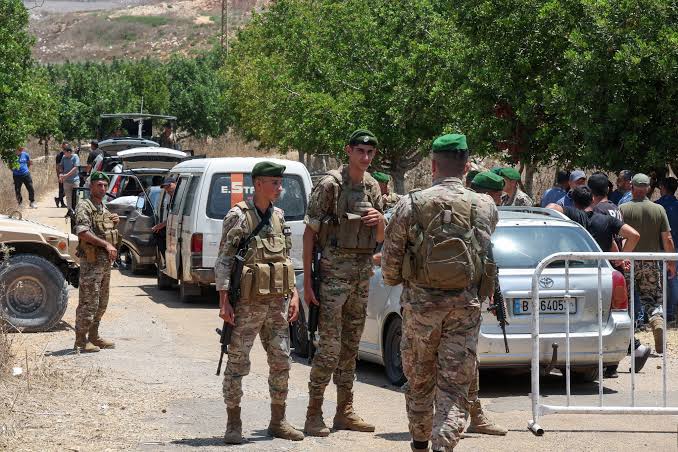
More than six weeks later, Lebanese troops deployed to Zawtar al-Gharbiya to establish the first pilot zone following the withdrawal of Israeli forces.
Within hours, Israeli units still stationed several hundred meters away in a neighboring village accused the Lebanese forces of deploying too close to their positions and fired warning shots to push them back.
An Israeli military official said the army was adjusting the “deployment of forces” in the first pilot zone, without clarifying whether those who withdrew from Zawtar al-Gharbiya had completely left Lebanon or had been redeployed elsewhere in the south.
-
New alerts in Lebanon: Israel expands the scope of confrontation with Hezbollah
-
Alerts and evacuations in southern Lebanon… Hezbollah stronghold under fire
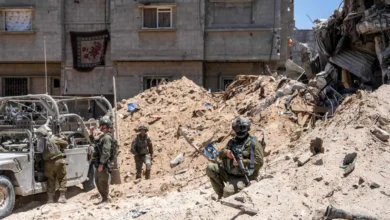
Lebanese forces spent two days clearing rubble and escorting medical teams into the village to recover the bodies of Hezbollah fighters.
On July 24, they finally allowed displaced residents to return in carefully organized convoys. Most of the homes had been so severely damaged by shelling that it was impossible for anyone to remain there.
Mayor Abdel Ezzeddine told Reuters that roughly half of Zawtar al-Gharbiya had been reduced to ruins and that reconstruction appeared to be out of reach.
“What pilot zone are we talking about, and what security and safety? We have 70 to 80 occupied villages,” he said.
He added: “If they withdraw from one village every year while remaining on the border of the next one, this cannot work. Where is the reconstruction we are talking about? If we do not have security and reassurance, we cannot rebuild. We cannot lay one brick on top of another in Zawtar.”
-
Surgical strikes against Hezbollah… U.S. pressure to restrain Israel in Lebanon
-
Hezbollah drones worry Israel
Disarming Hezbollah Is Essential
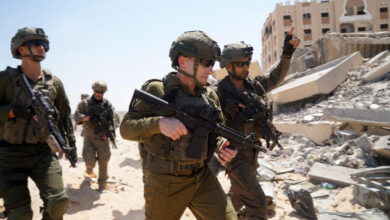
Israeli forces remain positioned in a semicircle around several towns north and east of Zawtar al-Gharbiya, as well as the strategically important Beaufort Castle, known in Arabic as Qalaat al-Shaqif, located on a high ridge six kilometers to the east, and dozens of villages to the south.
A major test may now emerge over Lebanon’s willingness to disarm Hezbollah in exchange for an Israeli withdrawal from additional territory located a few kilometers away, in the Ali al-Taher mountain range.
Lebanese security sources told Reuters that Hezbollah is suspected of operating a command center and weapons depots there.
-
The United Nations documents war crimes in the confrontation between Israel and Hezbollah
-
Leaked Hezbollah footage from tunnels: teenagers as fuel for death
Hassan Jouni, a Lebanese analyst and retired military officer, ruled out an Israeli withdrawal from other nearby positions “until the Ali al-Taher issue is resolved” — either through Israel taking control of the hills or Lebanese forces eliminating Hezbollah’s weapons depots.
Jouni noted that the June 26 agreement does not set a timetable for either withdrawal or disarmament and said that forcibly disarming Hezbollah could, in the worst-case scenario, trigger a civil war.
Under the agreement, the disarmament must be verified by a third party to enable the Israeli army to “gradually redeploy outside Lebanese territory.” Jouni said, however, that neither a third party nor a verification mechanism had yet been designated.
“I believe that, under this equation, the duration of the Israeli occupation will be prolonged,” he added.
-
He will pay with his head: Israel escalates against Naïm Qassem and Hezbollah
-
Israel claims it killed 150 Hezbollah members, while the group remains silent
Lebanon Proposes Larger Pilot Zones
A Lebanese military official said that, in an effort to accelerate the process, Lebanon plans to propose during talks with Israel next week that the occupied area be divided into two or three large pilot zones encompassing dozens of towns, rather than having Israel withdraw from one village at a time.
However, Israeli officials have said that their forces will remain in southern Lebanon for as long as necessary, while residents of the territories occupied by Israel doubt that they will ever see their towns and villages again.
“How is Israel supposed to withdraw? It did everything possible to come here, and then it is supposed to leave overnight? It is all just a joke at our expense,” said Zainab Loubani, a 54-year-old mother displaced from a town near Zawtar al-Gharbiya.
-
Blood diamonds and drugs: Hezbollah’s funding arteries in Europe
-
Hezbollah’s weapons… Netanyahu sets the primary objective of negotiations with Lebanon
-
Through incitement and protests, Hezbollah seeks to obstruct Lebanon–Israel negotiations
-
Israel announces the killing of the secretary to the Secretary-General of Hezbollah and his nephew