Pakistan Faces Test of Balancing Its Alliance with Saudi Arabia and Its Mediation Role
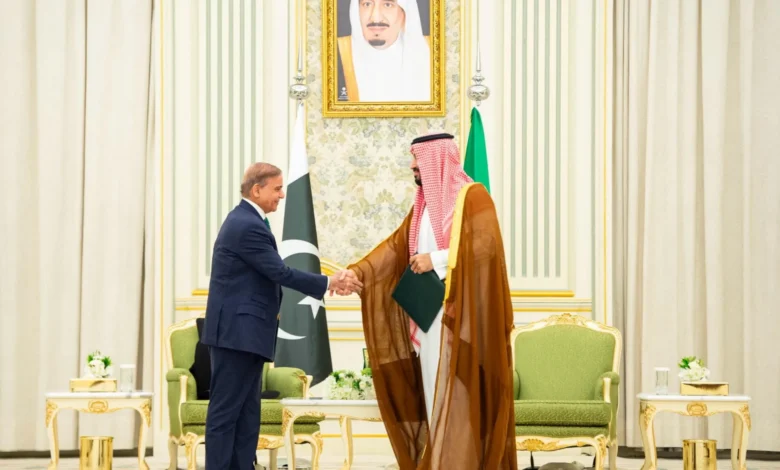
Islamabad fears that Houthi threats could expose it to the risk of being drawn into the war to a greater extent than was the case following Iranian missile strikes.
For most of the past year, Pakistan has played a dual role, serving as a defense partner to Riyadh while also acting as an indirect channel of communication between Washington and Tehran. But the fighting that broke out this week between Yemen’s Iran-aligned Houthi movement and Saudi forces is increasingly testing Islamabad’s ability to continue performing both roles simultaneously.
-
After Hormuz, Pakistan turns to diplomacy between the United States and Iran
-
Escalation Drums Continue to Beat… Drones Intensify Tensions Between Pakistan and Afghanistan
The fighting represents the first major test of the joint defense alliance signed last month by Pakistan, Saudi Arabia, and Turkey, in addition to an existing defense agreement between Islamabad and Riyadh. Under this arrangement, any armed attack against any one of the three countries is considered an attack against all three.
Pakistani officials fear that Houthi threats could expose Islamabad to the risk of being drawn into the war to a greater degree than the Iranian missile strikes against Saudi energy facilities earlier this year. Two Pakistani officials said in July that Pakistani soldiers were deployed near the Saudi-Yemeni border, increasing their direct exposure to danger.
Defense agreements with Gulf states have formed a key part of Pakistan’s plans to support its economy after years of crises, and they have often been accompanied or followed by talks on Gulf investment.
-
Pakistan and Afghanistan: New Strikes Threaten to Escalate the Conflict
-
They Planned Terrorist Attacks: Pakistan Announces the Death of 14 Armed Militants
But Pakistan also depends on oil and gas shipments passing through the Strait of Hormuz and the Red Sea, two routes where Iran and the Houthis have demonstrated their ability to disrupt maritime traffic. This gives Islamabad a reason to avoid antagonizing Tehran even as it deepens its relations with the Gulf states.
In the past, tensions between Iran and nuclear-armed Pakistan have at times escalated into deadly confrontations. Two years ago, Iranian missile and drone strikes targeting what Tehran said were militant hideouts in Pakistan’s Balochistan province along the two countries’ shared border prompted retaliatory attacks by Islamabad. The tensions briefly raised the specter of a new conflict before quickly subsiding.
This time, however, Pakistan is seeking to prevent escalation before it is too late. Saudi, Pakistani, and Iranian sources said on Wednesday that Pakistan had conveyed a Saudi warning this week urging Iran to rein in its Houthi allies in Yemen.
-
Pakistan denies using its bases to host Iranian fighter jets
-
Pakistani mediation: international lifeline or risky gamble?
A Pakistani source said army chief Asim Munir spoke with Iranian Foreign Minister Abbas Araghchi on Thursday evening to discuss “ways to revive diplomatic efforts to de-escalate tensions on all fronts.”
A second Pakistani government official said, “Pakistan is trying to distance itself from the conflict between Saudi Arabia and the Houthis because it has major and direct interests,” adding that it “does not want to damage its relations with Iran.” Meanwhile, Pakistani Foreign Ministry spokesman Sajjad Haider Khan said at a press briefing on Thursday that any military response to Houthi attacks was not currently under consideration.
Responding to a request for comment, Khan added, “Iranian leaders have consistently expressed their appreciation for Pakistan’s mediation efforts.” He explained, “Pakistan has consistently opposed escalation and called for restraint, dialogue, and diplomacy.”
-
Immediate truce and safe corridor: details of the China-Pakistan initiative to end the war in Iran
-
Pakistan and Afghanistan: a comparison of military capabilities
Iranian officials have publicly praised Pakistan’s role and added that they do not consider the joint defense agreement a threat. However, three Iranian sources familiar with the discussions said the situation was different behind the scenes because Pakistan, despite its good intentions, lacks the means necessary to implement its initiatives as well as the negotiating expertise possessed by countries such as Qatar.
There are indications that Islamabad is now reassessing its position as it recognizes the extent of the delicate balance it is trying to maintain among the different parties.
Four sources familiar with the talks said Kuwait had pushed for a broadly similar arrangement after Pakistan and Saudi Arabia concluded a preliminary defense agreement last year.
-
Pakistan and Afghanistan: Gunfire in Spin Boldak and Chaman shatters promises of de-escalation
-
Pakistan announces failure of peace talks with Afghanistan
The sources said Pakistani officials, wary of deepening military ties with another Gulf state that could come under Iranian attack, scaled back the scope of the discussions.
Instead, the two countries signed a narrower protocol in Islamabad last month covering training, border security, and capacity-building, which fell short of Kuwait’s expectations. Khan said on Thursday that there were currently no plans to expand the broader alliance between Pakistan, Saudi Arabia, and Turkey to include new members.
Farzana Sheikh, a researcher at Chatham House, questioned whether Tehran’s confidence in Islamabad was as firmly established as had been believed. She said Pakistan “does not possess the resources or expertise that Qatar and Oman would have brought,” and that Islamabad’s prominent role stemmed less from its diplomatic capital than from “the personal, friendly relationship” between President Donald Trump and Pakistani army chief Asim Munir.
-
Afghanistan’s unity and Pakistan’s security: talks to establish truce mechanisms
-
Pakistan and Afghanistan: Will negotiations cool the flames at the border?
Trump has repeatedly described Munir as his “favorite field marshal,” following a Pakistani campaign of rapprochement focused on cryptocurrency deals, securing U.S. access to rare minerals, and counterterrorism.
Others argue that this may not necessarily represent a fatal blow to Islamabad’s role as a mediator. Kamran Bokhari, a Washington-based analyst of Pakistani-Iranian relations, said Tehran communicates with Islamabad precisely because of its proximity to Riyadh and Washington.
He added that this enables Iran to convey messages in ways that a neutral party would be unable to, which is exactly what Riyadh and Washington rely on when they send messages through Pakistan.
-
Pakistani Taliban strike again: car bombing and border clashes
-
Pakistani Taliban strike again: 12 soldiers killed in dawn ambush
But an escalation in the fighting between the Houthis and Saudi Arabia could overturn these calculations entirely. Bokhari said, “Passing messages and shaping them is one thing… providing actual support in air defense or intelligence is another, turning Pakistan from an influential actor into a party to the fighting.”
Pakistan, which has the world’s seventh-largest military in terms of active-duty personnel, has already deployed thousands of troops and a squadron of fighter aircraft in Saudi Arabia under the defense agreement. With forces also deployed along its troubled borders with India and multiple insurgencies being fought in the country’s western provinces, Islamabad is currently seeking to limit demands from other Gulf states seeking similar security guarantees.
Bokhari said Pakistani forces were facing pressure on multiple fronts, making additional commitments “difficult.”
-
Pakistan forms a new force in the army to oversee missiles
-
On the Eve of His Imprisonment Anniversary, Pakistan Arrests 120 Supporters of Imran Khan