Al-Sisi warns of the repercussions of the Houthis’ control of Bab el-Mandeb
Cairo is expressing concern over the consequences of the conflict in the Red Sea for the Suez Canal, whose revenues represent a major source of foreign currency, at a time when the Egyptian economy is facing mounting challenges.
-
Houthis Enter Mayyun Island and Take Control of the Bab el-Mandeb Strait
-
Western Yemen Coast: Iran Leads the Houthi Battle as the Muslim Brotherhood Paved the Way to Mokha and Bab el-Mandeb (Exclusive)
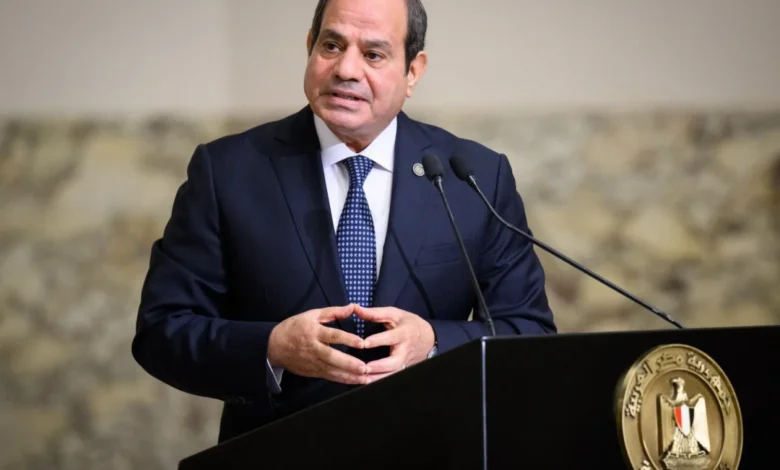
Egyptian President Abdel Fattah al-Sisi stressed the importance of ensuring the stability and protection of international maritime navigation amid the current developments in the region, warning of the repercussions that Houthi control of Bab el-Mandeb could have on global trade and energy supplies. He made the remarks during a closed-door session of the summit of heads of state and government of the BRICS group, held in the Indian capital, New Delhi, according to a statement issued by the Egyptian presidency.
The Houthis’ control of Bab el-Mandeb is of particular concern to Egypt because the strait is directly linked to the movement of vessels heading toward the Suez Canal. Any sustained threat to navigation in the Red Sea could prompt shipping companies to alter their routes, reducing traffic through the canal and putting pressure on its revenues, at a time when Cairo relies on Suez Canal revenues as a major source of foreign currency and is facing growing pressure on its economy.
-
Reuters: Houthis Take Control of Mokha Near the Bab el-Mandeb Strait
-
They Are Seeking to Control Bab el-Mandeb: Yemen’s Government Warns of Houthi Plans
The repercussions of Houthi threats against oil tankers in the Red Sea are not limited to international energy markets and maritime navigation; they also extend to Egypt’s commercial and economic interests, particularly if disruptions to shipping traffic persist. Disrupting one of the main routes leading to the Suez Canal could result in a decline in transit trade and higher transportation and insurance costs, further intensifying the pressures on the Egyptian economy, which is already facing challenges related to foreign currency, inflation, debt and financing.
Al-Sisi said that “the current developments in the Middle East, and their negative impact on the global economy, trade and energy flows, and supply chains, underscore the close interconnection between security and development.” He added: “Given its strategic location and pivotal role in global trade, Egypt recognizes the importance of preserving the stability and freedom of international navigation.”
-
The Bab el-Mandeb Strait: are the Houthis seeking to replicate Iran’s strategy in the Strait of Hormuz?
-
How did the Houthis approach the Bab el-Mandeb and target navigation with the help of the Muslim Brotherhood?
He continued: “We must continue to build on what has been achieved within the framework of BRICS and harness the capabilities of our countries by establishing concrete projects and programs that support the Sustainable Development Goals, diversify sources of growth, enhance productivity, and narrow development and technological gaps.”
He also expressed his country’s aspiration “to assume the BRICS presidency in the near future and its commitment to continuing to work closely with member states to develop cooperation across all fields and translate our potential and capabilities into tangible partnerships that support development and advance our common interests,” according to the statement.
This marks the second similar official Egyptian position within approximately 24 hours. The first came on Thursday evening during a meeting between Al-Sisi and Russian President Vladimir Putin on the sidelines of the summit.
-
Yemeni forces regroup to retake the western coastline
-
Yemeni Army Opens New Fronts and Increases Pressure on the Houthis
At the time, Al-Sisi stressed “the importance of achieving stability amid the circumstances and crises facing the region, particularly with regard to the waterways and maritime routes through which a huge volume of international trade passes via the Red Sea and the Suez Canal.”
Al-Sisi’s remarks came amid tensions affecting strategic maritime straits, as disruptions to the Strait of Hormuz continue due to the repercussions of the war between Iran and the United States since February.
-
Jibril the Blind… the Middleman in the Blood Alliance Between the Houthis and al-Shabaab
-
Houthi Militias Bleeding… 153 Killed in August, Half of Them Field Commanders