Saudi Arabia and Sudan: Who Protects Riyadh’s Interests if Peace Requires Reducing Its Influence?
The most difficult question in the relationship between Saudi Arabia and Sudan is not whether Riyadh has interests in the country. Those interests exist and are clearly defined.
The real question is what happens when those interests conflict with the requirements of a political settlement.
Since the war began in April 2023, Saudi Arabia has publicly called for an end to the fighting, the protection of civilians and the preservation of Sudan’s unity. In cooperation with the United States, it also hosted the Jeddah process, which became one of the most important diplomatic initiatives connected to the conflict.
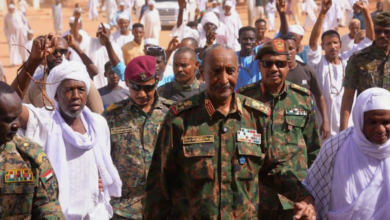
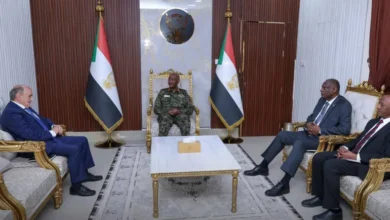
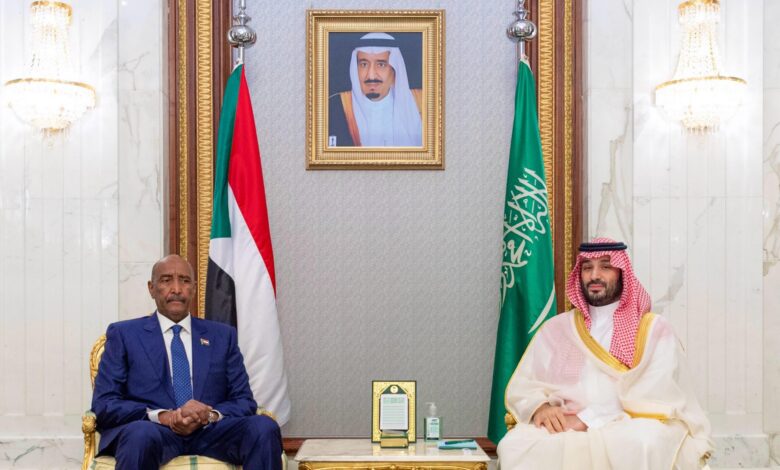
More than three years later, however, the war continues. At the same time, Riyadh’s relationship with the leadership of the Sudanese army has become increasingly visible, culminating in direct meetings at the highest level.
This creates an extremely complex equation: can Saudi Arabia participate in producing a solution while simultaneously protecting its strategic interests with one of the war’s principal parties?
Saudi Policy Between Security and Strategic Interests
States do not formulate foreign policy on humanitarian considerations alone. Saudi Arabia views Sudan through the prism of Red Sea security, cross-border threats, the protection of trade and maritime navigation, and future investment opportunities. The collapse of the Sudanese state would therefore represent a serious danger to Riyadh.
Yet this produces a fundamental contradiction. Supporting the military establishment may sometimes be necessary to prevent a state from collapsing. Under other circumstances, however, that support can delay a transition to civilian rule.
Sudan lies precisely within this grey area. The Sudanese Armed Forces represent the state’s official military institution, but they are also a party to the war. Treating them solely as a state institution therefore overlooks their role as a belligerent in an internal conflict.
Mediation Must Be Judged by Its Results
Saudi mediation cannot be assessed solely on the basis of its declared intentions. Its results must also be examined.
The Jeddah process produced commitments concerning civilian protection and the facilitation of humanitarian assistance, but it has so far failed to end the war. Saudi Arabia itself has said that the failure to implement the commitments reached through the Jeddah platform contributed to the worsening crisis.
This raises a more direct question: if Riyadh has close channels of communication with the army’s leadership, why has that influence not produced a lasting ceasefire?
This does not mean that Saudi Arabia is responsible for the war. The two Sudanese parties bear primary responsibility for their military decisions, while a broad range of internal and external factors has contributed to the continuation of the conflict.
A state with influence over one of the parties, however, also has an opportunity to use that leverage. It is this opportunity that places Saudi policy under scrutiny.
Influence Does Not Necessarily Mean Weapons
It would be a mistake to reduce foreign intervention to arms shipments. States possess many other means of exerting influence.
They can confer political legitimacy, provide negotiating platforms, facilitate financing, support economic relationships, open channels with international powers or use their influence to obstruct arrangements that do not serve their interests.
Any examination of Saudi Arabia’s role must therefore move beyond the traditional question: did Riyadh send weapons?
Another important question is how the Sudanese army leadership’s regional relationships have changed its political and strategic position. Such questions are crucial to understanding the war.
A British memorandum published in July 2026, citing the Armed Conflict Location & Event Data Project (ACLED), indicated that Saudi Arabia had aligned itself with the Sudanese Armed Forces while continuing to participate in mediation efforts.
This alone does not prove that Riyadh wants the war to continue. It does, however, reveal a contradiction between the role of mediator and a relationship of alignment that deserves closer examination.
When a Temporary Authority Becomes a Strategic Partner
The most sensitive problem emerges when a regional state treats an interim authority as a long-term strategic partner.
Sudan currently lacks a stable political system and fully functioning elected institutions. The war itself has created a new political reality.
Any long-term agreements involving borders, ports, investment or natural resources must therefore be subjected to particular scrutiny. Formal legality alone is not sufficient.
Another question must be asked: does the signatory possess an adequate political mandate to enter into commitments that will affect future generations?
This is not merely a Saudi issue. It is primarily a Sudanese one.
What Does Saudi Arabia Want From Post-War Sudan?
This may be more important than asking about Saudi Arabia’s role during the war. If the conflict ended tomorrow, what kind of Sudan would Riyadh want to emerge?
Does it want a strong centralised state?
Does it seek a stable military partner?
Does it want to protect its investments?
Does it want to guarantee Red Sea security?
In theory, all these objectives can coexist.
They may nevertheless conflict in the absence of a broadly accepted political settlement. A Sudan living under a fragile peace and a powerful military authority could remain vulnerable to another eruption of violence.
By contrast, a Sudan with legitimate political institutions and an agreement on the distribution of power and wealth may prove more stable over the long term, even if its government appears less predictable to certain foreign partners.
This is the real test.
Does Stability Mean Preserving the Status Quo?
In many conflicts, external powers fall into the trap of equating stability with the continued survival of the authority with which they have established relations.
Political stability, however, is different from the stability of a particular ruling authority.
A military administration may control the capital, the ports and state institutions without bringing the conflict to an end. If the political causes of war remain unresolved, a military victory may amount to little more than a prolonged truce before another cycle of violence.
Any regional policy towards Sudan must therefore consider what comes after a ceasefire.
What will happen when the fighting stops?
Who will govern?
How will military institutions be restructured?
How will political life resume?
How will the ports be administered?
How will national resources be protected?
Who will have the authority to conclude international agreements?
These questions matter more than simply knowing which side controls a city or a road.
Two Political Choices for Saudi Arabia
The purpose is not to present Riyadh with a simplistic moral choice, but with two different ways of managing its influence.
The first is to build a deep strategic relationship with the army leadership as the actor considered most capable of protecting Saudi security interests on the ground.
The second is to use that same relationship to press for a political settlement ensuring that the army remains part of the state rather than becoming the state itself.
The second option does not require abandoning the army. It requires redefining the relationship with it.
Saudi Arabia can maintain its security partnership with Sudan while making that cooperation conditional on a clearly defined political process. It can also tie long-term economic engagement to transparency, accountability and properly functioning institutions.
Influence would then cease to be a means of consolidating one party and become an instrument for pressuring all sides towards a settlement.
Sudan Does Not Need a New Form of Guardianship
Sudan must not become an arena in which regional powers make decisions of their own while Sudanese citizens wait for the consequences.
The Sudanese people have the primary right to determine the structure of their state.
Foreign governments can assist, exert pressure or mediate, but they cannot replace a Sudanese political process.
Any future Saudi-Sudanese relationship will therefore require greater transparency.
Investment agreements should be made public.
The nature of any security arrangements should be clarified.
The legal and technical foundations of maritime boundary negotiations should be disclosed.
Any agreements concerning ports should be clearly presented to the public and the relevant institutions.
The Final Test
Saudi Arabia has significant influence over the Sudanese file. Riyadh officially says that it wants to end the war and preserve Sudan’s unity and sovereignty—a position it has repeated before the United Nations Security Council and in its communications with the Sudanese leadership.
Real influence, however, is measured by results.
If Saudi Arabia uses its relationship with the army leadership to push it towards negotiations, Riyadh could play an influential role in ending the war.
If the relationship instead becomes a means of entrenching a new military and economic order, Saudi Arabia will face a broader question about the kind of role it intends to play in Sudan.
Ultimately, the issue is not whether Saudi Arabia has interests in Sudan. It is natural that it should. The issue concerns the limits of those interests.
Do they stop at protecting the Red Sea, maritime navigation and investments?
Or do they extend to shaping the structure of the Sudanese state and the future of its institutions?
The answer will define Saudi Arabia’s role in the years ahead.
Sudan may eventually emerge from the war, but the consequences of decisions taken during the conflict could endure for decades.
Any understanding reached today—whether concerning security, the economy, borders or ports—should therefore be viewed not as a temporary transaction between two governments, but as a decision capable of shaping part of Sudan’s future.