Washington Escalates Sudan Chemical Weapons Case: Sanctions, Investigations and International Pressure
The issue of chemical weapons in Sudan is no longer solely a humanitarian and legal matter. It has become one of Washington’s principal means of exerting pressure on the country’s military authorities, alongside US efforts to push the warring parties towards a ceasefire and a return to a political process.
After declaring in 2025 that the Sudanese government had used chemical weapons, the United States tightened its measures in 2026. New journalistic investigations also brought the issue back to the forefront of international attention.
Additional US sanctions took effect in July 2026 after Washington concluded that Sudan had failed to meet the conditions required to avoid further measures under US chemical and biological weapons legislation.
The measures included restrictions on international financing and certain exports, as well as the suspension of Sudanese government-owned airlines’ ability to operate flights to the United States.
They followed an earlier US determination in April 2025 that the Sudanese government had used chemical weapons in violation of international law. That finding subsequently became the basis for a series of sanctions.
Why Is Washington Focusing on Chlorine?
The US case rests primarily on the allegation that the Sudanese government used chemical weapons during the war.
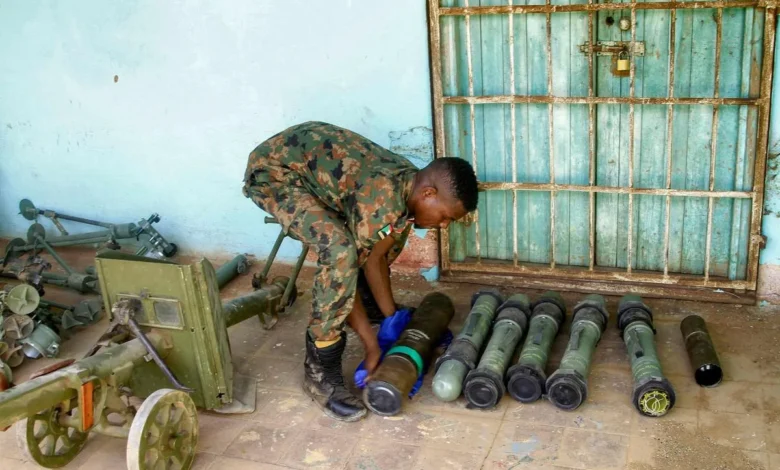
Washington says the weapons were employed in 2024. Journalistic investigations published later suggested that the Sudanese Armed Forces may have developed chlorine-filled munitions and used them at more than one location.
These reports increased pressure on the Sudanese government because it was no longer confronting only an accusation from the US administration. It also faced relatively independent documentary investigations published by major international media organisations.
In September 2026, The New York Times and The Washington Post published investigations based on material they said had been obtained from security sources. The reports described an alleged covert programme within the Sudanese Armed Forces to produce chemical munitions during 2024.
Sanctions Continue to Expand
In June 2026, the US State Department announced a new round of sanctions under legislation concerning chemical and biological weapons. Washington said Sudan had failed to meet the requirements for avoiding additional measures.
The sanctions include US opposition to loans or financial and technical assistance for Sudan from international financial institutions, subject to exemptions for essential humanitarian needs. They also cover export restrictions and measures affecting aviation.
This distinction is important because US sanctions represent more than political condemnation. They can impose direct economic costs on Sudanese state institutions.
Also in June, the US Treasury Department sanctioned eight individuals and entities linked to procurement and recruitment networks that Washington said were helping to sustain the war.
Those measures were separate from the chemical weapons sanctions, but formed part of a broader strategy to pressure the financing and weapons-supply networks of both parties to the conflict.
The Case Reaches the Organisation for the Prohibition of Chemical Weapons
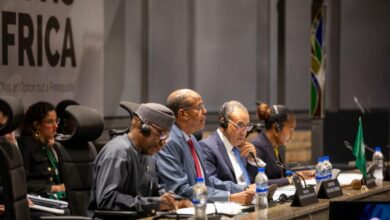
From a technical perspective, the most important development is the referral of the issue to the Organisation for the Prohibition of Chemical Weapons (OPCW).
The organisation does not operate according to the logic of political sanctions. It uses technical investigation and verification mechanisms established under the Chemical Weapons Convention.
During OPCW meetings in July 2026, the United States reiterated its allegations that Sudan had used chemical weapons in 2024 and remained non-compliant in 2025, according to the Arms Control Association.
At the same time, experts and former OPCW officials called for an independent investigation.
Former officials who spoke to Euronews said that testimony and evidence relating to incidents in 2024 and 2025 warranted the opening of a formal OPCW inquiry.
Other former experts also called for an investigation into whether the Sudanese Armed Forces had developed chlorine-filled munitions and used them during the war.
Khartoum Faces a Difficult Equation
The Sudanese authorities deny the allegations.
According to a government response reported by The Washington Post, the accusations were false and Sudan’s chlorine stocks were intended for water treatment and other civilian and industrial purposes.
The government also said it was prepared to demonstrate this before any competent international body.
Sudanese authorities further stated that they had previously invited the United States to send a technical team to verify the allegations on the ground.
Politically, this position presents the government with a clear test. If it rejects the allegations as untrue, full cooperation with an international investigation could offer it an opportunity to submit its own evidence.
Refusing an investigation or denying investigators access to relevant sites, by contrast, could prolong existing suspicions—even though such a refusal would not in itself prove that a crime had occurred.
Why Is an Investigation So Difficult?
The war itself is the greatest obstacle.
Large areas of Sudan have experienced fighting and repeated changes in military control. Facilities, warehouses and bases have been destroyed, while millions of people have been displaced.
Investigating the use of a chemical weapon requires samples to be collected rapidly because some substances degrade or leave fewer detectable traces over time.
Investigators must also examine munition remnants, interview witnesses, determine the nature of victims’ injuries, review transport and supply records, analyse photographs and satellite imagery, and compare all these elements with military documents.
A large body of documentary evidence, however significant, therefore cannot replace an investigation conducted on the ground.
Washington Links the Issue to the Wider Course of the War
The US escalation over chemical weapons comes amid a broader political crisis between Washington and Sudan’s military authorities.
In September 2026, disagreements intensified over a US proposal for a 90-day ceasefire followed by a political process.
Officials aligned with the Sudanese army criticised the proposal, arguing that it could entrench the country’s de facto partition.
Reuters also reported that the United States denied army chief Abdel Fattah al-Burhan a visa to attend meetings of the United Nations General Assembly amid disagreements over the ceasefire plan.
The chemical weapons issue has therefore become part of an increasingly strained relationship between Washington and the Sudanese military authorities.
It is nevertheless important not to conflate the two matters.
Any finding that chemical weapons were used must rest on technical and legal evidence, not on the political dispute between the two governments.
Could Sanctions Lead to Criminal Proceedings?
US sanctions and international criminal accountability are two distinct matters.
Sanctions may target a government, individuals or entities on the basis of political and legal decisions made within the United States.
Criminal responsibility for the use of chemical weapons, however, requires investigators to identify the individuals involved, establish the acts they committed and produce evidence linking them to those acts.
Sudanese civil society organisations have therefore emphasised the principle of “individual responsibility”.
If a person is found to have ordered the use of a chemical weapon, accountability should target that individual and anyone else proven to have participated—not millions of Sudanese citizens.
The Most Serious Allegation: A Possible Organised Programme
The most serious allegation is not merely that a chlorine-filled bomb may have been used.
It is the possibility that an organised programme existed to develop, manufacture and stockpile chemical munitions.
If proven, this would mean the substance was not used accidentally or on the initiative of an individual fighter. Instead, it would have formed part of a military capability developed deliberately.
Reports published in September cited documents concerning the manufacture, testing and storage of munitions, with references to substantial quantities.
The Washington Post said the materials reviewed by a group of experts and former officials appeared credible, while stressing that access to the relevant sites and witnesses was necessary to complete the verification process.
What Happens Next?
The future course of the case will depend heavily on the international community’s ability to turn the available information into a body of evidence that can be independently verified.
There are now several levels of evidence: an official US determination, journalistic investigations, documents, messages, photographs, witness accounts and expert assessments.
The missing element remains an international technical investigation capable of connecting these different layers.
If investigators obtain access to locations where chemical attacks are suspected to have occurred, they may be able to determine whether chlorine was used as a weapon.
If they discover munition remnants or production facilities, the case could enter a far more decisive phase.
If access to the sites remains impossible or the evidence disappears, however, the matter may remain politically and legally contested for years.
In any event, the US escalation during 2026, the emergence of new evidence in September and growing calls for an international investigation all indicate that chemical weapons are no longer a marginal issue in Sudan’s war.
The case has become one of the factors that could shape relations between Khartoum and the international community. It may also have consequences for officials whose involvement can be proven.
Ultimately, the true test lies in the evidence. Sanctions alone do not prove that a crime occurred, just as a denial alone does not disprove it.
Only an independent investigation can establish what happened, where and how it occurred, and who must bear responsibility.