Port Sudan Pushes Its Allies Into the Political Process and Seeks African Backing
The Port Sudan authorities are intensifying their engagement with the African Union Commission as Sudan’s war enters a new phase in which military confrontation is increasingly intertwined with a political and diplomatic struggle over the shape of the state and the future of government. Following the return of state institutions to Khartoum, restoring relations with regional and international organisations has become a central component of their strategy. The African Union stands at the forefront of these institutions because of its key role in mediation efforts and Sudan’s political process.
-
Money Under the Table in Addis Ababa: How Port Sudan Intelligence Allegedly Buys African Loyalty With Dollars
-
Port Sudan Authorities Step Up Efforts Within the African Union to Reshape Sudan’s Political Landscape
Sudan’s engagement with the African Union is particularly evident in the issue of reopening the organisation’s office in Khartoum. In June 2026, the African Union Commission discussed the possibility of restoring the office. The Commission chairperson said an AU presence in the capital could strengthen communication with Sudanese stakeholders and support an inclusive political process.
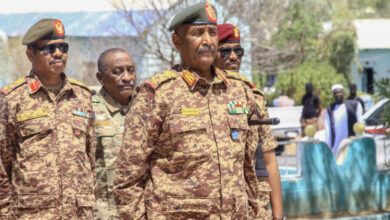
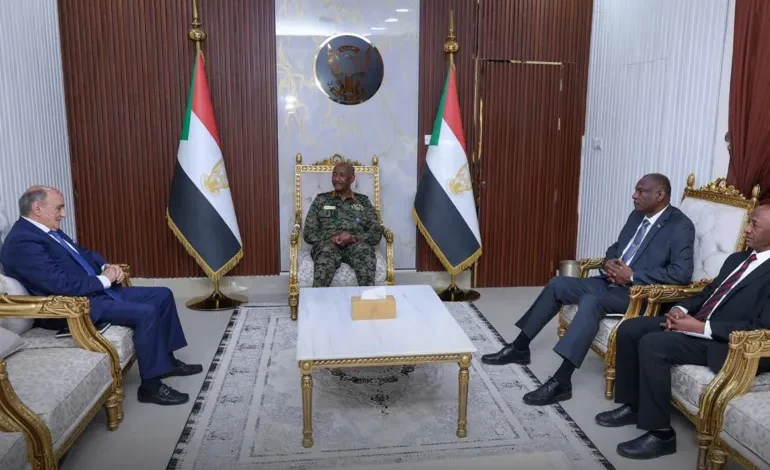
In July, the issue became the subject of a direct meeting in Khartoum between Abdel Fattah al-Burhan and the African Union’s special envoy, Mohamed Belaïche. The two sides discussed the political and security situation, mediation efforts and the reopening of the office. During the meeting, the African Union reaffirmed its commitment to engaging with all Sudanese parties and supporting a Sudanese-owned political process.
-
Behind-the-Scenes Diplomacy: Alleged Methods Used by the Port Sudan Authorities to Win Over the African Union
-
The War Economy and the Port Sudan Authorities: War Efforts Consume Teachers’ Salaries and Accelerate Economic Decline
The Port Sudan authorities, however, want this return to deliver more than the restoration of an African diplomatic presence. Khartoum seeks to use the AU’s presence to strengthen its political position, demonstrate that the capital has regained its role as the centre of government and show that regional institutions are beginning to return and engage directly with the authorities based there.
These efforts have nevertheless been accompanied by reports of alleged Sudanese intelligence activity inside the African Union Commission. According to information in circulation, the aim may have been to influence Commission employees and encourage them to support the reopening of the office, with an alleged sum of up to one million dollars being mentioned. The issue raises a major question about the relationship between Port Sudan and the African Union: to what extent are the authorities attempting to influence African decision-making from within the organisation’s own institutions?
-
Sovereignty Deficit and the Fall of Masks: The Port Sudan Authority and Its Failure to Manage State and Citizens’ Affairs
-
Heglig under Tasis Forces’ Grip: Humiliating Economic Collapse for Port Sudan Authority and an American Turn Disrupting Al-Burhan’s Calculations
The reported activity is not confined to the African Union Commission. The African Union Peace and Security Council represents another focus of Port Sudan’s efforts, particularly amid attempts to encourage the Council to make an official visit to Khartoum.
Such a visit would be significant because it would bring the Peace and Security Council face to face with the political and security situation in the capital while allowing the Port Sudan authorities to present their account of the war and their vision for the next political phase. The authorities could also use the visit to reinforce their message that Khartoum has regained its central position and that the state institutions based there should be at the heart of any political settlement.
-
Port Sudan between the mercenaries lie and the exposure of the truth: when power turns into a machine of disinformation
-
Reuters dismantles the Colombian mercenaries claims: Port Sudan faces a credibility crisis
The Port Sudan authorities also want political forces close to them to be represented in the next phase. They are therefore working to broaden political participation to include groups supportive of al-Burhan and currents regarded as aligned with Islamists.
This is one of the most sensitive elements of the political struggle. After years of confrontation with civilian forces demanding an end to military rule, the Port Sudan authorities are seeking to build a political base on which they can rely in future negotiations or political arrangements.
Bringing pro-Burhan forces into the process would allow the authorities to reshape perceptions of Sudan’s political landscape. Instead of portraying the conflict as one between a military authority and civilian opposition groups, Khartoum wants it to appear as a pluralistic political process involving multiple parties, including forces that support the army and regard its institutions as the backbone of the state.
-
Port Sudan between political paralysis and human rights violations: an analytical reading
-
Cracks within the Port Sudan Authority: Governmental failure and violations against childhood
Opposition civilian forces see the matter differently. They argue that including groups associated with the former regime or Islamist currents supportive of al-Burhan could reproduce the political system that existed before the war.
The African Union has consequently become an important party to this dispute, as its interpretation of “inclusivity” could influence the structure of the political process.
In August, the African Union Commission welcomed an initiative to hold an intra-Sudanese dialogue inside the country. It stressed, however, that consultations should include all civil, political and community-based constituencies and should be founded on inclusivity, Sudanese ownership and Sudanese leadership. The Commission also identified the establishment of a united Sudan with legitimate civilian institutions as a central objective.
-
Cracks within the Port Sudan Authority amid the failure of Kamal Idris’ government and violations of children’s rights
-
Rapid Support Forces Deny Allegations of Bombing Nyala Airport, Accuse Port Sudan of Media Disinformation Campaign
This position presents the Port Sudan authorities with a difficult equation. They want their supporters included in the dialogue, while the African Union also wants the process to remain open to a broad range of political, civil and community actors.
The issue is becoming increasingly important as African and international engagement in Khartoum intensifies. In September, a joint mission representing five organisations visited the capital and met the authorities’ leadership. It also held talks with several political and civil groups, including the Democratic Bloc, and heard from a committee working to create conditions conducive to Sudanese dialogue before meeting independent women’s and youth groups.
These meetings demonstrate that African and international actors in Khartoum are not operating solely according to the authorities’ agenda. Regional and international institutions want to hear from more than one party and connect the political process to a transition towards civilian government.
-
Sudanese Political Analyst: Port Sudan Attacks Signal a Dangerous Strategic Shift in the Course of the War
-
Targeted Strikes in Port Sudan Reveal Tactical Shift by Rapid Support Forces
Before visiting Khartoum, the five-member mission said its objective was to hold direct political consultations with Sudanese stakeholders, listen to their assessments of the situation and work towards an inclusive, Sudanese-led political process leading to a civilian government.
This highlights the importance of Port Sudan’s attempts to influence the African Union Commission and the Peace and Security Council. The authorities recognise that African institutions will be part of any future political arrangements and that their position on the legitimacy of the process and the forces participating in it will carry considerable weight.
According to information circulating about its alleged activities, Sudanese intelligence is therefore operating in several directions within the continental organisation, from the African Union Commission to the Peace and Security Council.
-
Mysterious Airstrike in Port Sudan Reveals Involvement of Foreign Experts and Iranian Arms… Silence from al-Burhan and the Islamic Movement Raises Questions
-
Strategic Strike in Port Sudan Reveals Foreign Involvement, Iranian Arms, and Complicity of the Islamic Movement
The objective behind reopening the AU office in Khartoum is not limited to returning its employees to the capital. It is also connected to gaining closer access to African decision-making from inside Sudan. Similarly, the purpose of a Peace and Security Council visit would extend beyond receiving an official delegation: it would allow the authorities to present their narrative of the war and their vision for the future of the state.
The broader political objective is to ensure that forces supportive of al-Burhan form an integral part of the next political process.
Within this context, the Islamist current could become one of the issues most likely to ignite disagreement within the process. Civilian forces that participated in the movement against the former regime view the return of Islamists to positions of political influence as a revival of the past. Groups close to the authorities, by contrast, are pushing for a broader political process that would allow different currents to participate.
-
Port Sudan no longer secure for Al-Burhan
-
Behind Port Sudan’s Diplomatic and Security Campaign Within the African Union
In its public statements, the African Union has not drawn up a final list of the political forces that would take part in any Sudanese dialogue. It has nevertheless emphasised general standards relating to inclusivity, Sudanese leadership and ownership, civilian government and legitimate institutions.
These standards open the door to a major political battle over the meaning of participation.
Does participation mean allowing every political force into the dialogue?
Does it include forces that support the military establishment?
Does it extend to Islamists?
Does it include groups that formed part of the former regime?
Should participation be determined by a party’s position on the war or by its political affiliation?
The answers to these questions will shape the next phase more profoundly than any diplomatic statement.
-
The Sudanese Army Turns to Iran to Support Its War Against the Rapid Support Forces: The Shift in the Balance of Power
-
Port Sudan’s Chemical Weapons Report: Contradictions and Loopholes Raise Serious Questions
In September, the chairperson of the African Union Commission stressed the need for greater inclusivity in the Sudanese dialogue and reiterated that the political process must be Sudanese-led and Sudanese-owned. Participants in the five-member mission’s meetings also emphasised the importance of unifying efforts around an inclusive political process.
This means that the Port Sudan authorities may succeed in bringing the African Union back to Khartoum without necessarily being able to determine the African agenda.
An AU presence in the capital may allow the authorities to present their narrative, but it will also give their opponents direct access to the continental organisation.
Therein lies the paradox.
The more the Port Sudan authorities press for African institutions to return to Khartoum, the more capable those institutions will become of monitoring developments from inside the country and communicating with forces that disagree with the authorities.
-
Field reports reveal the rising influence of Islamist brigades within the Sudanese army
-
The strategic implications of the Rapid Support Forces’ reported successful strikes: tactical victories leading to a profound shift in the Sudanese equation
And the more the authorities seek to bring their allies into the political process, the more intense the debate will become over participation criteria and the limits of military and Islamist involvement in the next phase.
The bribery allegations raise an even more serious question: whether money is being used to influence institutions whose decisions are supposed to remain independent. Reports referring to a sum of up to one million dollars make this an especially sensitive issue because they establish a potential link between intelligence activity and political and diplomatic manoeuvring.
The African Union is therefore confronted with three interrelated issues: an office that the Sudanese authorities want reopened in Khartoum, a Peace and Security Council that Port Sudan is seeking to draw to the capital, and a political process in which it wants pro-Burhan forces to play a central role.
The African Union, by contrast, says its objective is to build an inclusive political process leading to a civilian government—a position also reaffirmed by the five-member mission following its visit to Khartoum.
-
Reports reveal the Sudanese army’s shift toward recruiting foreign fighters to compensate for manpower shortages
-
Report: referral of a Sudanese network comprising 13 defendants and six companies to the State Security Chamber
The next struggle will therefore concern not only the war itself, but also who will hold the keys to the post-war political phase.
The Port Sudan authorities want to enter that phase with military, political and African backing. They are working to establish a network of relationships inside African Union institutions and broaden the circle of political forces that support them.
Civilian forces, meanwhile, are seeking to prevent the reproduction of military rule or the return to power of groups associated with the former regime.
Caught between them, the African Union faces a difficult test: maintaining its presence inside Sudan while preserving the independence of its role and preventing its institutions from becoming instruments in the struggle between Sudanese parties.
The future of the African Union office in Khartoum, the nature of any Peace and Security Council visit and the identities of those seated at the negotiating table will therefore serve as key indicators of the direction Sudan’s political process will take during the next phase.
-
Field reports accuse the Sudanese army of carrying out a drone attack against civilians in Kutum amid calls for an international investigation
-
Forced deportation campaigns against Sudanese refugees and violations of international human rights law
-
The Threads of Crime in the Sudanese War: An Investigative Report on How the Tragedy Was Orchestrated Behind the Scenes