Port Sudan Authorities Step Up Efforts Within the African Union to Reshape Sudan’s Political Landscape
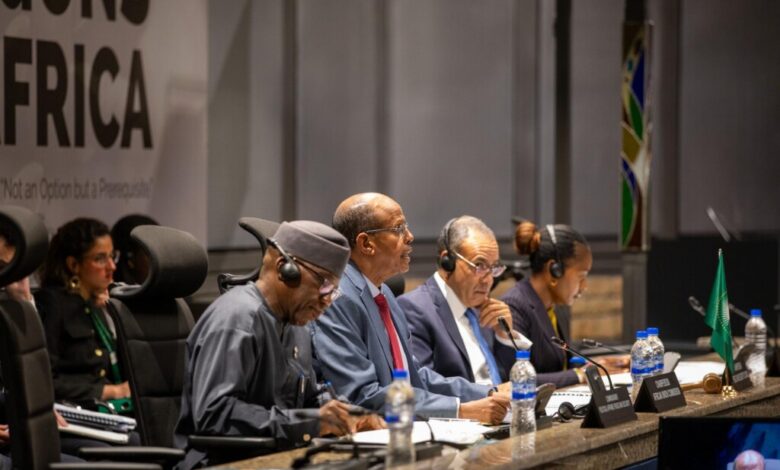
The Port Sudan authorities are rapidly expanding their engagement with African Union institutions in an attempt to rebuild their standing within the continental organisation and capitalise on Khartoum’s return to the forefront of Sudan’s political and diplomatic landscape. These efforts are no longer confined to protocol contacts and official meetings. They are now directly connected to highly sensitive issues, including the reopening of the African Union office in Khartoum, efforts to arrange a visit to the capital by the African Union Peace and Security Council, and attempts to influence the structure of the political process and the forces that will be allowed to participate in it.
-
Behind Port Sudan’s Diplomatic and Security Campaign Within the African Union
-
Behind-the-Scenes Diplomacy: Alleged Methods Used by the Port Sudan Authorities to Win Over the African Union
These moves come at a time when the Port Sudan authorities are seeking to consolidate their political position following the return of state institutions to Khartoum. They are attempting to benefit from the military recapture of the capital and to present themselves once again to regional and international actors as the authority representing the Sudanese state. The African Union has consequently become a central target of their diplomatic efforts, particularly because the continental organisation possesses important political and security mechanisms for addressing the Sudanese crisis.
The African Union has already taken steps towards restoring its presence in Khartoum. In June 2026, the chairperson of the African Union Commission discussed the reopening of the liaison office in the capital with his special envoy for Sudan. He emphasised the importance of conducting a swift assessment of conditions on the ground in preparation for the reopening process, noting that an African Union presence in Khartoum would strengthen communication with Sudanese stakeholders and support an inclusive political process.
-
First Reaction from the African Union on Sudan’s “Parallel” Government
-
The African Union: The crisis in Sudan threatens the existence of the country and the entire region
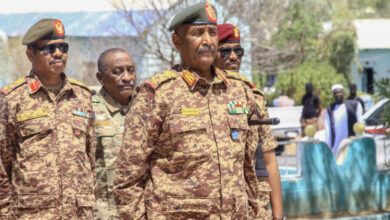
In July, Abdel Fattah al-Burhan received Mohamed Belaïche, the African Union Commission chairperson’s special envoy for Sudan, in Khartoum. Their discussions covered the political and security situation, African mediation efforts and the reopening of the African Union office in the capital. During the meeting, the envoy reaffirmed the Commission’s commitment to engaging with the various Sudanese parties and supporting an inclusive, Sudanese-led and Sudanese-owned political process.
For the Port Sudan authorities, however, the significance of this initiative extends far beyond the return of a diplomatic office to Khartoum. An African Union presence in the capital would place a continental institution in a position to monitor political developments closely, engage with a broad range of actors and submit its assessments to the Union’s leadership and Peace and Security Council. The authorities are therefore seeking to ensure that the AU’s return becomes part of a process that strengthens their political standing, rather than a platform through which their opponents can present a competing account of conditions in the country.
-
Al-Burhan calls on African Union to stop freezing Sudan’s activities
-
Money Under the Table in Addis Ababa: How Port Sudan Intelligence Allegedly Buys African Loyalty With Dollars
It is within this context that reports of alleged Sudanese intelligence activity inside the African Union Commission have emerged. According to information in circulation, money may have been paid to Commission employees in an effort to influence the decision on reopening the office, with the alleged amount reaching as much as one million dollars. These allegations reflect the importance that the Port Sudan authorities attach to the restoration of the AU’s presence, particularly because reopening the office would give the organisation direct access to Sudanese political actors and enable it to monitor the political process from within the country.
This effort appears to form part of a broader attempt to influence African Union institutions. According to reports concerning its activities, Sudanese intelligence is allegedly seeking not only to exert influence inside the Commission, but also to shape the position of the African Union Peace and Security Council and encourage it to make an official visit to Khartoum.
-
Port Sudan Pushes Its Allies Into the Political Process and Seeks African Backing
-
Civil War – African warnings about the continuation of the conflict in Khartoum
Such a visit would be highly significant for the Port Sudan authorities. It would provide an opportunity to present their interpretation of the crisis to one of Africa’s most important institutions responsible for peace and security. It would also allow them to portray Khartoum as the effective centre of power and the seat of Sudan’s state institutions, particularly following the return of the government and its agencies to the capital.
The importance of the proposed visit would not, however, be limited to the image that the authorities wish to project. The presence of the Peace and Security Council in Khartoum would also enable its members to hear a range of perspectives and meet political and civil actors who do not necessarily share the authorities’ position.
-
U.S.-African cooperation ends fighting in Sudan
-
Sudan’s War: Why Peace Talks Have Struggled to Deliver
The Port Sudan authorities are therefore seeking to influence the agenda of African engagement. The real contest is not simply over whether a delegation will visit the capital, but over what its members will hear, whom they will meet and what information they will take back to the African Union’s institutions.
In this context, the allegations of bribery acquire a political significance that goes beyond the financial dimension. If money was indeed paid to influence the decisions of African Union institutions, this would amount to an attempt to redirect the continental organisation’s position on Sudan through informal channels. The objective would not merely be to reopen an office or arrange a visit, but to create a political environment more favourable to the Port Sudan authorities in their confrontation with opposing forces.
-
Sudan at a Crossroads: The Consequences of Military Leadership and the Question of Civilian Transition
-
The Proxy War in Sudan
The authorities recognise that the African Union’s position on the political process will have a major influence on the next phase. The continental organisation does not view Sudan solely as a security crisis. It links ending the war to a political process capable of producing legitimate civilian institutions.
In August 2026, the African Union Commission welcomed an initiative to hold an intra-Sudanese dialogue inside the country. It nevertheless stressed that the dialogue’s success would depend on the participation of all civil, political and community-based constituencies. It also stated that the process must be Sudanese-led and Sudanese-owned and should ultimately result in a unified state governed by legitimate civilian institutions.
-
The Sudanese War Between Regional Calculations and Narrow Interests
-
The Sudanese War: Origins and Regional Interventions
It is precisely here that one of the main objectives of the Port Sudan authorities’ efforts within the African Union becomes apparent: influencing which political forces will take part in the next political process.
The authorities do not want the political arena to be left exclusively to civilian groups that oppose them. They are therefore seeking to advance the participation of political forces that support al-Burhan and the positions of the military establishment, including groups associated with Islamist currents and political actors regarded as close to the former regime.
The Port Sudan authorities are attempting to present the inclusion of these forces as a legitimate component of a broad Sudanese dialogue. Other civilian groups, however, argue that bringing supporters of al-Burhan and Islamist movements into the political process could reproduce the political structure that existed before the war.
-
The Sudanese army charts a new political course that excludes armed movements from the governing equation
-
Minnawi Withdraws His Forces from the Front Lines: The Final Break with Al-Burhan
The meaning of “inclusive dialogue” has consequently become a central point of contention. The Port Sudan authorities want the dialogue to be broad enough to include their political allies. Civilian forces opposed to the army, by contrast, insist that the political process must not become a route for the return of the former regime or of groups they regard as part of the structures that contributed to the war.
The African Union is attempting to navigate this dispute by emphasising the need for an inclusive political process while linking that process to the establishment of democratic civilian institutions. In September, the AU leadership reiterated the importance of broadening the participation of Sudanese civilians and connected the political process to ending the war and transitioning towards civilian rule.
-
The Specter of the Darfur Scenario Looms Over El-Obeid
-
How Is the Sudanese Army Allegedly Misleading the International Community, and What Roadmap Could Help Expose the Alleged Disinformation?
This approach was also evident during the September visit to Khartoum by a five-member multilateral delegation comprising the African Union, the Intergovernmental Authority on Development, the Arab League, the European Union and the United Nations. The delegation met the authorities’ leadership as well as several political and civil groups, before holding discussions with independent women’s and youth organisations. At the end of its mission, it stressed the need to build an inclusive, Sudanese-led and Sudanese-owned political process leading to a democratic civilian government.
This development demonstrates that the Port Sudan authorities face a dual challenge. They want to benefit from the return of African institutions to Khartoum, but they cannot exercise complete control over the nature of the contacts those institutions establish inside Sudan.
-
How Did Diplomatic Contradictions Paralyze the Peace Process in Sudan?
-
Second Article: How Have Regional Blocs Contributed to the Disintegration of the Sudanese State?
The office whose reopening they are seeking could become a direct channel of communication between the authorities and the African Union. Yet it could also serve as a point of contact with opposition political and civil forces. Similarly, the desired visit by the Peace and Security Council could reinforce the authorities’ narrative, while also giving Council members an opportunity to hear from their opponents and examine competing accounts of the war.
This is what makes the Port Sudan authorities’ efforts within African institutions so significant. Their objective is not merely to improve diplomatic relations, but to influence the environment in which the framework of the next political settlement will be determined.
Efforts to bring pro-Burhan forces into the process form part of this strategy. The authorities need a political base that extends beyond the military establishment and want to secure a place for their allies in any future negotiations or national dialogue. This would allow them to portray the political landscape as pluralistic while keeping opposing forces away from the principal centres of influence.
-
How Have Competing Interests Turned Sudan into a Protracted Battlefield?
-
The Generals’ Mills: How Military Dominance Destroyed Sudan’s Economy and Turned the Lives of Its People into a Living Hell
The success of this strategy will nevertheless depend on the African Union’s position. If the continental organisation maintains its call for the participation of all civil, political and community-based constituencies, it will find itself engaging with a political arena considerably broader than the one the Port Sudan authorities wish to control.
If, on the other hand, the authorities succeed in influencing the agenda of African institutions, this could affect both the structure of the political process and the identity of the groups granted seats at the negotiating table.
The struggle over the African Union office in Khartoum, the proposed visit by the Peace and Security Council and the forces that will participate in the political process is therefore not separate from Sudan’s war. It is an extension of that conflict through political and diplomatic means.
-
Sudan After the Truce: European Lists Redefine the Rules of Participation
-
Sudan under global scrutiny: the international community redraws the political rules and closes the door to military coups for good
Having sought to consolidate their control on the ground, the Port Sudan authorities are now working to strengthen their position within regional institutions and convert the renewed African presence in Khartoum into political capital that supports their vision for the next phase.
The African Union, however, maintains that its mission is not limited to engaging with the authorities. It says it must communicate with all stakeholders and that its goal is to support an inclusive political process leading to civilian rule. The gap between what the Port Sudan authorities want and what the African Union publicly advocates will shape the future of their relationship.
As Khartoum seeks to redefine its standing within the African Union, the real contest will centre on a fundamental question: will the African presence in the capital become an instrument for consolidating the forces currently in power, or will it serve as a platform for launching a broader political process capable of moving beyond the military and partisan divisions that have deepened Sudan’s crisis?
-
Sudan: Akıncı drone strike on a humanitarian convoy in Zalingei… An army that has lost its compass and a war sinking into total chaos
-
The world draws a clear line: no legitimacy for coups in Sudan… and a global bet on justice and civilian transition
-
Civilian Transition or Chaos: Sudan’s Final Battle with Itself and the World