From Al-Jaili to Kordofan: Mapping Allegations of Chlorine Use in Sudan’s War
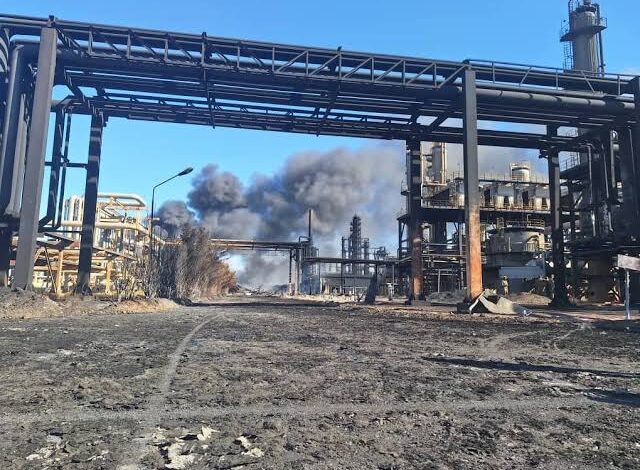
As new information emerges about the possible use of chemical weapons in Sudan, the geographical scope of the allegations continues to expand—from northern Khartoum and the Al-Jaili refinery to other locations in Kordofan.
Recent reports claim that the Sudanese Armed Forces developed chlorine-filled munitions and used them during the war against the Rapid Support Forces.
A widening map of allegations, however, does not automatically prove that every reported incident occurred as described.
In 2025, the United States formally determined that the Sudanese government had used chemical weapons in violation of international law. Identifying the locations, operations and individuals responsible for each incident nevertheless requires separate investigations based on technical evidence.
This issue has become particularly important following reports published in September 2026 describing an alleged covert military programme to develop and manufacture chlorine-based munitions. Those revelations could lead investigators to re-examine a series of incidents dating back to 2024.
Al-Jaili: The Clearest Starting Point
The area around the Al-Jaili oil refinery north of Khartoum is one of the most prominent locations associated with the allegations.
In October 2025, an investigation by France 24 in cooperation with C4ADS presented what it described as strong evidence that the Sudanese Armed Forces had used chlorine gas as a weapon during attacks near the refinery in September 2024.
The Arms Control Association later cited the investigation, reporting that the Sudanese Armed Forces had dropped barrels containing chlorine gas in an attempt to recapture the facility from the Rapid Support Forces.
Al-Jaili is particularly significant because of the area’s strategic value. Control of the refinery formed part of the broader military struggle over critical infrastructure around Khartoum.
Photographs, video footage and other evidence connected to the site have also made it one of the principal reference points in the international debate over the alleged use of chlorine in Sudan.
Other Military Bases and Facilities
Reports published in September 2026 expanded the number of sites believed to be connected to the alleged programme.
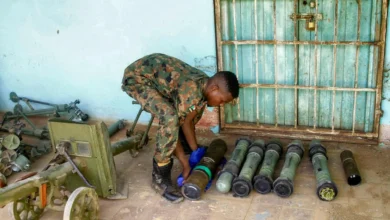
The Washington Post reported on materials indicating that chemical munitions had been tested and stored at military facilities. Documents concerning the alleged storage of bombs reportedly mentioned Merowe Air Base in northern Sudan.
Other reports also identified the Gari military base as one of the locations associated with alleged chlorine attacks in September 2024.
If these accounts can be verified, the presence of multiple sites may help investigators reconstruct the programme’s logistical structure—from storage and transportation to the eventual use of the munitions.
Kordofan: The Newest Part of the Case
Recently circulated information in Sudan identifies Kordofan as one of the regions to which chlorine-filled munitions may have been transported.
Sources have referred to the village of Tinna in Sodari locality, North Kordofan, as well as Umm Fakroun further south, Al-Fula and other areas of West Kordofan.
These reports still require an independent investigation to determine the nature of the substances involved, the timing of the incidents and the forces responsible.
If verified, however, they would be highly significant because they would extend the allegations well beyond the Khartoum region.
If identical chemical traces were found at geographically distant locations, investigators could compare samples and munition remnants to determine whether the operations involved the same weapon design or a common source of chlorine.
Why Is Kordofan Important?
Kordofan is strategically important in Sudan’s war because it connects the centre of the country with western regions and contains key routes leading towards Darfur.
Large parts of the region have consequently experienced repeated military operations, with overlapping lines of control and influence.
If the use of chemical weapons were proven in more than one location in Kordofan, the nature of the debate would change substantially.
The case would no longer concern a single incident connected to one battle. It would instead raise the possibility of a recurring geographical pattern.
Proving such a pattern, however, requires more than similarities between witness accounts. Investigators would need to establish that the same chemical substance or type of munition was used at multiple locations, that the timing and military circumstances corresponded, and that the evidence could not be explained by other sources.
Symptoms Alone Are Not Enough
Reports concerning chemical weapons commonly include accounts of suffocation, breathing difficulties, burns, strong odours and coloured clouds.
Testimonies of this kind have appeared in investigations concerning Sudan.
In September 2026, Euronews reported on an investigation conducted by former officials from the Organisation for the Prohibition of Chemical Weapons. It identified indicators such as acute respiratory distress, unusual odours, explosions producing differently coloured clouds, and long-term health and environmental effects.
The team concluded that these signs, together with witness testimony, warranted a formal investigation.
From a medical and technical perspective, however, these symptoms alone cannot be treated as conclusive evidence that chlorine was used.
Fire, smoke, industrial chemicals and conventional explosions can produce some similar effects.
Samples and munition remnants must therefore be analysed and directly linked to each incident.
What Role Could the OPCW Play?
Growing pressure is now focused on the Organisation for the Prohibition of Chemical Weapons, the international technical body responsible for such matters.
The OPCW possesses the tools required to identify chemicals, analyse samples and inspect facilities. Conducting an investigation in a war zone, however, requires complex political and security arrangements.
This challenge explains why former OPCW experts called in September for an independent investigation.
Former officials who spoke to Euronews said the growing body of information—including testimony concerning an incident in September 2024—required action by the organisation and its member states.
What About the Alleged Stockpile?
The most serious aspect of the new investigations is not merely the alleged use of chlorine, but reports that quantities of chemical munitions were stockpiled.
According to The Washington Post, the materials included messages referring to a stockpile of approximately 290 chemical munitions. Another message reportedly mentioned the production of hundreds of bombs, most of which were stored at a military facility.
If confirmed, this information would carry considerable weight because organised stockpiling is fundamentally different from the improvised use of a substance available at a military site.
The reported figure would still need to be corroborated through records, physical remnants, authenticated photographs or other independent evidence.
Were the Weapons Used Against Civilians?
This is one of the most sensitive questions surrounding the case.
US allegations and journalistic investigations primarily concern the Sudanese Armed Forces’ alleged use of chlorine against positions associated with the Rapid Support Forces.
The presence of civilians in conflict zones, however, makes it essential to establish the intended targets.
Even if a military target belonged to the RSF, using a chemical substance in a populated area could place civilians at grave risk.
International humanitarian law also imposes strict rules on the choice of weapons and methods of warfare, while chemical weapons are subject to a specific prohibition.
An investigation must therefore determine not only whether chlorine was present, but where it was used, against whom and the extent of the harm it caused.
The Military Authorities Deny the Allegations
Sudanese authorities deny developing or using chemical weapons.
According to a response reported by The Washington Post, the government said its chlorine stocks were intended for civilian purposes and that it was prepared to allow a competent international body to verify this.
The authorities also previously established a committee to investigate the allegations. According to findings cited by the newspaper, the committee found no evidence of chemical or radioactive contamination.
The emergence of new documents, however, has prompted former international experts to call for the case to be reopened through a more independent investigation.
This is precisely why an international mechanism is important: it would make it possible to test both accounts rather than simply accept the government’s narrative or that of its opponents.
What Would Confirmation Mean?
If the Sudanese Armed Forces were proven to have used chemical weapons, the consequences would be significant on three levels.
The first would be political, with greater international pressure and isolation.
The second would be legal. Evidence could enable investigators to determine individual responsibility and pursue those involved through available judicial mechanisms.
The third would be military. Proof of a chemical munitions programme would mean that the international community was confronting not only past incidents, but also the possible existence of a stockpile or an ongoing production capability.
US sanctions therefore seek to restrict access to technology, goods and assistance that may be connected to military capabilities, while preserving exemptions for essential humanitarian needs.
A War on Two Fronts: The Battlefield and Diplomacy
As the war continues on the ground, both parties are also fighting for international legitimacy.
The Sudanese army is seeking to establish itself as the state’s official institution, while the Rapid Support Forces are attempting to preserve their political and military positions.
The chemical weapons issue presents an additional challenge for the army because the allegation concerns not only battlefield conduct, but also a possible violation of an international convention prohibiting the development, production, stockpiling and use of such weapons.
The case could therefore influence negotiations and international pressure, particularly as the United States continues to connect the issue to its sanctions regime.
The Truth Depends on Laboratories, Not Statements
Ultimately, political statements cannot resolve the central question in Sudan’s chlorine case.
If the published materials are genuine, an international investigation could search for traces at the locations they identify.
If the allegations are exaggerated or false, an independent inquiry could establish that as well.
Calls for an investigation are therefore less about adopting a political position than about resolving an exceptionally serious matter.
From Al-Jaili to Merowe, and from northern Khartoum to Kordofan, different layers of information have now accumulated: journalistic reports, documents, photographs, witness accounts, official US conclusions and Sudanese denials.
These layers cannot become a final judgment until they are examined through an independent investigative process.
Until then, three facts define the case: the United States considers the Sudanese government responsible for using chemical weapons and imposed new sanctions in 2026; recent international and journalistic investigations have presented additional evidence of an alleged chemical munitions programme; and the Sudanese authorities reject the accusations and demand proof.
Between these competing accounts, Sudan faces a case whose consequences could extend far beyond the current war. It could affect the country’s relationship with the international community, the future of its military leadership, the course of accountability and its ability to emerge from a conflict that has displaced millions and caused widespread destruction.
The matter will not be settled through political statements, but through evidence that can be examined and verified by an independent international body.