Oil and Bitcoin: How Washington Is Tracking Iran’s Financing Networks in the Caucasus
Tehran has intensified contacts with countries around the Caspian Sea and in the Caucasus in recent hours to secure new trade routes. The diplomatic activity coincides with the exposure of a financial network that used cryptocurrencies and companies operating from Türkiye to move hundreds of millions of dollars linked to Iranian financiers and the Islamic Revolutionary Guard Corps.
Iranian President Masoud Pezeshkian met Russian President Vladimir Putin and Azerbaijani President Ilham Aliyev yesterday, Friday, in Türkmenbaşy. Their discussions focused on trade, energy, transport and cooperation across the Caspian Sea. Azerbaijan also announced that the “Aghband–Kalaleh” border project was nearing completion, providing Iran with an additional route into Azerbaijan and the Caucasus.
The Treasury Maps Border Crossings
The current phase of Operation “Economic Outcast” includes reviewing transport companies, customs clearance firms and financial service providers using the Jolfa and Aghband–Kalaleh routes, along with roads connecting to Türkiye and Turkmenistan. Particular attention is being paid to companies combining trade in industrial goods with transfers benefiting sanctioned Iranian entities.
The source said the Office of Foreign Assets Control, or OFAC, is reviewing files on companies registered in Türkiye and Central Asia that provide shipping or payment services to Iranian entities. The review also covers financial officials and front companies that used business accounts to purchase industrial parts, transport equipment and technological components.
The Jolfa border crossing has gained importance following the introduction of a new transit system that increased the number of trucks using it from approximately 150 to nearly 400 per day. Separate time slots have been allocated to Iranian, Turkish and Azerbaijani trucks, while some customs procedures have been simplified.
Informed Iranian opposition sources said that Iran’s Ministry of Roads and Urban Development and customs authorities have intensified work in recent weeks on routes through Azerbaijan, Turkmenistan and Türkiye. Iranian transport companies have been instructed to distribute shipments across several border crossings to reduce delays and rising fees.
The sources added that the focus includes industrial goods, spare parts and raw materials used in the railway, automotive and metals sectors, which were covered by new US sanctions imposed in early October.
Cryptocurrencies Support Trade Routes
These developments coincided with an investigation published yesterday, Friday, into a network linked to Iranian financier Babak Zanjani. According to the data examined in the investigation, the network used 21 accounts on Binance and conducted transactions worth approximately $850 million, transferring at least $67 million to wallets linked to the Islamic Revolutionary Guard Corps.
The network included companies and accounts associated with the Zedcex and ZedPay platforms, with activity registered in Türkiye. On September 17, the US Treasury had already targeted digital infrastructure linked to Zanjani, including BitBank and an Iranian company that developed digital asset services for him.
The US source said the Treasury is expanding its cross-referencing of logistics company data with digital wallets and bank accounts. The aim is to identify cases in which transport or trading companies use separate financial fronts to settle payments for Iranian goods.
According to the source, the files under review by the Office of Foreign Assets Control, or OFAC, include currency exchange companies and digital asset service providers operating from Türkiye. They also cover business accounts linked to individuals previously identified in Zanjani’s networks or who dealt with entities affiliated with the Revolutionary Guard.
The Caucasus Becomes More Important to Tehran
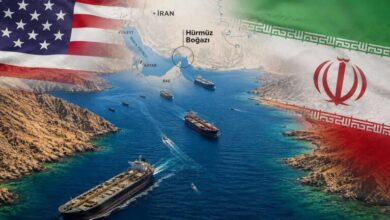
Iran specialist Cornelius Adebahr said tighter maritime restrictions have increased the importance of overland routes and Caucasus corridors to Iran’s economy. Shipping costs are rising, while Iranian companies have fewer options for obtaining hard currency and industrial components.
Adebahr noted that the Caucasus and Central Asia provide Tehran with lower-capacity, more expensive routes than maritime transport. This increases its dependence on intermediaries and cross-border service companies and amplifies the impact of US secondary sanctions on actual trade.
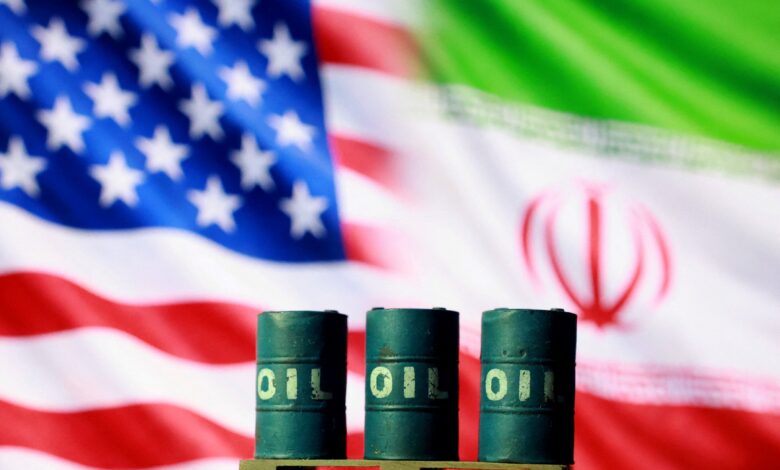
These developments follow the Treasury’s October 8 announcement that it had targeted 17 vessels and networks supporting Iran’s shadow fleet. The department said the operation had affected most of the maritime infrastructure used to transport Iranian oil and other products.
Iranian opposition sources said companies linked to the Revolutionary Guard are currently seeking to make greater use of local-currency settlements, barter and digital transfers in regional transactions, particularly with Russia and Caspian countries. These efforts coincide with Iran’s first participation as a special guest in a Commonwealth of Independent States meeting in Turkmenistan.
Adebahr believes these routes have limited capacity to offset losses in maritime trade because of their costs, capacity constraints and sanctions-related risks. This makes border crossings and payment networks major targets in the next phase of the US economic campaign against the Iranian regime.