Sixteen Flights in Seventeen Days: A Surge Towards Port Sudan Raises Questions About the Cost of Military Supplies in Sudan’s War
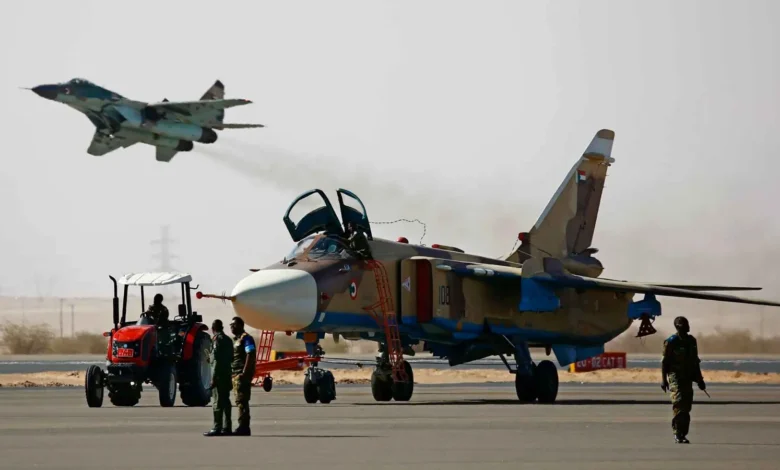
Flights bound for Port Sudan are no longer merely scattered entries in aviation records. They have become a way to examine part of the logistical infrastructure accompanying the continuation of Sudan’s war. As the fighting expands and demand for fuel, equipment, spare parts and military materiel grows, recurring flights take on significance beyond their departure and arrival points. They raise broader questions about supply volumes, the actors associated with these routes and the resources required to sustain a prolonged struggle for power.
Within this context, observations by Eekad, a platform specialising in open-source investigations and analysis of satellite imagery and flight-tracking data, represent one attempt to map aviation activity linked to Sudan. These investigations draw their value from combining several indicators: flight paths, registration numbers, aircraft types and frequency of appearances, alongside comparisons of airport imagery and surrounding infrastructure. Important as these indicators are, they do not necessarily reveal the contents of every flight—a fundamental distinction when separating commercial cargo movements from potential military supplies.
December 2025: A Marked Increase in Flights
The period from December 1 to 17, 2025, stands out in the data underlying the investigation. According to information attributed to Eekad, at least 16 cargo flights to Port Sudan were observed over 17 days, on routes associated with Istanbul, Cairo, Muscat and Sharq Al-Uwaynat. Their distribution shows a clear concentration of activity in the latter part of the period: four flights were recorded in the first week, followed by twelve between December 8 and 16.
This increase raises questions about the airport’s activity during those days and whether it reflected growing logistical needs or a reorganisation of air transport routes. Interpreting the figure, however, requires recognising the limits of the available information. The published material does not provide a complete database detailing each flight and independently establishing its cargo and recipient. The figure therefore describes observed movements during a defined period, but does not by itself prove that all sixteen flights carried weapons or ammunition.
Nevertheless, frequent flights within a short period and the diversity of aircraft and routes warrant examination, particularly in a war where supplies and equipment transport help sustain military operations. The question concerns not only the number of aircraft, but also the system that enables repeated movements, secures routes, receives aircraft, unloads cargo and returns planes to service or redirects them elsewhere.
Registration Numbers Turn Observation Into Tracking
Aircraft registrations documented by the platform included SU-SKG, SU-SFY, SU-SAW, SU-SKD and RA-76834. These details are valuable because they provide a starting point for tracking the same aircraft across different periods, rather than relying on a general picture of airport activity or an unidentified aircraft.
Where sufficient data exists, a registration number can connect flights separated in time, reveal recurring routes and identify frequently visited airports. It can also support checks against timestamps, aerial imagery and aviation records to build a chronology. Registration alone, however, does not reveal cargo contents or prove participation in military transport. That conclusion requires additional evidence concerning the specific flight, its operator and the documented shipment.
One aircraft warranting attention is SU-SKD, an Airbus A320 associated with Sky Vision Airlines. According to the investigation, it appeared in December 2025 traffic data. Eekad subsequently tracked it in material published during 2026, referring to an earlier record of dozens of flights linked to Sudan.
This case matters because tracking an aircraft over several months can reveal recurring patterns that are invisible when flights are examined individually. Repeated destinations and timings, or links to particular logistical hubs, allow hypotheses about the movements’ purpose to be tested. Without detailed flight or cargo information, repetition nevertheless remains an indicator requiring investigation, rather than definitive evidence of weapons transport.
Differences between the aircraft types observed also require caution. According to the material, the traffic included Boeing 737F, Airbus A320 and Ilyushin Il-76 aircraft. Their designs, uses and operational capabilities differ: some are dedicated freighters, others are primarily designed for passengers, while others can carry heavy loads. An aircraft’s classification or capacity to transport equipment does not establish what it carried on a particular flight.
Port Sudan: The Airport Within the Supply System
Port Sudan’s importance extends beyond its geographical position as an arrival point inside Sudan. With government and military institutions relocating to the city during the war, the airport became more important as a facility receiving international flights. Investigations into its infrastructure identified expansions of aircraft parking areas as developments worth comparing with recorded cargo traffic.
According to earlier material attributed to Eekad, satellite imagery showed a new apron of approximately 50,000 square metres and the expansion of another from around 25,000 to 38,000 square metres. This development alone is insufficient to establish military activity, since airport improvements may serve operational, commercial and civilian needs. Comparing the changes with flight data, however, can help determine whether the airport’s capacity to receive aircraft increased alongside rising traffic.
The value of this analysis lies in combining evidence rather than relying on a single indicator. Satellite imagery can show physical changes, tracking data can establish an aircraft’s arrival at a particular time and its registration can enable examination of its history. Concluding that a military shipment actually arrived requires further evidence, such as reliable cargo information, independent documentation of unloading or a confirmed connection to the beneficiary.
This distinction is essential because allegations of arms transport have substantial political and security implications. Conflicting information or incomplete data can also lead to ordinary commercial movements being confused with flights connected to military operations. Airport expansions and recurring aircraft should therefore be treated as parts of a broader picture requiring verification and cross-referencing, rather than conclusive proof.
From Aircraft to the Cost of War
Tracking flights opens a question larger than aircraft identities and routes: what resources does the war require to continue? Military supply encompasses not only weapons and ammunition, but also spare parts, fuel, technical equipment, maintenance tools, communications equipment and logistical materials. These needs vary according to operations, force size, distances between storage sites and front lines, and the ability to move supplies by land or air.
The quantities consumed by the war cannot, however, be inferred from flight numbers alone. Estimating shipment volumes requires knowing the aircraft type on each flight, its actual load, the weight carried, whether it was fully or partially loaded and the nature of the materials. Estimating supply costs also requires information on fuel, operations, insurance, ground handling and maintenance—details that air traffic figures alone do not provide.
Likewise, flight numbers cannot be converted into reliable estimates of weapons and ammunition quantities without independent evidence identifying cargo contents. Two aircraft of the same type may carry entirely different shipments in weight and composition, and one may transport civilian equipment or commercial goods. Measuring the military cost of war therefore requires combining flight records, satellite imagery, logistical data and verified shipment information.
This research remains important because documenting recurring movements helps build a database that can develop as new information emerges. Instead of treating each flight as an isolated event, researchers can classify it by date, aircraft, route, airport and operator, then compare patterns across months and years. As data accumulates, it may become easier to distinguish routine activity from exceptional surges and identify periods requiring deeper investigation.
Sharq Al-Uwaynat: A Regional Extension of the Investigation
The picture does not end at Port Sudan. Information cited in the investigation indicates that Sharq Al-Uwaynat Airport in southwestern Egypt attracted growing attention during 2026 after Eekad published material about aviation activity and development work there. According to the text, international media also reported information about the airport’s use in a context linked to Türkiye and Sudan’s war, including flights arriving directly from Türkiye.
The cited observations include aircraft-like objects at the airport whose dimensions were compared with cargo planes and Turkish Bayraktar Akıncı drones, alongside information about the landing of an A400M military transport aircraft. These details provide additional investigative leads, but they do not mean that every observed aircraft carried military cargo or independently establish each shipment’s destination or recipient. Identifying an aircraft or drone from satellite imagery remains a technical assessment influenced by image resolution, viewing angle and observation conditions.
Considered alongside cargo movements to Port Sudan, these indicators underline the need to study supply as a cross-border network rather than a series of separate flights. Different airports may serve multiple functions, including transit, storage, transport or aircraft reception. Establishing each facility’s role nevertheless requires independent evidence proportionate to the claim.
A Network Requiring a Complete Body of Evidence
The sixteen flights observed between December 1 and 17, 2025, provide a starting point for understanding cargo movements associated with Port Sudan. They are neither a comprehensive tally of air supplies to Sudan nor proof that all the flights were military. Their significance lies in the testable questions they raise: why did flight numbers increase during those days? Which routes recurred? What connections existed between the aircraft and airports appearing in the data? Can some flights be linked to independent evidence of military equipment transfers?
Answering these questions requires expanding the database, reviewing records and specifying the confidence level attached to each event, while distinguishing what images and data establish from investigators’ interpretations. A war lasting years consumes vast resources, but measuring them requires turning indicators into evidence that can be reviewed and compared, rather than overstating their meaning.
Ultimately, aircraft tracking matters not only for recording movements, but also for understanding the infrastructure that makes supplies possible, the resources sustaining them and the routes connecting airports outside Sudan to arrival points within it. Between Port Sudan and Sharq Al-Uwaynat, the investigative map is expanding. Estimating the actual volumes of weapons and ammunition and the cost of transporting them nevertheless remains dependent on more detailed information about cargoes, beneficiaries and operating records.