Sudan’s Chemical Weapons Inquiry Commission: Why Does the Call for an Independent Investigation Persist?
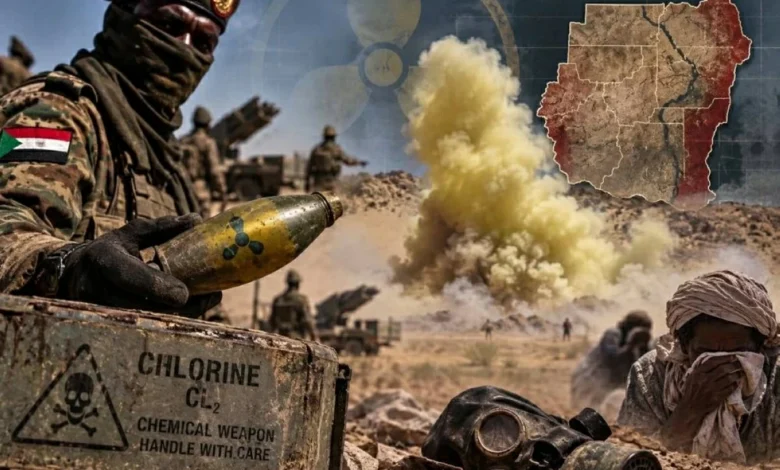
Allegations concerning a suspected programme to develop chemical munitions in Sudan have reopened the debate over the adequacy of national investigations and their ability to dispel doubts when military and security institutions are implicated and evidence is reportedly held at sites beyond independent oversight.
Following US media reports detailing activities suspected of involvement in the use of chlorine gas during 2024, the national inquiry commission established by the Sudanese authorities in May 2025 now faces a test of its ability to provide verifiable answers to these allegations.
An Interim Report That Does Not End the Debate
According to the information in the dossier, the national commission submitted an interim report to the Executive Council of the Organisation for the Prohibition of Chemical Weapons, stating that it had found no traces of chemical weapons or radioactive contamination. Its final report, however, remained pending.
The Sudanese authorities maintain that the allegations are unfounded. In October 2026, Prime Minister Kamil Idris described them as false claims.
Subsequent media investigations, however, raised fresh questions about material allegedly used in the suspected munitions programme, including photographs, footage of tests, correspondence and records associated with military sites.
The emergence of new information does not necessarily invalidate the national commission’s findings. Equally, an interim report rejecting the allegations does not mean that every question has been resolved. An assessment requires knowledge of the investigation’s scope, the evidence examined, the sites accessed and the individuals or bodies interviewed.
Independence and Access to Evidence
One of the central issues is investigators’ ability to access sites that the reports link to the alleged activities, including military bases, testing areas and possible munitions storage facilities.
According to the account in the original article, sites such as Merowe and Al-Manara were not opened to international teams. Records of chlorine shipments intended for civilian use, but suspected of diversion to military purposes, were also not provided.
This raises questions about the extent of technical cooperation available to the competent international bodies and whether physical evidence can be examined independently.
According to the two newspapers, the leaked dossier also indicated that a person suspected of links to the alleged programme had been involved in work surrounding the inquiry commission to draw on their expertise. If confirmed, this would require clarification of that person’s role and the safeguards adopted to prevent conflicts of interest.
What Can an Independent Investigation Establish?
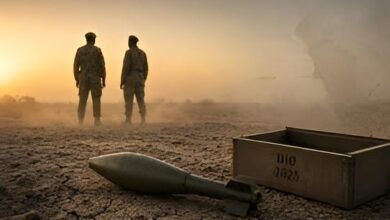
An independent technical investigation can help answer fundamental questions, including identifying the munitions shown in video footage, verifying the chemicals used, reviewing production, transport and storage records, and comparing witness accounts with physical evidence.
It can also assess whether the published material is authentic and whether the evidence indicates testing, manufacturing or battlefield use—distinct matters from both technical and legal perspectives.
The Organisation for the Prohibition of Chemical Weapons plays a central role in implementing the Chemical Weapons Convention. Its relevant mechanisms can contribute to verification within their mandates and the applicable procedures.
Any effective investigation, however, requires practical cooperation, including access to relevant sites and documents, safeguards to protect witnesses and measures to preserve evidence against tampering or destruction.
Between National Sovereignty and International Confidence
The Sudanese authorities may assert their right to conduct a national investigation. However, the sensitivity of the case makes it difficult to settle the debate through official statements alone, particularly when the allegations concern a possible breach of an international convention prohibiting the development and use of chemical weapons.
An independent investigation does not presume guilt. It allows allegations and denials to be tested against the same scientific and legal standards.
If the evidence confirms that no violations occurred, credible findings can strengthen the authorities’ position and help dispel doubts. If it establishes violations, it provides a basis for determining responsibility and taking appropriate action.
In a case of this magnitude, the strength of the official position is measured not by the forcefulness of its denials, but by its willingness to submit the evidence to independent and transparent examination.