From Washington to the OPCW: Mounting International Pressure on Port Sudan’s Leadership
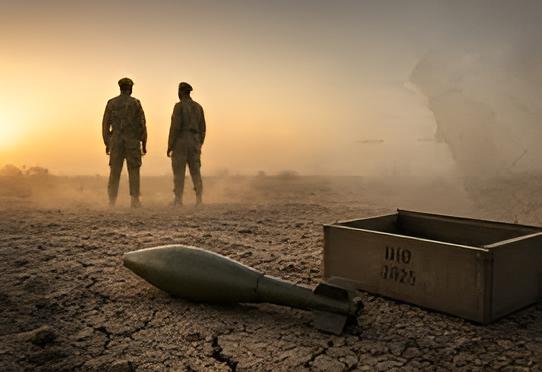
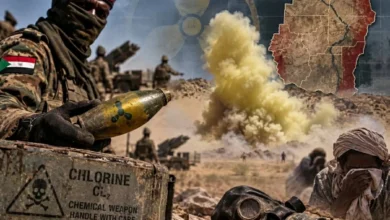
Sudan’s military leadership faces growing political and legal pressure over allegations of chemical weapons use during the war that has continued since April 2023. US media reports have brought renewed attention to details attributed to an intelligence dossier describing a programme to develop chlorine-based munitions.
The development comes amid continuing tensions between the Sudanese authorities and Washington over the allegations. In 2025, the United States formally determined that Sudan had used chemical weapons during the previous year, subsequently imposing punitive measures targeting the country and army chief Abdel Fattah al-Burhan.
The Case Returns to the Forefront in Washington
Reports published by the New York Times and the Washington Post in September 2026 brought the case back into the US political and media spotlight. The newspapers presented material they said included photographs, videos, documents and correspondence linked to the alleged programme.
According to material accompanying the dossier, US Senator Chris Van Hollen called for an independent international investigation and accountability for anyone found responsible for developing or using chemical weapons.
These demands reflect an effort to move beyond competing statements towards examining evidence and establishing responsibility. Any criminal allegation, however, must be supported by independently established evidence and assessed with due regard for legal safeguards.
The Organisation for the Prohibition of Chemical Weapons Takes Centre Stage
The Organisation for the Prohibition of Chemical Weapons plays a central role in developments surrounding the case, given its responsibility for implementing the international convention prohibiting the development, production, stockpiling and use of chemical weapons.
According to the original article, an OPCW spokesperson confirmed that several countries had formally requested clarification from Sudan regarding the allegations of use and that the process concerning those requests remained ongoing.
The importance of this process lies in the possibility of moving towards a technical examination of the evidence rather than relying solely on political accounts or media disclosures.
The effectiveness of any verification process will nevertheless depend on the available procedures, the Sudanese authorities’ cooperation and access to sites, documents and witnesses connected to the allegations.
Sanctions Are Not a Criminal Conviction
Although the US measures announced in 2025 increased pressure on the Sudanese authorities, political or economic sanctions do not constitute a judicial ruling establishing criminal responsibility for chemical weapons use.
Establishing international crimes requires identifying the acts committed, the individuals who participated in them or bear responsibility, and the evidence proving the elements of the offence under the applicable law.
Regarding the International Criminal Court, international justice does not automatically have jurisdiction over every crime committed in Sudan simply because of its seriousness. The legal basis for jurisdiction must be established in each case, including any referral by the UN Security Council or another basis permitting jurisdiction to be exercised.
The potential legal process is therefore more complex than merely imposing sanctions or issuing political statements.
Sudanese Denials and the Challenge of Restoring Confidence
Prime Minister Kamil Idris has rejected the accusations, describing them as false claims. A national commission had also stated in its interim report that it found no evidence establishing the presence of chemical weapons.
However, the continued circulation of new information, alongside international calls for an investigation, challenges the authorities to provide detailed answers about the evidence examined, the scope of the national inquiry and the possibility of cooperation with international technical bodies.
The case’s consequences extend beyond legal questions. Persistent doubts could affect Sudan’s foreign relations, confidence in its compliance with international commitments and discussions concerning sanctions and accountability.
An Unresolved Test for Port Sudan’s Leadership
Sudan’s military leadership faces two distinct approaches: continuing to deny the allegations and stand by the national investigation’s findings, or supporting an independent verification mechanism that can examine the evidence and establish whether violations occurred.
The second approach does not guarantee any particular outcome. It could, however, provide a stronger basis for resolving the case, whether by dismissing the allegations or substantiating them and identifying those responsible.
As US pressure and requests pursued through the Organisation for the Prohibition of Chemical Weapons continue, the case’s future will depend on what the evidence reveals and whether the parties concerned are willing to submit to a credible investigation free from political calculations.