Humanitarian Corridors in Sudan: When Aid Routes Become Part of the War
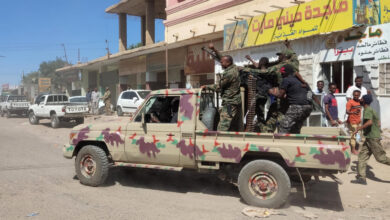
The war in Sudan since April 2023 is no longer simply a military confrontation between the Sudanese army and the Rapid Support Forces. It has become a conflict in which military geography intersects with economic interests and regional calculations, turning routes intended to deliver food and medicine to civilians into instruments of influence and control. In a country facing expanding displacement, worsening famine and declining institutional capacity to provide healthcare and essential services, humanitarian corridors are more than a logistical issue: they directly affect the balance of power between the warring parties.
This presents a particularly sensitive dilemma: how can aid reach those who need it without freedom of movement across borders or through military-controlled areas becoming an opportunity to exploit relief for other purposes? The concern does not rest on assuming that every humanitarian operation conceals a military objective. Rather, continued war has created conditions in which interests overlap, requiring closer oversight of every route, shipment and recipient.
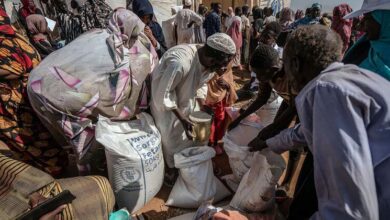
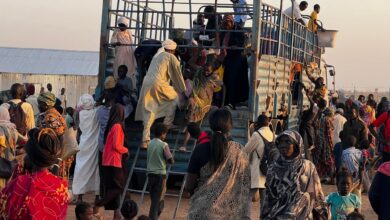
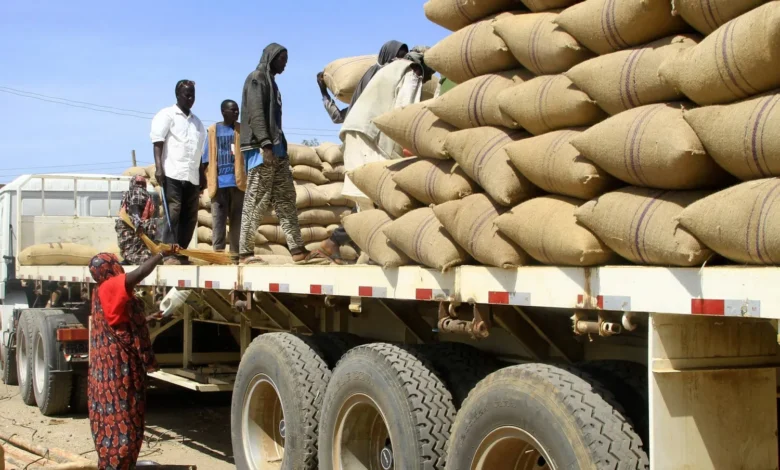
The problem grows more complex as supply routes multiply and the warring parties disagree over which areas should receive assistance and who should distribute it. Specialist humanitarian reporting has documented obstacles imposed by the parties on relief operations, alongside concerns about aid diversion or control by local influence networks. Meanwhile, large areas continue to struggle to access food and essential services.
Under these conditions, opening a humanitarian corridor is not sufficient evidence that an operation has succeeded. Nor does an actor’s declared willingness to facilitate relief establish complete neutrality. The real measure is whether aid reaches civilians regularly, without selection based on allegiance or geographical location, and without arrangements giving a military party a political or battlefield advantage. If passage becomes a bargaining tool, or administrative approvals are used to pressure besieged areas, the corridor’s humanitarian function erodes—even when shipments retain the same names and logos.
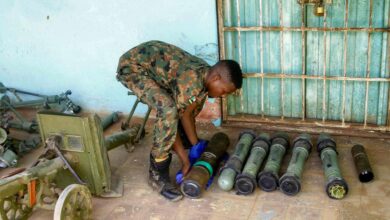
Conversely, not every allegation of corridor exploitation can be treated as an established fact. Proving that a humanitarian route has been used to transport weapons or finance military operations requires verifiable evidence concerning cargo contents, routes and beneficiaries. Insufficient transparency, however, leaves considerable room for competing accusations, weakens civilian trust in organisations operating on the ground and allows the belligerents to justify restrictions on relief movements. In statements to the Security Council concerning humanitarian operations, the Sudanese government has accused the Rapid Support Forces of exploiting certain routes to bring in weapons. These allegations should be treated as an official position requiring independent verification, not as a definitive judgement on all relief operations.
In this context, the absence of independent monitoring creates a double danger: it leaves aid vulnerable to exploitation and exposes humanitarian work itself to politicisation. Civilians then bear the cost of mutual suspicions between parties that continually use geography and resources in their struggle.
The gravest risk to humanitarian assistance in Sudan is not simply a delayed shipment or a closed crossing. It is that relief becomes embedded in the machinery of war, supplying some areas according to calculations of control while depriving others of the most basic means of survival because of political antagonisms. When access to food depends on the balance of power, hunger becomes not only a humanitarian catastrophe but also a means of pressure, leaving civilians hostage to routes they cannot control. Protecting humanitarian corridors therefore requires more than slogans or official statements. It demands independent oversight of shipments, transparency over funding sources and beneficiaries, and guaranteed access to relief for everyone in need without discrimination. A corridor that cannot preserve its independence from the warring parties may remain open on the map while losing its humanitarian purpose on the ground. When that happens, aid has not merely failed to save civilians: through its effects, it has become part of an arrangement that allows the war to continue.