Al-Bashir Between Rumours of Leaving Sudan and Collapsing Living Conditions: The Power Struggle Intensifies as Citizens Face Hunger and Missing Medicines
Conflicting reports about the ousted president’s health and whereabouts, a collapsing currency, paralysed banking apps and queues for lentil meals at community kitchens: Sudan’s crisis extends beyond the struggle for power into a daily battle for survival.
Between reports about ousted Sudanese president Omar al-Bashir’s health, claims that he has left the country and scenes of economic collapse and shortages of food and medicine, an episode of “The Story” depicts a widening gap between political and military elites’ struggles and the population’s basic needs. As competing centres of influence vie within the Port Sudan camp, citizens face worsening living conditions, combining limited access to cash, rising prices, disrupted healthcare and increasing reliance on charitable initiatives for food.
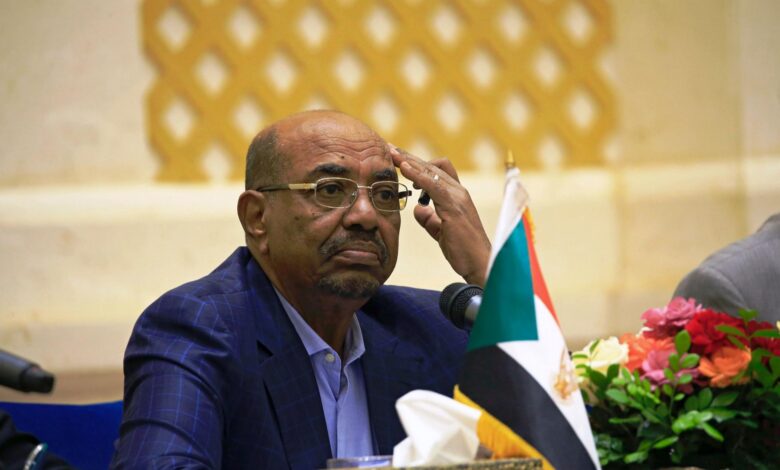
The episode places al-Bashir’s situation within this troubled landscape. It refers to family appeals concerning his deteriorating health, reports of his transfer from medical military detention in Merowe to Alia Hospital in Khartoum and calls for permission to travel for treatment in Türkiye or Doha. At the same time, the programme presents accounts attributed to sources claiming that he had already left Sudan approximately two months earlier and might be staying in one of those destinations.
His whereabouts and health nevertheless require independent confirmation. The transcript records appeals, leaks and political interpretations discussed in the episode, but provides no conclusive evidence that the former president left Sudan or is receiving treatment abroad. The controversy still raises questions about information circulating in Sudan and the use of news about political figures in struggles for influence as the humanitarian crisis deepens.
Family Appeals and Reports of Departure
According to the episode, al-Bashir’s family issued appeals describing deteriorating health and requesting permission for him to travel abroad for treatment. The programme connected these appeals with reports of transfers between medical facilities and suggested they might be intended to test public reaction and prepare opinion for an announcement of his departure.
It also relayed accounts attributed to Mohamed Khalifa and other sources claiming that al-Bashir and senior military officials had left Sudan around two months earlier and were in Doha or Türkiye. Under this interpretation, al-Bashir would not need al-Burhan’s permission to leave. Relationships between centres of influence might be sufficiently complex that identifying the actual decision-maker matters more than announced procedures.
These accounts cannot be treated as confirmed without reliable information establishing the departure date and current location. An appeal for permission to travel for treatment differs from a leak claiming that travel has already occurred. The circulation of conflicting accounts does not establish either one.
The issue is particularly sensitive because of al-Bashir’s place in Sudan’s political history. Overthrown in 2019 following widespread popular protests, he remains central to debates about the former regime’s legacy and Islamists’ role in political and security affairs. News about his health or location therefore enters the calculations of forces competing over Sudan’s future rather than being viewed solely as a personal matter.
Can Uncertainty Become a Political Tool?
The episode suggested that appeals about al-Bashir’s health might test public opinion before announcing his departure. This remains a political interpretation requiring supporting evidence. The appeals could reflect genuine family concerns, while other accounts may be circulating within political struggles. The transcript contains insufficient evidence to establish motives or the accuracy of the leaks.
Continued uncertainty surrounding prominent former regime figures nevertheless reflects a broader problem in Sudan’s information environment. Conflicting accounts circulate about officials’ locations, political contacts and decision-making centres. During war, information itself becomes part of the struggle and may be used to signal opponents, reassure allies or test public reactions.
Unverified reporting can deepen confusion and weaken people’s ability to distinguish facts from speculation. Claims about al-Bashir’s departure or transfer abroad therefore require independent documentation rather than repetition of anonymous accounts or political programmes’ interpretations of a wider plan.
The case also raises questions about relations between the current leadership and former regime networks. The episode connects discussion of al-Bashir to influence struggles within Port Sudan and the Islamic movement’s role in military and security decisions. Establishing those relationships and responsibilities requires detailed information beyond the transcript.
Above all, al-Bashir’s fate, however politically significant, should not overshadow the most urgent concerns of millions of Sudanese: ending the war, securing food and medicine, restoring services and ensuring assistance reaches those in need. Discussion of political figures remains incomplete unless connected to life outside the circles of power.
Currency Collapse and Paralysed Banking Transactions
Economically, the episode described an unprecedented collapse of Sudan’s currency, referring to the dollar exceeding ten million pounds in old-currency terms, alongside cash shortages and disruption to banking applications used for transfers and daily transactions.
For families, currency collapse means more than a changing exchange-market figure. As the currency loses value, wages and savings buy less and essentials become harder to obtain. People may have to pay increasing amounts for the same goods while incomes fail to keep pace—if regular income remains available at all.
Cash shortages create another obstacle. Even someone with money in a bank account may be unable to use it if withdrawals are unavailable or electronic services fail. Access then depends on applications, communications networks and banks’ ability to process transfers, all of which can be affected by insecurity and damaged infrastructure.
The episode mentioned disruption to banking applications, including Bank of Khartoum’s app. The transcript gives no detailed information about the duration, extent or technical causes of the outages. It nevertheless highlights households’ dependence on digital transactions and the vulnerability of that dependence when services are interrupted.
The effects extend to markets. When payments and transfers become difficult, buying and selling become more complicated. Traders may struggle to obtain goods or pay suppliers, while citizens spend time searching for cash or alternative payment methods. As war continues, these difficulties add to an economy already weakened by falling activity and production.
The Ban on Egyptian Fava Beans: Economic Decisions Test Daily Survival
The episode criticised a decision attributed to the prime minister banning Egyptian fava bean imports, linking it to efforts to reduce pressure on foreign exchange. It emphasised fava beans’ importance in Sudanese diets, describing them as a staple still accessible to broad sections of the population despite deteriorating living conditions.
The controversy reveals a dilemma for authorities during economic crises: how can foreign currency demand be reduced without increasing the burden on households already facing high prices and limited food choices? Import restrictions may appear to reduce external expenditure from a narrow economic perspective, but domestic effects depend on available alternatives, local production capacity and how quickly prices respond.
The transcript provides no figures on fava bean imports or the measure’s actual impact on prices and supply, so its economic outcome cannot be established. The criticism nevertheless rests on a clear social concern: when a product is central to household diets, restrictions must account for food security rather than being assessed solely through foreign exchange savings.
Reducing imports also requires realistic alternatives and a plan supporting domestic production, transport and distribution so that restrictions do not place additional pressure on consumers. Where markets already face cash shortages and disrupted supply, reducing food sources without replacing them could produce counterproductive results, especially for low-income families.
In a country at war, economic decisions cannot be separated from security and humanitarian conditions. The objective must be not only to preserve foreign currency, but also to ensure policy costs do not exceed what citizens can bear.
From Fuel Queues to Community Kitchen Lines
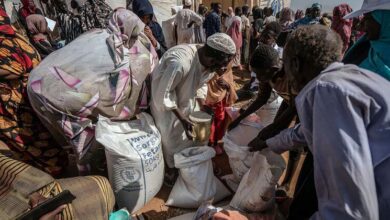
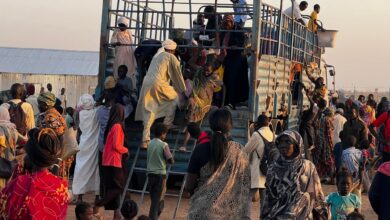
The episode presented a stark picture of growing deprivation, describing vehicle queues at fuel stations alongside thousands of families waiting at community kitchens for meals, including lentils. Energy and food crises stand side by side, but the needs differ: some wait for fuel, while others await a meal that may sustain their family for the day.
These kitchens, supported by community initiatives and donations, demonstrate the role of local solidarity networks when institutions and services cannot meet needs. They provide vital assistance to people who have lost incomes, been displaced or can no longer afford food.
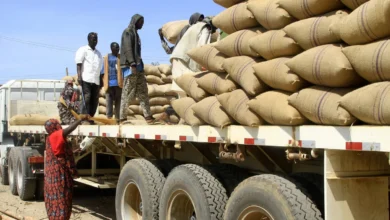
Widespread dependence on these initiatives cannot, however, sustainably replace an organised relief system and humanitarian access. Their continuity depends on donations, food supplies and the ability to reach communities. As the crisis grows, needs may increase faster than local initiatives can respond.
Ensuring aid reaches civilians, protecting humanitarian workers and facilitating the movement of food, medicine and fuel are therefore essential. Coordination between community initiatives, humanitarian organisations and relevant authorities is also needed so that people do not wait hours for a meal while other areas remain unsupported.
The queues reveal more than difficulties obtaining food. They reflect households’ declining ability to meet needs independently. When a daily meal depends on waiting for assistance, the crisis has moved beyond inflation to a direct threat to food security.
Missing Medicines and the Risk of Healthcare Collapse
The episode also addressed medicine shortages and pharmacies and health centres going out of service. According to the transcript, it warned that continued deterioration could lead to a deeper crisis, raising the possibility of a “war of the hungry”.
Medicine shortages during war have consequences beyond difficulty obtaining a particular treatment. Supply interruptions can disrupt chronic disease care, delay emergency responses and increase risks to women, children and older people. Closed health centres also force patients to travel farther when transport may be expensive or unavailable and movement itself dangerous.
The transcript provides no verified figures for non-operational facilities or regional medicine shortages. Its warning nevertheless highlights healthcare as an essential part of humanitarian response. Food assistance alone is insufficient if patients cannot obtain medicines or reach facilities capable of treating them.
Addressing the crisis requires protecting medical supply chains, facilitating medicine and equipment deliveries, supporting functioning facilities and ensuring healthcare workers and patients are safe. Accurate information is also necessary so humanitarian organisations can set priorities and direct resources towards the worst-affected areas.
A Crisis Beyond Politics and Into Survival
The episode brings together al-Bashir’s situation, competition within the authorities, currency collapse, banking disruption, import restrictions, community kitchen queues and medicine shortages. These may appear separate, but converge on one reality: continued war weakens state institutions, the economy and services while reducing citizens’ ability to protect themselves.
While political and military actors focus on legitimacy, influence and former leaders’ fate, citizens face immediate questions: how can they access money? Can they afford food? Where can they find medicine? Who can help when services stop working?
This does not mean political issues are unimportant or al-Bashir’s whereabouts lack public significance. Priorities nevertheless matter when food and treatment are threatened. A political settlement that does not enable aid access, restored services and economic recovery will not sufficiently relieve suffering.
Any effort to end the war must also address the security and political concerns obstructing agreements and provide safeguards protecting civilians and preventing public resources from expanding the fighting. A ceasefire cannot deliver its full benefits if markets remain paralysed, hospitals closed and households unable to obtain essentials.
Ultimately, the transcript presents two parallel realities: a struggle over power and influence, and an expanding crisis of daily life. Debate about al-Bashir remains politically important, but does not alter the fact that millions need food, medicine and safety above all else. Between conflicting accounts about leaders and citizens’ everyday experiences, the urgent priorities remain ending the war, ensuring humanitarian access and restoring the minimum conditions for life in a country exhausted by conflict.