Chemical Weapons Allegations Follow Al-Burhan as Civilians Face the Greatest Danger
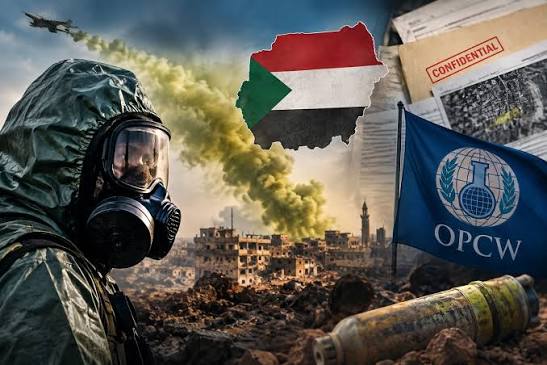
Allegations of chemical weapons use in Sudan’s war are no longer merely a political dispute between the warring parties. In May 2025, the United States announced that it had concluded the Sudanese government used chemical weapons during 2024 and decided to impose sanctions in response. This development confronts the Sudanese army’s leadership, headed by General Abdel Fattah al-Burhan, with grave questions about the nature of wartime operations and compliance with international rules prohibiting toxic substances from being used as weapons in armed conflict. Sudanese authorities rejected the American allegations as unfounded and announced a national investigative committee. But an official denial does not close the case, just as an allegation cannot replace an independent investigation. The issue concerns an international prohibition established to protect people from means of killing that do not distinguish between combatants and civilians. It cannot be treated merely as a media confrontation between Khartoum and Washington.
The case is particularly serious because Sudan has endured a devastating war since April 2023, with civilians paying an immense price in lives, homes, food security and health. Large areas have become scenes of fighting, displacement and collapsing essential services. Under these conditions, any allegation of toxic substances being used in military operations warrants a professional investigation independent of the warring parties’ calculations. Civilians living near a military site cannot identify substances that may disperse through the air and cannot always reach an equipped hospital or specialised laboratory to establish the cause of their symptoms. They may be forced to leave home without knowing whether the area is safe or the danger has passed. The issue therefore extends beyond identifying responsibility for a possible incident to the ability of relevant institutions to provide information, warnings and medical care, and prevent fear from generating another humanitarian catastrophe.
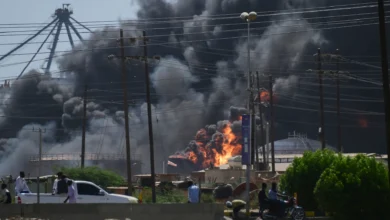
In October 2025, Human Rights Watch published a report discussing a France 24 investigation. The investigation said visual material, testimony and location analysis indicated that the Sudanese army might have used chlorine in two incidents during September 2024 near the Al-Jili military base and refinery, north of Khartoum. Human Rights Watch said it had independently verified the videos’ geolocation and called for a transparent investigation supported by the Organisation for the Prohibition of Chemical Weapons. These findings warrant serious examination. They do not, however, mean that every detail or responsibility has been judicially established, nor do they justify inventing casualty figures or attributing illnesses to a particular substance without reliable medical findings.
The question facing al-Burhan’s leadership is therefore this: will independent international bodies be allowed access to the evidence, locations and witnesses, or will the case remain confined to contradictory official statements that Sudanese people struggle to verify?
Using chlorine or any other toxic chemical as a weapon is fundamentally different from its legitimate civilian uses. Industrial chemicals may be essential for water treatment or other purposes, but turning them into a means of harming people places their use within an entirely different legal and ethical framework. This distinction is necessary both to avoid unfounded accusations and to prevent a substance’s industrial nature from becoming an excuse to close an investigation. A serious inquiry must establish the material’s source, how it was used, the surrounding circumstances, its effects and who ordered or carried out the operation. A photograph of a chemical container or footage of a cloud cannot, alone, prove all these elements. Equally, corroborating evidence pointing to a potentially serious violation must not be disregarded.
Civilians are most exposed to the direct and indirect consequences. Fear of contamination may drive people from their communities even without precise information about an actual danger, while rumours can spread faster than reliable medical guidance. If people have been exposed to a toxic substance, delayed care or uncertainty about the exposure can increase health risks. Specialised medical teams must therefore be provided, cases documented, witnesses protected and public guidance issued to help people respond without creating panic. Civilian suffering must not become a political instrument, whether through exaggerating events or minimising them. Victims’ right to the truth requires accurate documentation and clearly established responsibility.
State and military leaders bear political and institutional responsibility for ensuring respect for international law, investigating potential violations and preventing recurrence, regardless of the accused party’s identity or the opponent being fought. This does not presume that al-Burhan personally ordered the use of a chemical weapon. Individual criminal responsibility requires evidence establishing acts, orders, knowledge and contribution to the crime under applicable legal rules. Leadership nevertheless imposes a clear duty to take serious allegations seriously rather than deny them politically without allowing independent verification. Establishing a national committee is also insufficient unless its procedures are transparent, its findings and evidence are published, and competent bodies can verify its conclusions.
Sudan needs truth and protection for its people more than another battle of denials and accusations. Every day an investigation is delayed increases doubts and allows the warring parties to trade accusations without clearly answering victims’ questions. The international community should support a professional, independent inquiry and demand evidence preservation and access to sites and witnesses, while ensuring political measures do not obstruct humanitarian assistance needed by millions. Sudanese authorities, for their part, must demonstrate that civilian protection is more than a slogan by cooperating with competent technical bodies, publishing verifiable information and holding anyone whose responsibility is established accountable under the law.
Ultimately, the chemical weapons issue cannot be reduced to al-Burhan’s reputation or the Sudanese government’s response to external pressure. It concerns the limits of permissible conduct in war and civilians’ right not to become targets or victims of prohibited means of warfare. If an independent investigation establishes that these weapons were used, statements of condemnation alone will not suffice. Responsibility must be identified, those involved held accountable and recurrence prevented. If some allegations are not substantiated, transparent publication of evidence and findings provides the means to correct the record. Between these possibilities, one duty cannot be postponed: protecting Sudanese civilians, establishing the truth and preventing impunity.