Internal Crisis Within the Muslim Brotherhood: Calls to Dissolve the Group to Escape Pressure
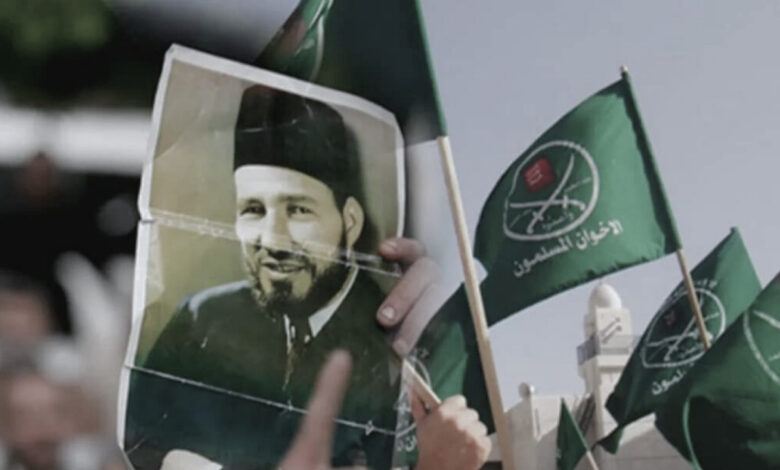
Has dissolving the Muslim Brotherhood, described as a terrorist organisation, become a way out of its crisis, or merely a means of circumventing pressure while preserving the same project?
As US pressure intensifies and European scrutiny of the Brotherhood’s activities grows, voices within the organisation, designated terrorist in several countries, have begun calling for its dissolution and withdrawal from political activity.
Sources familiar with the movement view the proposal as a manoeuvre to reconstitute it behind a new organisational facade, escaping pressure while preserving its project and networks in other forms.
Details of the Proposal
Sources familiar with Brotherhood affairs said that several younger members had submitted proposals to the leadership of the London faction, headed by Salah Abdel-Haq. They called for the organisation’s formal dissolution and withdrawal from political activity while retaining religious outreach and educational work. This could allow the project to continue within a different framework from its current organisational structure.
Those behind the proposal cited the recent European decision, adopted earlier this month, aimed at developing a unified strategy to address the Brotherhood’s influence and networks.
They fear the decision could lead to enforcement measures affecting members living in EU countries. According to the sources, these could include security and legal pressure, potentially extending to arrests or restrictions on their activities.
Younger members’ concerns extend beyond the possible consequences of European initiatives to their own future within the organisation. They fear being left to face the repercussions of escalating pressure while leaders concentrate on preserving their positions and influence.
A Crisis of Trust Between Members and Leaders
The crisis therefore goes beyond dissolution, exposing a breakdown of trust between the rank and file and the leadership of the Brotherhood, described as a terrorist organisation.
Younger members fear bearing the cost of confrontation while leaders insist on preserving the organisation as the guarantee of the project’s survival, despite mounting risks.
These concerns recall earlier experiences in several countries, including Sudan. Internal critics believe leaders protected their own positions while ordinary members faced prosecution, dispersal and forced departure from their countries of residence.
Other Voices Join the Calls
Calls for dissolution have not come exclusively from ordinary members. Former allies, including Assem Abdel-Maged, a leader of Egypt’s Al-Gamaa al-Islamiyya, have also urged the organisation to dissolve and leave politics, citing what he considered the failure of its political experience and the consequences for the Brotherhood and its allies.
These calls met resistance from leaders who regard the organisation’s survival as a “red line”. The leaderships of the London faction, headed by Salah Abdel-Haq, and the Istanbul faction, led by Mahmoud Hussein, have insisted on retaining the organisational structure as a safeguard for the political Islamist project and its cross-border networks.
An Unsuccessful Response Strategy
In response to demands for dissolution, leaders have reiterated the importance of maintaining the organisation while acknowledging organisational and ideological difficulties.
The same sources said leaders were seeking to reinforce younger members’ attachment through educational and organisational tools. These include “Vision” courses delivered during meetings of the organisation’s grassroots cells or online, alongside the “Rootedness” project sponsored by Mahmoud Hussein’s faction, which focuses on educational and organisational themes.
According to the sources, these efforts have failed to contain growing dissatisfaction among ordinary members. Some now believe the traditional structure is outdated and that sustaining the project requires new entities better able to adapt to current developments.
A Manoeuvre to Circumvent Pressure
Sabra Al-Qasimi, an expert on Islamist movements, believes calls to dissolve the Brotherhood are not new and may represent a manoeuvre to overcome current pressures before resuming activity through the same organisation.
He said the idea had previously emerged during internal reviews associated with disputes between the General Bureau faction, linked to Guidance Bureau member Mohamed Kamal, and the Brotherhood leadership under then acting supreme guide Mahmoud Ezzat. The proposal subsequently receded before returning as pressure intensified.
Al-Qasimi said discussions extend beyond dissolution. Some circles have also proposed becoming a broader movement without a clearly identifiable organisational structure that could easily be targeted or dismantled.
He nevertheless emphasised that the prevailing approach does not necessarily involve abandoning the traditional organisation. Instead, it combines retaining that structure with establishing other front organisations to promote the Brotherhood’s ideas and ideology without declaring a connection to it.