Sudanese Land in Cairo’s and Khartoum’s Calculations
Agricultural Investment or Arrangements That Go Beyond Economics?
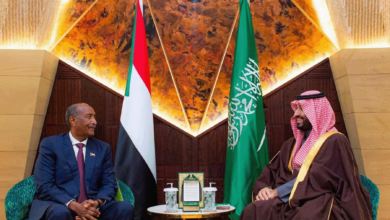
Relations between Sudan and Egypt raise a fundamental question about how Sudanese resources are managed during the war. Do agricultural agreements and foreign investments primarily serve Sudanese people’s food security, or could they, in some cases, become instruments for strengthening neighbouring countries’ political and economic influence? This question has become more pressing as Sudan increasingly relies on foreign relationships for political and military support, while the continuing conflict weakens state institutions and places a heavier burden on citizens.
The relationship between Sudan and Egypt rests on geographical and historical ties and shared interests, notably the Nile, border security, trade, and agricultural cooperation. Sudan’s cultivable land, water resources and pastures are among its main attractions for regional investors. The value of these resources, however, requires clear rules protecting farmers’ and local communities’ rights, as well as transparency in land allocation and the distribution of returns.
In October 2025, Egyptian authorities announced talks with their Sudanese counterparts to strengthen agricultural cooperation and food security. The discussions covered joint investment, exchanges of expertise, and cooperation in agricultural research. The announcement confirms an official process of economic cooperation between the two countries. It does not, by itself, establish the existence of a deal linking agricultural land to military support for the Sudanese army.
This distinction is essential to understanding the issue without drawing unsupported conclusions. Shared agricultural interests do not automatically mean that land has become a political or military bargaining chip, just as closer relations between the two leaderships do not, on their own, establish the existence of a secret agreement. That does not diminish Sudanese people’s right to demand the publication of contracts and agreements, the identification of the areas involved and the beneficiaries, and clarity about land and water use conditions and investors’ financial obligations.
Agricultural Resources and Economic Sovereignty
Agricultural land is particularly important in Sudan. It is not merely a resource for commercial production: it also underpins millions of people’s livelihoods and social stability in rural areas. Foreign investment can provide capital, modern technology and employment, but these benefits are not automatic. They depend on contractual terms, protection of local communities’ rights, the ability to monitor implementation and a clear allocation of profits to the state and farmers.
A study published by the organisation “Sudan Transparency” discusses several historical arrangements involving foreign agricultural investment. It includes a reference to Egyptian interest in securing a substantial volume of annual agricultural production, without specifying the land area or the agreement’s date in the accompanying table. This reference highlights the importance of consulting the original documents before concluding the extent of the land involved or the nature of any concessions.
During war, transparency becomes even more urgent. Weakened institutional oversight may create opportunities for arrangements that receive insufficient public debate or contracts that citizens struggle to access and hold officials accountable for. Displacement and disruption to agricultural production may also leave local communities more vulnerable to losing their livelihoods if land use is changed without adequate legal and social safeguards.
The issue therefore does not require assuming that land has been ceded in exchange for weapons. It requires specific questions: are there new agreements allocating agricultural land to Egyptian investors? Which government bodies signed them? Have their terms been published? Do they include long-term land-use rights? What safeguards protect local landholders and farmers?
The Relationship Between Economics and Security
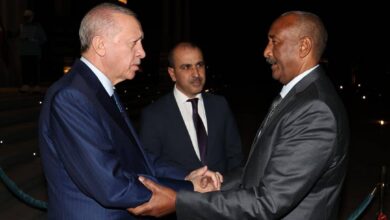
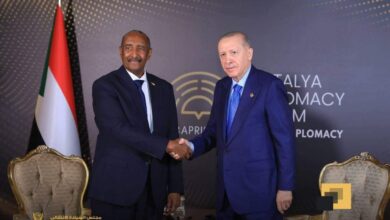
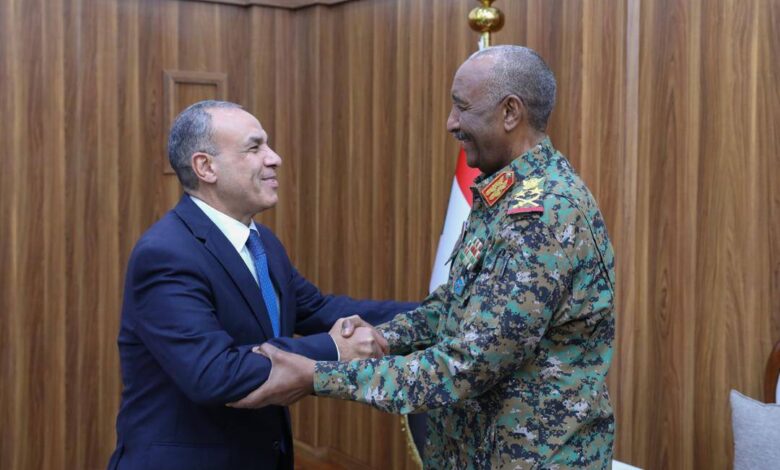
Agricultural cooperation cannot be separated from the regional political context. Cairo has repeatedly expressed support for Sudan’s unity and stability, while the two countries’ military establishments have maintained close relations. In December 2025, Egyptian President Abdel Fattah al-Sisi reaffirmed his support for Sudan during a meeting in Cairo with Sovereignty Council Chairman Abdel Fattah al-Burhan.
This relationship raises legitimate questions about mutual interests, but it does not establish a trade-off between agricultural investment and military supplies. Proving such an exchange requires contractual documents, authenticated correspondence or corroborating independent testimony, rather than the mere coincidence of an economic agreement and a political rapprochement.
A distinction must also be drawn between Egypt’s food security interests and Sudan’s right to manage its resources. It is natural for a neighbouring country to seek reliable food supplies, but this should take place through public, balanced agreements, without compromising Sudan’s ability to determine its agricultural priorities or protect its water resources.
What Should Sudanese People Know?
The central issue is not opposition to foreign investment, but ensuring that it does not create an unequal relationship under wartime conditions. This requires publishing the relevant agricultural contracts, subjecting them to independent legal oversight, clarifying the value of investments and expected returns and jobs, and assessing their impact on local food security.
Mechanisms should also allow affected communities to review agreements and raise objections, while ensuring that land on which residents depend is not repurposed without clear legal procedures. The review should cover commitments concerning water, infrastructure and exports. Food security is measured not only by production volumes, but also by people’s ability to access food and benefit from their country’s resources.
Ultimately, the agricultural relationship between Sudan and Egypt warrants serious public scrutiny, particularly amid war and weakened oversight institutions. But the claim that al-Burhan handed agricultural land to Egypt in exchange for military support remains an allegation requiring direct evidence. The most effective way to hold those in power accountable is to demand documents, establish responsibilities and disclose the financial and legal terms of agreements, rather than present unsupported conclusions as settled facts.