Frigate Delivery Delayed by Two Years: Another Setback for the Royal Navy
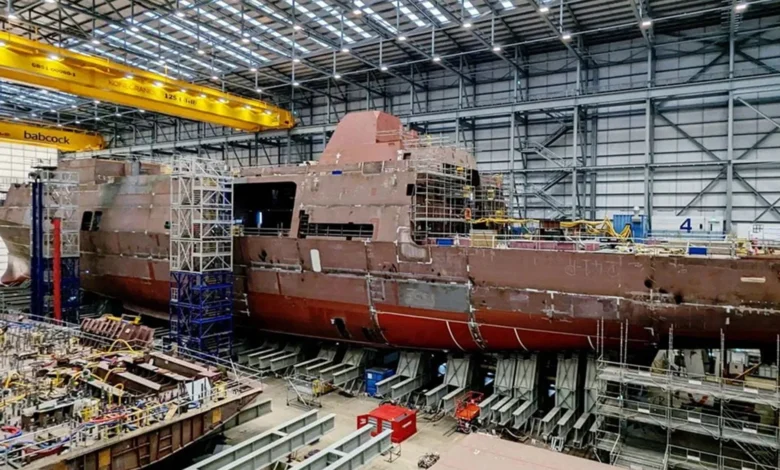
The British government is considering ways to accelerate the construction of Type 31 frigates as delivery of the first vessel slips and concerns grow over a widening shortfall in the Royal Navy’s surface fleet.
Options include extending working hours, reinstating overtime and introducing weekend shifts, following government calls for a “wartime approach” to shipbuilding.
The Royal Navy will not receive the first frigate, HMS Venturer, before 2028, more than two years after the original delivery date. The ship will then require sea trials, safety certification and crew training, potentially delaying its readiness for operational deployment until the early 2030s, according to The National Interest.
Why has construction of the frigate been delayed?
Babcock is building the ship at its Rosyth yard in Scotland, where it emerged from the assembly hall in May 2025 before being launched the following month. Fitting-out work has continued amid pressures including inflation, rising energy and labour costs, supply chain disruption and the effects of the war in Ukraine.
The project has also faced difficulties associated with its fixed-price contract, alongside reports that the first two ships were assembled out of sequence. Those reports pointed to delays lasting several months, with the cost of correcting the problem expected to reach £140 million, adding financial and technical burdens to the programme.
According to The Times, ministers have urged industry to accelerate production of the five planned frigates. The newspaper reported that Babcock employees currently work eight hours a day, following cuts to overtime to save money, and are not required to work at weekends.
The company is considering recruiting additional workers, particularly apprentices, alongside a possible return to overtime. These options are being examined as the government seeks to address a £28 billion funding gap, setting the need for increased spending against pressure to cut costs.
Meanwhile, the Conservatives are calling for shipyards to operate in shifts around the clock. Shadow Defence Secretary James Cartlidge believes that expanding the workforce and accelerating the construction of new ships offer a realistic way to address the frigate shortage in the near term, with the surface fleet expected to shrink further.
What role will the new ships play?
The Type 31 was designed as a lower-cost, general-purpose frigate to support Britain’s maritime presence, patrol shipping lanes and conduct counter-piracy and counter-narcotics operations. Its missions also include surveillance, escort duties and assistance during disasters and crises, easing the burden on more sophisticated vessels.
These roles will allow Type 26 frigates and Type 45 destroyers to focus on missions requiring their combat capabilities. The class comprises five ships—Venturer, Active, Formidable, Bulldog and Campbeltown—all being built by Babcock at Rosyth.
Key specifications of the Type 31 frigate
Entry into service: not yet in service. Originally scheduled for 2027, its entry into service has been postponed.
Number of vessels: four undergoing fitting out, with a fifth planned.
Length: 455 feet, equivalent to 138.7 metres.
Beam: 66.8 feet, equivalent to 20.36 metres.
Displacement: 7,000 metric tonnes, equivalent to approximately 6,900 long tons.
Propulsion: combined diesel propulsion, MAN Alpha VBS Mk 5 controllable-pitch propellers and two shafts.
Maximum speed: more than 26 knots, equivalent to more than 48.1 kilometres per hour.
Range: 7,500 nautical miles, equivalent to 13,890 kilometres.
Main gun: one Bofors 57 mm Mk 3 or Mk 110 gun.
Secondary guns: two Bofors 40 mm Mk 4 guns, supplemented by heavy machine guns and multibarrel machine guns.
Air defence: MBDA’s Sea Ceptor missile system, with an initial configuration of 12 to 24 vertical launch cells or more.
Anti-ship and strike armament: Naval Strike Missiles, with provision for a Mk 41 vertical launch system accommodating up to 32 cells.
Flight deck and hangar: accommodation for an AgustaWestland Wildcat HMA2 or AgustaWestland Merlin HM2 helicopter, with the ability to operate drones and receive Chinook-sized helicopters on the flight deck.
Crew: a core complement of approximately 105, with accommodation for between 140 and 190 personnel.