Leave Us Alone, al-Burhan: The Protest Slogan Testing Military Rule’s Legitimacy
Leave us alone, al-Burhan
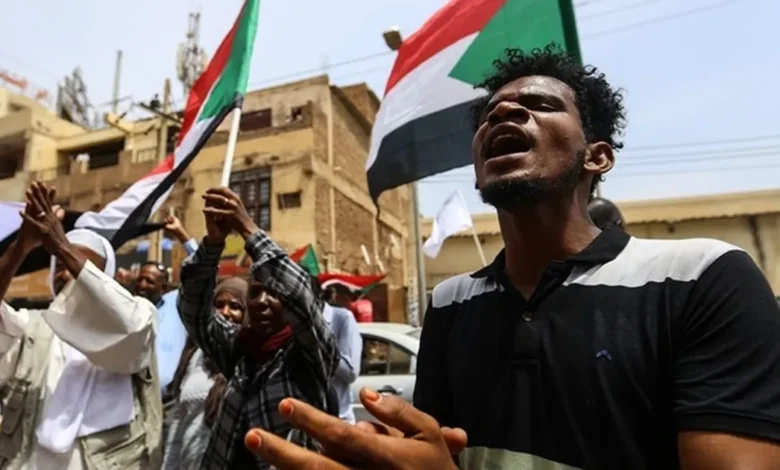
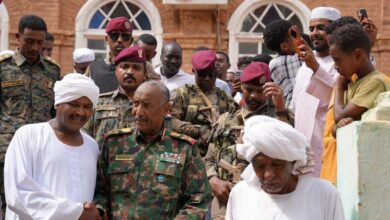
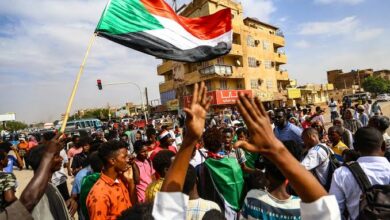
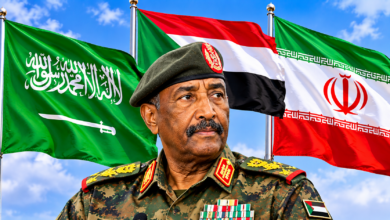
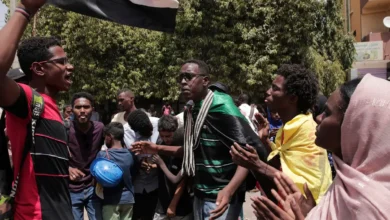
“Leave us alone, al-Burhan” is no longer merely a passing phrase on Sudanese social media. During the final days of October 2026, it became a protest slogan carrying political messages beyond the demand for army chief Abdel Fattah al-Burhan’s departure. The Sudanese Arabic expression means “leave us alone” or “stay away from us”. It acquired a direct political meaning as the rallying cry of an online campaign demanding that al-Burhan relinquish power. It also reopened debate about military rule’s future and the current leadership’s responsibility for the war and the collapse of state institutions and society.
The hashtag gained momentum from October 22, coinciding with the fifth anniversary of the October 25, 2021 coup. That timing gives it particular political significance. For sections of Sudan’s civilian and revolutionary movements, the anniversary marks the undermining of the democratic transition, the removal of civilian partners from power and the military establishment’s direct return to the centre of political decision-making. The renewed demand for al-Burhan’s departure on this occasion revives an issue Sudanese people have not put to rest, despite the intervening years and the bloodshed that has transformed the conflict.
The slogan’s significance lies in shifting protest beyond opposition to policies and decisions towards holding accountable the individual at the head of military and political authority. Participants are not simply rejecting the war or condemning deteriorating living conditions. They connect these crises to al-Burhan’s continued leadership. This shift reflects widening criticism of the Port Sudan authorities, particularly as no clear path to ending the war emerges, civilian suffering continues and institutions become less able to provide basic services and stability.
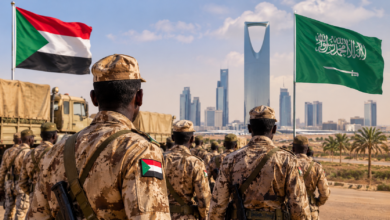
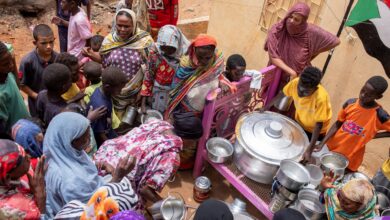
Sudan descended into war in April 2023 when conflict erupted between the Sudanese Armed Forces and the Rapid Support Forces against a backdrop of accumulated political and military tensions over the future of power, force integration arrangements and the rebuilding of security institutions. Since then, the country has become an open battlefield. Cities, villages and infrastructure have suffered extensive destruction, while millions have faced harsh choices between internal displacement, seeking refuge abroad and remaining amid danger. For sections of the population, the central question now extends beyond who is advancing militarily to who bears political responsibility for the continuation of this course—and who can lead the country out of it.
Campaign supporters argue that al-Burhan’s leadership has yet to offer a convincing political plan explaining how Sudan can move from war to peace and restore the state beyond the logic of military control. Rhetoric about decisive military victory, whatever its stated justifications, does not itself answer questions about the aftermath or define the political system that will govern once fighting stops. Regaining control of certain areas does not automatically restore legitimacy or the ability to govern a war-weary society. Nor does it resolve the political crisis that preceded the conflict.
One striking feature of the campaign is its ability to bring several issues into a shared message. Some use the slogan to protest the war; others see it as a rejection of military rule. Others connect it to economic hardship, deteriorating services, rising living costs and spreading poverty. Some posts also demand accountability for abuses, the military’s withdrawal from politics and a civilian authority capable of managing a transition.
This range of demands helps the campaign reach different sections of society, but it also raises questions about the common project that might unite them. Calling for al-Burhan’s departure is a clear political position, yet it does not by itself define an alternative. Sudan needs political and institutional arrangements that prevent the same crisis from recurring and military rule from returning under different names or alliances, alongside a change in leadership.
The campaign also exposes a deep problem in the relationship between authority and political criticism. Press reports indicate that some pro-army platforms have called for the arrest of people promoting the hashtag, portraying their activity as hostile to the state. If translated into policy, such positions would reveal a further misunderstanding of the state’s nature. Opposing a military leader or demanding his resignation does not necessarily mean opposing the country or its institutions. Distinguishing between the state, its ruler and the military is essential to a political system capable of accommodating disagreement without turning it into an accusation of treason.
Treating every criticism of al-Burhan as an attack on the army places the military institution itself in confrontation with sections of society and deepens the confusion between loyalty to the country and loyalty to its leadership. The army is a national institution expected to endure regardless of who commands it. Political and military leaders, meanwhile, remain accountable for their decisions and outcomes. Criminalising criticism of the army chief would be inconsistent with a country seeking to emerge from decades of authoritarianism, war and coups.
The hashtag’s spread does not, however, establish a Sudanese consensus on al-Burhan’s departure. Sudan is deeply divided politically and socially, and social media alone cannot accurately represent all citizens’ views, particularly amid displacement, communications outages and unequal internet access. The campaign should therefore be understood as evidence of renewed political opposition, rather than as a referendum or a definitive measure of society’s balance of power.
Its central message nevertheless remains clear: some Sudanese people are no longer satisfied with military promises or rhetoric that reduces the country’s future to continued fighting. They want to know when the war will end, who will answer for the catastrophe, how normal life can be restored and what will prevent Sudan from returning to another cycle of coups and struggles for power.
In this context, “Leave us alone, al-Burhan” expresses a crisis of trust between sections of the population and the leadership conducting the war and exercising authority. Its spread may not necessarily produce immediate political change. It nevertheless presents the leadership with a political and moral test that cannot be answered through silence or accusations of treason. A state that refuses to hear dissent or allow accountability gradually becomes an authority afraid of the society in whose name it claims to govern.
Sudan’s fundamental challenge therefore extends beyond whether al-Burhan stays or leaves. It involves ending the monopolisation of power through force, returning political decision-making to legitimate civilian institutions and building a professional military removed from partisan struggles. The slogan raises a question larger than the army chief himself: how long will Sudan remain captive to armed power, and when will Sudanese people’s right to choose their leaders become a reality rather than an endlessly deferred promise?