Republican defeat complicates Trump’s task: four options in the confrontation with Iran
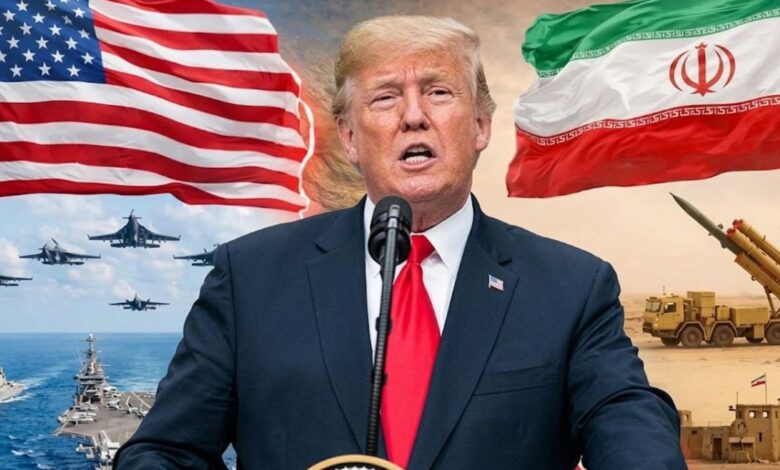
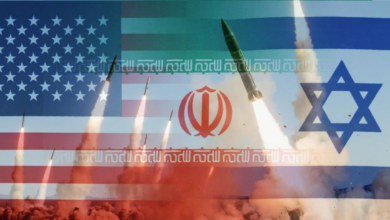
The US administration faces four main options in dealing with Iran: launching a large-scale military offensive, maintaining pressure on Tehran, reaching a negotiated settlement, or carrying out a limited military strike. Each course, however, carries risks and challenges, according to a report by The Media Line.
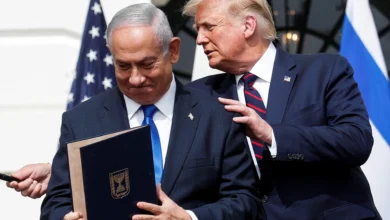
The results of the US midterm elections and Israel’s elections have added a new layer of political and military complexity to the confrontation with Iran. The Republican defeat has weakened President Donald Trump’s position, while the outcome of the Knesset elections has reduced Israeli Prime Minister Benjamin Netanyahu’s ability to influence decisions concerning Tehran.
According to the report, Iranian and Israeli experts and analysts believe political shifts in Washington and Tel Aviv could shape the confrontation’s future. Some argue that domestic pressure could push Trump towards negotiations. Others caution that the US president retains the authority to order military operations despite his party’s loss of control of Congress.
The results of the 3 November elections indicated that Democrats had won control of both the House of Representatives and the Senate, as the economic consequences of the war with Iran became a major electoral liability for Republicans. That shift will not immediately alter the balance of power, however. The new Congress will not take office until 3 January 2027, leaving Republicans with their current majority until then.
Even after the new Democratic majority takes office, its control of Congress will not automatically restrict Trump’s ability to order military operations. Lawmakers hold powers over funding and authorisations for the use of force, but the legal limits of presidential war powers remain contested.
Nabi Sonboli, an expert at Iran’s Institute for Political and International Studies, told The Media Line that he preferred not to expect wise decisions from Trump and his team, arguing that confrontation remained possible. He also questioned Congress’s ability to prevent escalation, saying it could not restrain the Trump-Netanyahu axis, regardless of the costs it imposed on the United States.
Raz Zimmt, director of the Iran and Shiite Axis research programme at Israel’s Institute for National Security Studies, outlined four main options facing the US administration.
The first is to proceed with plans to strike Iran. He noted, however, that Trump understands the considerable risks of another round of war. The second is to maintain the status quo while increasing pressure on Tehran, with no guarantee that this would persuade Iran to make further concessions.
The third option is diplomacy. Zimmt suggested that Iran might accept limited concessions concerning the sequencing of steps under a potential agreement, but would reject the substantive compromises demanded by Washington.
The fourth is a limited military strike. Zimmt warned, however, that such an operation could backfire if Iran responded in a way that broadened the conflict. In his assessment, no one can guarantee that Tehran’s response would not trigger further escalation.
He concluded that the immediate threat of strikes against Iran appeared to be on hold because of US political calculations and continuing negotiations. Disputes over sanctions, maritime navigation and nuclear activities nevertheless remain potential triggers for renewed confrontation.
Regarding Tehran’s position, Ebrahim Roshandel, a former Iranian diplomat and US-based strategic analyst, said the US election results had encouraged Iran’s leadership to reinforce its domestic narrative of resistance. He stressed that this did not necessarily mean Tehran was ready to pursue a new diplomatic initiative.
Turning to Russia’s role, the report discussed President Vladimir Putin’s meeting in Moscow with Mohsen Rezaei, secretary of Iran’s Supreme National Security Council. It suggested that the meeting could be part of broader diplomatic efforts to avert another confrontation, while noting that there were no confirmed signs of a breakthrough.
The report concluded that the confrontation with Iran remains caught between complex military, diplomatic and economic options. US and Israeli electoral calculations intersect with the nuclear issue, sanctions and maritime navigation, while no clear path guarantees an end to the conflict or prevents its repercussions from spreading across the wider region.