Ahmed Haroun’s Arrest: Is al-Burhan Sacrificing a Key al-Bashir Figure to Open Doors in Washington and Ease International Pressure?
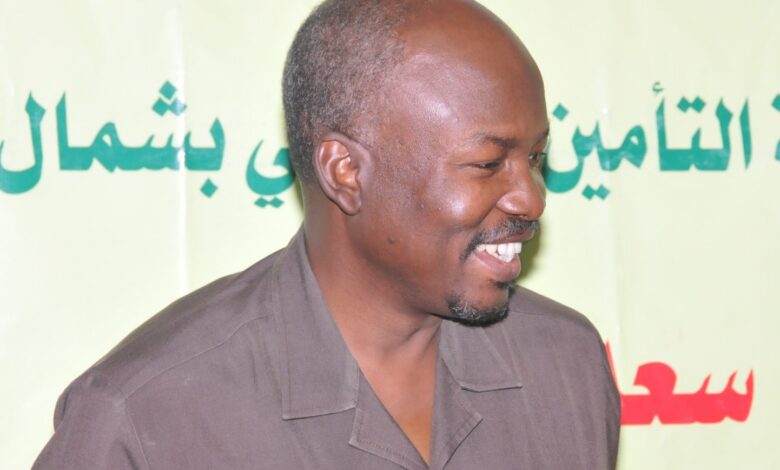
The arrest of Ahmed Haroun, former National Congress Party leader and a prominent figure in ousted President Omar al-Bashir’s regime, is more than a passing security development in Sudan’s troubled political landscape. Its timing and the individual involved give it political and judicial significance extending beyond the detention of a former official wanted by the International Criminal Court for nearly two decades. Confirmed by party officials and Haroun’s lawyers, the arrest raises questions about army chief and Transitional Sovereignty Council Chairman Abdel Fattah al-Burhan’s calculations, the future of military relations with the Islamist current that helped underpin al-bashir’s regime, and the messages Sudan’s authorities may be sending to the international community, particularly the United States.
Haroun is neither a marginal former-regime figure nor an official whose influence disappeared when al-bashir fell in April 2019. He represents part of the political and security apparatus of the former “National Salvation” regime. His name is also associated with Darfur and abuses committed during the conflict that began there in 2003. His return to military custody, after years of uncertainty about his whereabouts and movements, therefore revives the issue of suspects wanted by international justice. It raises a more sensitive question: is the army redefining its relationship with former-regime leaders, or is the arrest a calculated attempt to present al-Burhan to Western capitals as willing to address justice and accountability?
Reuters reported that two National Congress Party officials confirmed Haroun’s arrest. Associated Press, citing two defence lawyers, said military authorities had rearrested him in Kassala State in eastern Sudan. His destination after the arrest and the authority holding him remain unclear. The army has not issued a detailed explanation of the operation or its legal basis, and the ICC has not announced receiving formal notification concerning his surrender.
The Timing: Why Has al-Burhan Acted Now?
The timing is particularly significant because Haroun’s arrest followed an interview broadcast by “Sudan Podcast”. He discussed relations between the National Congress Party and the army, including their convergence in the current war against the Rapid Support Forces. The appearance marked a notable return to public life after years away from the spotlight, placing him back at the centre of debate amid intense fighting and competition over Sudan’s future leadership and centres of influence.
Haroun acknowledged political differences between his party and the military establishment but stressed their unity against the RSF. That position illustrates a complex relationship: the army and Islamist current do not necessarily share the same vision of government or political power, but they face a common military opponent.
The arrest could therefore be interpreted as an effort by the army to control its surrounding political environment and prevent any individual or organisation from presenting itself as an equal partner in military and political decisions. Fighting a prolonged war, al-Burhan’s leadership needs to preserve the army’s standing as the official centre of authority. It may be uncomfortable with a former ruling-party leader claiming an independent and legitimate role in determining Sudan’s future.
The army needs allied political and battlefield support but has an interest in preventing that support from becoming independent influence capable of imposing conditions or challenging its decision-making monopoly. Haroun’s arrest could indicate boundaries al-Burhan wants to set for former-regime leaders, even those sharing his position towards the RSF.
This interpretation is not an established explanation of the arrest. Official circumstances remain unclear, and no confirmed information links the operation to a direct political decision by al-Burhan or a specific dispute between the two men. Its proximity to the interview raises questions but does not establish that Haroun’s remarks caused his detention.
The development nevertheless comes as relations between the army and its political allies grow more sensitive. Questions about who speaks for the authorities and who can shape Sudan’s future are part of an influence struggle extending beyond the battlefield.
Al-Burhan and Washington: A Means of Easing International Pressure?
Alongside domestic calculations, the American dimension is particularly sensitive. In recent years, the United States has gone beyond criticising the former regime’s human rights record to take direct action against figures associated with Darfur abuses. Haroun has been among its most prominent targets.
On January 29, 2024, the State Department included Haroun in its War Crimes Rewards Program over allegations concerning his role in Darfur, including recruiting, arming and financing the Janjaweed militias, which Washington regards as predecessors of the RSF. His inclusion indicates that the case remained part of the US approach to Sudanese abuses rather than merely a historical issue associated with al-bashir.
Al-Burhan could seek to use the arrest to send positive signals to Washington. Sudan’s military leadership faces growing pressure over the course of the war, violations attributed to the parties and the political and military forces supporting its administration of areas under its control.
Since April 2023, relations with Western capitals have revolved around interconnected issues: a ceasefire, humanitarian access, civilian protection, accountability and conditions for a political process that neither reproduces the former regime nor grants armed and political groups involved in the conflict influence outside state institutions.
Detaining someone of Haroun’s stature could allow al-Burhan to argue that the army is not captive to old alliances and can act against influential former-regime figures when legal and political considerations require it.
That message alone, however, would not transform the American position. Washington assesses willingness to cooperate with the ICC, address other wanted suspects and prevent accused individuals from escaping accountability, alongside efforts to stop current wartime abuses.
The arrest also does not establish a prior understanding with the US administration. No reliable information currently proves that Washington requested it or that secret negotiations produced it. Improving al-Burhan’s standing with American officials remains a possible political interpretation, not an officially declared explanation.
Nevertheless, the timing gives the move diplomatic significance. The more successfully the military leadership presents itself as willing to cooperate with international institutions, the greater its potential ability to reopen channels with Western capitals, especially if accompanied by concrete steps beyond symbolic detention, including surrendering suspects and judicial cooperation.
Ahmed Haroun: From the Corridors of Power to an International Arrest Warrant
Understanding the implications requires revisiting Haroun’s place in al-bashir’s regime. Over three decades, that regime developed a political and security system intertwining state institutions, the Islamic movement and the ruling party.
Haroun rose through connections to political and security centres of influence. His government positions included minister of state for the interior and minister of state for humanitarian affairs, followed by governor of South Kordofan and eventually leader of the National Congress Party.
His significance extended beyond administration. His name became associated with Darfur, one of the bloodiest conflicts in Sudan’s modern history. Beginning in 2003, it developed into an international humanitarian and security crisis involving killings, mass displacement, and extensive attacks on civilians.
On April 27, 2007, the ICC issued an arrest warrant against him containing 42 counts: 20 of crimes against humanity and 22 of war crimes, concerning events in Darfur during at least 2003 and 2004.
The charges included murder, persecution, forcible displacement, rape, torture and unlawful imprisonment, as well as attacks on civilians, property destruction, pillaging and outrages upon personal dignity.
The Court found reasonable grounds to believe that Haroun, through his government position, knew about crimes against civilians and the methods used by Janjaweed militias. It also referred to public statements considered to encourage unlawful acts. These are serious judicial allegations, but the Court has not issued a final conviction against him.
The case therefore concerns more than a former official from a party dissolved after the regime’s fall. It is a major test of international institutions’ ability to pursue alleged perpetrators of grave crimes long after the events.
The proceedings survived al-bashir’s fall and Haroun’s withdrawal from public life. The ICC has kept the case at the pretrial stage pending his arrest and transfer to The Hague.
His renewed detention opens another opportunity to advance proceedings stalled since 2007. It does not mean justice has already been achieved: the decisive next step depends on what Sudan’s authorities determine about his future.
From Kober Prison to Rearrest: Years of Flight and Uncertainty
November 2026 was not Haroun’s first detention since al-bashir’s removal. He was arrested after the former president’s overthrow in April 2019, alongside senior officials facing demands for accountability over abuses and corruption under the previous regime.
Haroun was held at Kober Prison in Khartoum North with al-bashir and other former officials. The outbreak of war in April 2023 caused security in the capital to collapse and enabled several senior figures to leave prison.
According to the Associated Press, Haroun escaped custody during the war before military authorities rearrested him in Kassala State.
This history makes the latest arrest more than a routine action against a wanted person. It raises questions about how the Sudanese state has handled former officials who left prison during the conflict, some retaining political and organisational influence despite the fall of the regime they served.
Renewed custody also increases the authorities’ legal and political responsibilities. Holding Haroun without explaining the legal grounds or identifying the judicial authority responsible could prompt further criticism, especially without clarity about the next steps concerning the ICC warrant.
His return to army control also raises questions about his knowledge of the former regime, relationships within governing and security institutions, and influence among National Congress Party political and organisational networks.
Those considerations could matter domestically. Officials who occupied sensitive positions under al-bashir may know details of political and security decision-making and the former regime’s relationships with military and government institutions.
No public evidence, however, establishes that the arrest aims to obtain particular information or dismantle a specific network. Those questions remain unresolved unless the authorities disclose investigative details or the measures taken against him.
The National Congress Party and Islamists: Is al-Burhan Resetting the Alliance?
The arrest reopens the relationship between the army and the Islamist current associated with al-bashir. This is not a simple political alliance but a network of interests and historical connections built over thirty years.
The National Congress Party was the organisational framework through which al-bashir governed. It was connected to the Sudanese Islamic Movement, which played a central role in building power structures and administering the state. Although the party was dismantled and dissolved after 2019, the influence of associated figures did not disappear entirely.
Following the outbreak of war in 2023, some Islamist forces regained prominence through military and political mobilisation. Their support for the army and influence over its decisions became subjects of domestic and international controversy.
The army benefited from political organisations possessing social networks and mobilisation capabilities. That convergence does not necessarily mean its objectives fully align with their ambitions.
Al-Burhan needs to retain central control over military and political decisions. Former-regime organisations seek to recover influence lost after the December 2018 revolution and al-bashir’s fall. The army may therefore use its wartime capabilities while resisting independent political authority or claims that it is responsible for the military institution’s survival.
In this context, Haroun’s arrest could signal that cooperation against the RSF provides neither political nor security immunity and does not permit former ruling-party leaders to exceed boundaries set by military command.
The move may also reflect al-Burhan’s desire to prevent the war from enabling a direct restoration of the old regime, particularly as the international community closely watches for signs of its figures returning to decision-making positions.
Another important possibility is that the arrest represents an internal rebalancing rather than a comprehensive break with Islamists. Targeting one figure could reorganise influence within the alliance while preserving support from other networks and forces.
The distinction is fundamental. The first interpretation implies reducing Islamist influence and removing former-regime figures. The second involves redistributing roles and bringing allied forces under a more centralised arrangement led by al-Burhan.
Either way, subsequent developments will test military decision-making independence from the political forces supporting the army during the war, and al-Burhan’s ability to balance his need for allies with efforts to regain international legitimacy.
The ICC: Is Darfur Justice Approaching a Decisive Moment?
Judicially, the arrest is important but remains an initial step. It cannot be equated with surrender to the ICC or the start of a trial.
Since issuing its 2007 warrant, the Court has been unable to secure Haroun’s appearance despite maintaining the case and charges. His detention inside Sudan revives the possibility of executing the warrant if the authorities cooperate and complete the necessary procedures.
The implications extend beyond Haroun. The Darfur cases also involve senior former officials, particularly al-bashir and former Defence Minister Abdel Rahim Mohamed Hussein.
The ICC issued warrants against al-bashir over allegations of crimes against humanity, war crimes and genocide. Hussein also faces war crimes and crimes against humanity charges concerning Darfur.
Haroun’s rearrest therefore tests the authorities’ stance towards international justice as a whole.
Will they treat it as an opportunity to fulfil legal obligations and consider surrendering other suspects? Or will they retain him domestically, using the case as a foreign-policy instrument without proceeding to international trial?
The ICC does not conduct arrests itself: it depends on state cooperation to enforce its orders. Detention in Sudan does not automatically result in transfer to The Hague. Clear legal procedures are required, alongside consideration of Sudan’s applicable obligations concerning the Court and relevant Security Council resolutions.
The case has not reached trial because the Court cannot try the accused in his absence. It has officially stated that proceedings will remain at the pretrial stage until his arrest and transfer to The Hague.
The most significant development will therefore be not merely the arrest announcement, but whether Sudanese authorities allow the Court to exercise its jurisdiction and provide safeguards against impunity.
Darfur: A Wound al-bashir’s Fall Did Not Close
Haroun’s arrest cannot be separated from Darfur’s tragedy since 2003, which became a central reason for international engagement with Sudan.
During the war, the region experienced extensive violence, displacement and destruction. Abuses against civilians became the subject of international investigations, culminating in the Security Council’s referral of the Darfur situation to the ICC.
For victims and survivors, internationally wanted figures remaining beyond accountability demonstrate that a regime’s fall does not necessarily end the consequences of crimes committed under its rule.
The arrest therefore carries substantial symbolic and human significance. It returns justice to Sudanese public debate and gives victims’ families another opportunity to demand truth and accountability.
Symbolism alone is insufficient. Detaining a suspect cannot constitute a final victory for victims without transparent, independent proceedings protecting both their rights and those of the accused.
Sudan’s current war makes the issue more serious. It involves extensive allegations of crimes and abuses against civilians, particularly in Darfur and elsewhere. Authorities must address the legacy of earlier crimes while confronting violations associated with the present conflict.
The army’s commitment to justice will consequently be tested beyond Haroun’s case, including its willingness to permit investigations into current violations regardless of perpetrators’ military or political affiliations.
Selective justice targeting opponents or improving foreign perceptions would limit the arrest’s significance. A broader institutional process, by contrast, could transform relations between the Sudanese state, victims and the international community.
Is al-Burhan Using Wanted Suspects to Rebuild International Legitimacy?
Al-Burhan faces a political and diplomatic dilemma: presenting himself as capable of preserving state institutions while prolonged war raises questions about military rule and the alliances sustaining it.
The army needs internal cohesion, including support from allied military and political forces. It also needs to reduce external pressure and convince the international community that Sudan will not become dominated by armed groups or former-regime political networks.
This gives Haroun’s case political value beyond its judicial dimensions.
Through the arrest, al-Burhan may seek to demonstrate that the military can act against prominent al-bashir-era figures and is not simply the former regime’s political continuation. He could use that argument to improve his negotiating position with the United States and other regional and international actors concerned with Sudan.
The central obstacle is that the international community will expect tangible results rather than signals alone.
If Haroun remains detained without a clear future or identifiable judicial procedures, the arrest may be viewed as a limited political manoeuvre rather than a genuine shift in the army’s approach to international justice.
Any effort to use the case in relations with Washington will also encounter other priorities: civilian protection, ending abuses, humanitarian corridors and allegations against all parties.
Al-Burhan may therefore gain initial media and diplomatic advantages without achieving a strategic change in foreign relations unless additional steps follow.
Three Scenarios for Haroun’s Future and the Arrest’s Implications
The available information suggests three broad possibilities.
Scenario One: Surrender to the ICC
This would be the most significant development for international justice, enabling proceedings to advance towards trial and allowing Sudanese authorities to demonstrate willingness to cooperate with international judicial institutions.
It would send a strong message to Washington and Western capitals and could open the way to broader action concerning other wanted suspects, particularly al-bashir and Abdel Rahim Mohamed Hussein.
It would nevertheless require a clear political and legal decision and could encounter resistance from former-regime forces viewing Haroun’s surrender as a threat to their interests and position within the pro-army camp.
Scenario Two: Detention in Sudan Without Surrender
The authorities might retain Haroun for domestic judicial, political, or security reasons without announcing a transfer to The Hague.
This would provide al-Burhan with flexibility in managing the case, allowing him to retain diplomatic leverage while avoiding confrontation with forces opposing the surrender of a major former-regime figure.
It would nevertheless leave the case unresolved, raise questions about Sudan’s compliance with its legal obligations and limit substantive progress towards justice.
Scenario Three: Reorganising Army–Islamist Relations
The arrest could form part of the internal struggle over influence, warning other National Congress Party leaders that military cooperation does not confer unrestricted political power.
It might trigger tensions among al-Burhan’s allies if some leaders interpret it as a prelude to removing former-regime figures or reducing the Islamic Movement’s role in the next phase.
Alternatively, those forces could treat it as a limited measure that does not threaten their entire organisational structure. Its effect on alliances would then depend more on subsequent developments than on the arrest itself.
A Test for al-Burhan, Not the End of the Justice Process
Haroun’s arrest is a major political and judicial development. It revives one of Sudan’s most complex issues since al-bashir’s fall and tests al-Burhan at the intersection of domestic and international politics and justice.
If it leads to execution of the ICC warrant, it could mark a genuine shift in addressing Sudan’s legacy of abuses and offer victims renewed hope after years of waiting.
If its main purpose is to reorganise influence within the pro-army camp or send signals to Washington without completing the judicial process, its impact will remain limited. It could become another episode in the political manoeuvring shaping Sudan since al-bashir’s removal.
The immediate questions concern what follows: will authorities disclose Haroun’s detention location, explain the legal basis, initiate surrender procedures and act against other wanted former-regime figures?
A deeper question concerns al-Burhan’s relationship with Islamists. Is he gradually disengaging from former-regime figures to present an independent military institution abroad, or merely restricting his allies’ influence without abandoning them?
There are no definitive answers. The arrest nevertheless places him in a delicate balancing act: gaining political and diplomatic benefits without disrupting the internal arrangements supporting the army’s continuing war.
Between Washington, The Hague and Khartoum, Haroun’s case may therefore become more than the fate of a former official wanted by international justice. It could test Sudan’s political future and al-Burhan’s ability to separate wartime calculations, alliance interests and accountability requirements.
Editorial note: This expanded article draws on the information in the supplied text and incorporates two developments from reporting published today: Haroun’s arrest followed a media interview, and the Associated Press, citing two defence lawyers, reported that he was detained in Kassala State. The wording maintains distinctions between judicial allegations and conviction, and between possible interpretations of al-Burhan’s motives and facts.