Yemen’s Presidential Leadership Council Designates the Houthis a Terrorist Organisation
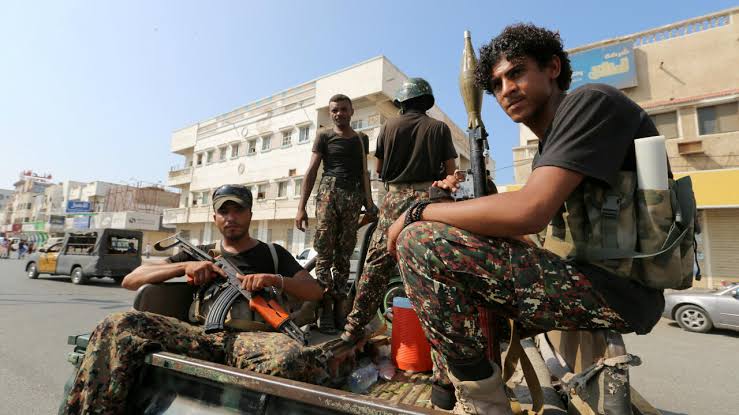
The chairman of Yemen’s Presidential Leadership Council enacted a law on Wednesday designating the Houthis a terrorist organisation. The move opens a new dimension of the confrontation alongside intense military operations in several governorates.
The legislation designates the Houthi militia, including all its political, military, security, administrative and civilian structures and affiliated entities, as a terrorist organisation. It criminalises its activities and funding sources, with the stated aims of protecting the state, society, the national economy and international shipping, combating terrorism and cutting off its sources of support.
Penalties Include the Death Sentence
The law prohibits membership of the movement; financial, military or logistical support; the recruitment and training of individuals, including children; and the establishment of entities to represent it. It also criminalises incitement to terrorism, terrorist financing and the facilitation of terrorist activities. The specified offences carry severe penalties, including the death sentence, lengthy imprisonment and fines.
The legislation also provides for freezing the assets of individuals and entities linked to the movement, prosecuting those involved in offences and recovering misappropriated funds. It establishes a technical unit within the attorney general’s office to oversee the designation, prepare terrorist lists and coordinate relevant authorities. It also includes safeguards intended to protect citizens from the effects of implementation.
The decision does not mark the beginning of government action. It strengthens measures initiated by the prosecution service and central bank in August 2025, when prosecutors announced the implementation of 23 judicial decisions issued between 2020 and 2025. Those decisions included asset freezes and prohibitions on dealings with 303 individuals, 83 entities and 12 vessels linked to the Houthis and terrorist financing.
Prosecutors also announced the removal of six individuals from sanctions and asset-freeze lists, indicating that listings are not necessarily permanent and remain subject to review, scrutiny and legal procedures.
Those measures were based on UN Security Council resolutions, particularly Resolution 2624 of 2022, and National Defence Council Decision No. 1 of the same year designating the Houthis a terrorist group. They also drew on Presidential Leadership Council Decision No. 8 of 2024 concerning binding measures to designate the movement a terrorist organisation.
The figures show that an earlier legal framework already existed for pursuing individuals and entities associated with funding networks. The latest decision adds a new list focused on leaders and officials in finance, oil, telecommunications, transport, customs and taxation.
Who Is on the New List?
The sanctions list includes political, military and security figures linked to the Houthis, alongside officials in financial and banking institutions and economic sectors.
Prominent names include Ali Hussein Badr al-Din al-Houthi, head of the police intelligence service, and Mohammad Salah Flaytah, the Houthis’ chief negotiator. The list also includes current and former officials at the central bank in Sanaa, the finance ministry, oil and telecommunications institutions, the Cooperative and Agricultural Credit Bank, known as CAC Bank, and the National Bank of Yemen in Sanaa.
It also names the company “Sail al-Zawraq” and five oil tankers: MT HASH, MT SEND, MT ROCKY, MT SHRIA and MT NOBLE.
Listing the company and tankers extends the measures beyond individuals and bank accounts to commercial and maritime activities that Yemeni authorities say are connected to financing networks.
According to Fares al-Najjar, an economic affairs adviser to the presidential office, the measures’ significance lies in targeting petroleum product trading, financial transfers, maritime shipping and commercial intermediary networks, rather than merely freezing existing bank balances.
Under the circular issued by the central bank in Aden, banks and exchange companies must freeze the accounts and assets covered by the decision, prohibit financial and commercial dealings with listed parties, monitor associated incoming and outgoing transfers and submit information to the Financial Intelligence Unit and the department responsible for combating money laundering and terrorist financing.
The Main Obstacle
Yemeni authorities face a fundamental challenge: the monetary and banking division between Aden and Sanaa, with different regulators and financial institutions operating in each side’s territories.
This fragmentation limits the Aden-based central bank’s ability to reach accounts and funds held by institutions under other supervisory authorities. It also makes enforcing asset freezes in Houthi-controlled areas more complicated.
Yemeni researcher and economist Wahid al-Foudai notes that a domestic decision does not automatically freeze assets held abroad. Doing so requires judicial and financial cooperation with the countries where those assets are located, under their laws and procedures.
Non-bank assets, including property, companies and commercial holdings, present greater difficulties because identifying their actual owners and beneficial owners requires additional procedures.
Multiple transfer channels and cash transactions outside the banking sector also create opportunities to circumvent freezes by changing intermediaries, company names or transfer routes.
Countering these practices requires information-sharing between regulators and judicial authorities, stronger ownership and beneficial ownership databases, monitoring of transfers and commercial relationships, and coordination with foreign financial institutions.
Sanctions lists also impose additional obligations on banks and exchange companies to screen customers and verify names and transactions, potentially increasing compliance and auditing costs.
Similar names and the possibility of legitimate commercial transactions involving listed individuals or companies also require clear mechanisms for objections, review and data correction. These safeguards are needed to prevent funds outside the decisions’ scope from being frozen.
Ultimately, success will be measured not by the number of names listed, but by the funds actually reached and the authorities’ ability to prevent sanctions evasion, trace indirect ownership and pursue assets held outside Yemen.