From the palace coup to the war in Khartoum: How did al-Burhan lead Sudan into an endless impasse?
Ikhtana ya Burhan
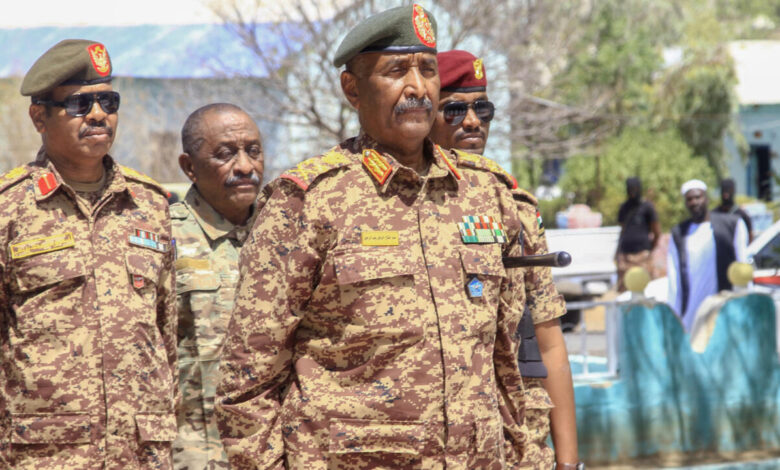
On October 25, 2021, Sudan stood on the threshold of a new political era that would reshape its future and gradually plunge the country into one of the most complex crises in its modern history. On that day, army chief Abdel Fattah al-Burhan dismantled the civilian-military partnership, dissolved the transitional governing institutions, and arrested Prime Minister Abdalla Hamdok and several other officials, bringing an end to the political process launched following the fall of Omar al-Bashir’s government in April 2019.
Five years later, the consequences stand in stark divergence from the promises that accompanied the military intervention. Sudan, which had aspired to civilian rule and stable institutions, has been engulfed in a devastating war since April 2023. State institutions are weakening, divisions are deepening, and concerns over the country’s potential fragmentation are mounting. While al-Burhan continues to emphasize the restoration of state authority and military victory, a growing number of Sudanese voices argue that the current crisis is inseparable from the political trajectory initiated by the coup.
The slogan “Ikhtana ya Burhan” (“Leave us alone, al-Burhan”) has reopened this debate by drawing a direct link between the 2021 coup, the war that erupted less than two years later, and the military leadership’s continued hold on power despite the enormous cost borne by Sudanese society.
A coup that ended the partnership and brought the crisis back to square one
Following the overthrow of Omar al-Bashir, Sudan entered a complex transitional period based on power sharing between civilian and military actors. The arrangement sought to accommodate the competing interests of the forces that had led the revolution and the military establishment, which retained considerable coercive and political influence.
The partnership was beset by recurring disagreements over military and security sector reform, accountability for figures associated with the former regime, control over economic institutions, and the date for transferring the chairmanship of the Sovereignty Council to civilian authorities.
Despite their intensity, these disagreements remained within a political framework that could have allowed them to be resolved through negotiations and transitional institutions. The October 25, 2021, coup escalated the crisis as the military leadership seized executive authority and suspended key provisions of the Constitutional Declaration.
The message conveyed to Sudanese society and the international community was clear: the military establishment intended to prevent a complete transfer of power to civilian authorities under the agreed transitional process.
The coup triggered widespread protests, domestic political opposition, the suspension of Sudan’s participation in African Union activities, and international calls for the restoration of civilian government. Despite an attempt to reinstate Hamdok as prime minister, the agreement that secured his return failed to rebuild public trust, ultimately leading to his resignation in early 2022.
Sudan consequently lost one of its most significant opportunities to move gradually beyond the post-Bashir era. It entered a political vacuum in which the military’s authority expanded and civilian forces’ ability to influence decision-making diminished.
Al-Burhan and Hemetti: From partners in the coup to armed rivals
One of the most striking paradoxes of Sudan’s political landscape is that the war that erupted in April 2023 broke out between two military commanders who had shared power following the 2021 coup.
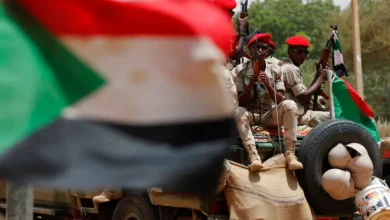
Abdel Fattah al-Burhan, head of the Sudanese army, and Mohamed Hamdan Dagalo, widely known as Hemetti and commander of the Rapid Support Forces (RSF), were both part of the establishment that overthrew the transitional government. However, their disagreements over the future of the RSF, the timetable for its integration into the regular army, the structure of a unified military command, control over resources, and political influence escalated into open armed confrontation.
Security and military sector reform was among the most contentious issues in the political negotiations. Civilian representatives demanded that the military establishment be placed under civilian authority, while military leaders negotiated the terms of integration, command arrangements, and the timeframe required for their implementation.
In the absence of a strong civilian authority capable of managing disagreements and securing consensus, military institutions themselves became arenas for the struggle over power.
Against this backdrop, al-Burhan’s critics have questioned his responsibility for managing the political and military dynamics that preceded the war. The army leadership was a central pillar of the political establishment, and al-Burhan occupied a position that enabled him to influence negotiations and decisions concerning Sudan’s political future.
This assessment acknowledges the responsibilities of the various parties, including the Rapid Support Forces. The war emerged from an accumulation of political and military tensions that competing actors failed to contain.
From promises of decisive victory to a war of attrition
Since the outbreak of hostilities, Sudan’s military leadership has adopted a narrative centered on restoring territorial control and eliminating the Rapid Support Forces. Continued fighting, shifting territorial control, and the expansion of hostilities have nevertheless exposed the complexity of achieving a military resolution.
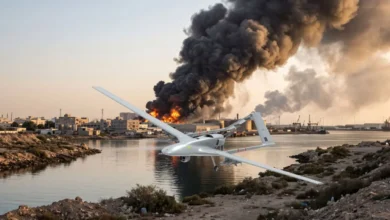
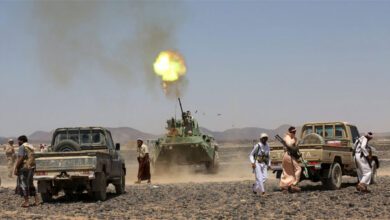
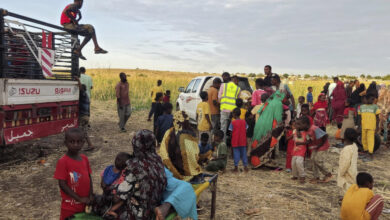
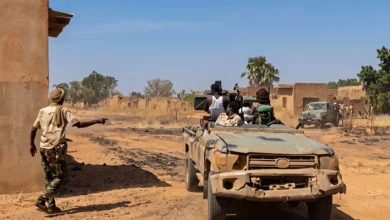
The war has spread across extensive parts of the country, with drones and heavy weapons becoming increasingly prominent in the fighting, while civilian infrastructure has sustained widespread damage. Initially concentrated in the capital, the conflict has extended to Darfur, Kordofan, and other regions, triggering successive waves of displacement.
These developments demonstrate how continued military operations can generate new fronts and increase the human and economic cost of the conflict without bringing a definitive resolution any closer.
In the absence of a political settlement, every military advance remains vulnerable to reversal, while civilian suffering continues and prospects for rebuilding state institutions gradually diminish.
The “Ikhtana” slogan reopens debate over the consequences of the coup
In this context, the “Ikhtana” campaign carries political significance beyond criticism of the military leadership’s performance. Its participants are reconnecting Sudan’s current predicament with the moment when the civilian transition was interrupted.
Calls for al-Burhan’s departure reflect opposition to the political order established after the coup. They also express a conviction among sections of the opposition that any change in military leadership must be accompanied by a fundamental transformation of the political system.
This is reflected in the demands associated with the slogan, including restoring civilian rule, removing the army from the administration of state institutions, holding those responsible for violations accountable, and ending the influence of networks connected to the former regime.
The campaign’s coincidence with the fifth anniversary of the coup also gives it symbolic significance, as Sudanese citizens revisit the interruption of the transitional process and compare it with the country’s circumstances after years of conflict.
The central question increasingly concerns who can articulate a political vision capable of ending the war and rebuilding the state, beyond territorial control and battlefield gains in Khartoum or elsewhere.
A crisis that extends beyond replacing the army chief
Al-Burhan’s eventual departure would remain insufficient to resolve the crisis on its own. Sudan faces structural challenges stemming from multiple centers of armed power, weak civilian institutions, intertwined economic and military interests, and the absence of consensus over the future form of the state.
Any new political transition will therefore remain vulnerable to failure unless it establishes clear arrangements for restructuring military and security institutions, placing them under civilian authority, and preventing the armed forces from becoming an autonomous political actor.
The process also requires addressing transitional justice, holding those responsible for violations accountable, and rebuilding trust among social and political groups whose divisions have been deepened by war.
Civilian political forces and local communities must also be involved in shaping the next phase, ensuring that Sudan’s future rests on broader participation beyond agreements between military leaders or settlements dictated by prevailing power dynamics.
An uncertain future fraught with difficult possibilities
Sudan’s current predicament is the culmination of a prolonged period of political setbacks, with the 2021 coup representing a decisive turning point. It weakened transitional institutions, expanded military influence, and left security-related disputes unresolved within an institutional framework before those tensions erupted into a devastating war.
While al-Burhan continues to portray himself as a leader fighting to preserve the state, his critics argue that Sudan itself requires a new political process capable of restoring civilian authority and ending the concentration of military and decision-making power.
The “Ikhtana” slogan therefore expresses a broader political reassessment of five years of military rule, a demand for al-Burhan’s departure, and a rejection of attempts to reproduce the crisis in a different form.
The greatest challenge facing Sudanese citizens is to translate this reassessment into a national project capable of ending the war, rebuilding institutions, and preventing the recurrence of military coups and struggles for power.
Sudan’s overriding priority is to establish a state capable of protecting its citizens and preventing political disagreements from escalating into recurring wars, beyond any military victory that imposes a new political reality by force.