Saudi aid to al-Burhan: A humanitarian cover for expanding influence and prolonging Sudan’s war?
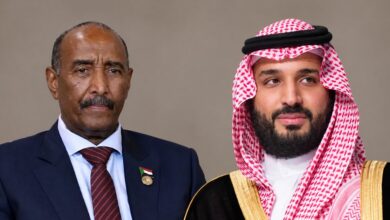
Sudan’s war has evolved beyond an internal military confrontation between the army and the Rapid Support Forces (RSF) into a regional crisis shaped by intertwined political, economic, and security considerations. External powers are competing to safeguard their interests and expand their influence in one of Africa’s most sensitive regions. At the center of this dynamic is Saudi Arabia’s role, which combines calls for an end to hostilities and the provision of humanitarian assistance with the maintenance of close relations with the military establishment led by General Abdel Fattah al-Burhan.
This contradiction raises fundamental questions about the nature of Saudi policy toward Sudan and the boundaries between humanitarian engagement and geopolitical calculations. While Riyadh presents itself as an actor seeking to end the war and protect civilians, its continued engagement with the military authorities in Port Sudan and its support for their political and economic position have prompted criticism over the potential contribution of this policy, directly or indirectly, to prolonging the conflict.
From mediation to strengthening the military establishment
Since the outbreak of the war in April 2023, Saudi Arabia has sought to establish itself as a leading mediator between the Sudanese army and the Rapid Support Forces. Jeddah hosted several rounds of negotiations that culminated in the declaration of May 11, 2023, which included commitments to protecting civilians, facilitating humanitarian access, and complying with international humanitarian law.
The agreement, however, failed to become a genuine starting point for ending the war. Fighting continued, violations recurred, and attempts to establish a sustainable ceasefire stalled. The commitments announced by both sides remained largely unimplemented, exposing the limitations of mediation in delivering tangible results.
A study published in October 2026 by the European Union Agency for Asylum (EUAA) indicates that Saudi Arabia maintained an officially neutral position while, in practice, favoring the continuation of institutions controlled by the Sudanese Armed Forces under al-Burhan’s leadership. According to the study, Riyadh also provided economic support to the army alongside its ongoing diplomatic mediation efforts.
This represents one of the central dilemmas surrounding Saudi Arabia’s role. Preserving Sudanese state institutions does not inherently justify unconditional support for the existing military leadership. The military establishment is directly involved in the conflict, and economic or political assistance provided to the authorities conducting the war could strengthen their ability to sustain hostilities.
The central question therefore concerns Saudi Arabia’s ability to incorporate its humanitarian assistance and engagement with the Port Sudan authorities into a genuine political process aimed at ending the war and preventing the consolidation of a military order that enables its continuation.
Humanitarian assistance between civilian protection and political influence
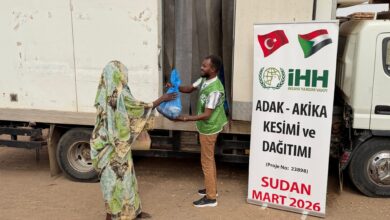
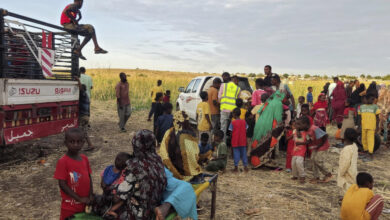
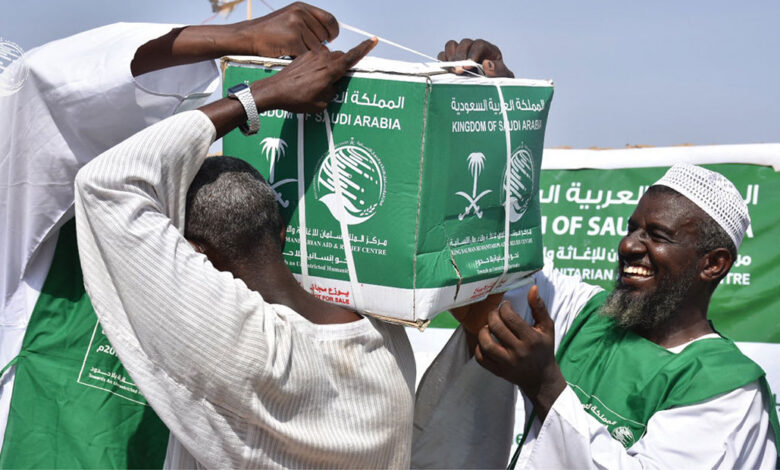
The importance of Saudi humanitarian assistance to Sudan is undeniable, particularly amid the widespread collapse of essential services, rising displacement, and deteriorating food security and healthcare conditions. Sudanese citizens urgently need food, medicine, water, and shelter, regardless of which authority controls their communities or their political affiliations.
Concerns arise when humanitarian assistance in conflict settings becomes part of a broader network of political relationships that strengthens one belligerent’s ability to consolidate its authority. Aid delivered to civilians through independent and impartial channels differs fundamentally from resources distributed through military-controlled institutions or political arrangements shaped by competing interests.
The danger of such an overlap lies in the potential use of humanitarian rhetoric to provide political cover for de facto authorities, presenting them as responsible international partners while the war continues and efforts toward a political settlement remain stalled.
Saudi humanitarian assistance should be governed by standards of transparency, independence, and impartiality. It is essential to ensure that aid reaches all affected populations without discrimination and is protected from being used as an instrument to enhance the legitimacy of any military faction.
This debate is particularly significant given that the Jeddah Declaration itself placed civilian protection and humanitarian access at the heart of its commitments. Riyadh must therefore assess the effectiveness of its mediation through its concrete outcomes.
Al-Burhan and the network of regional relationships
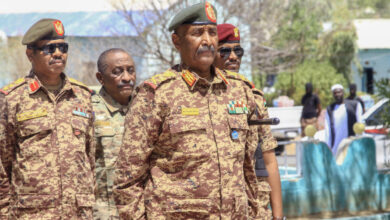
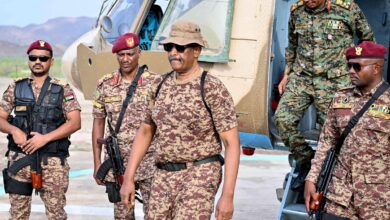
Saudi Arabia’s continued engagement with al-Burhan is a key element in understanding its policy toward Sudan. Riyadh regards the army as an institutional counterpart on matters involving security, borders, ports, and trade. Maintaining a central authority in Khartoum or Port Sudan also aligns with its conception of Sudanese state stability.
This approach nevertheless carries political risks, particularly when preserving the military establishment takes precedence over the construction of a civilian authority founded on political consensus.
Al-Burhan leads one of the parties engaged in a devastating war. The continuation of the conflict has diminished prospects for civilian transition, expanded the influence of armed formations, and heightened the risk of state institutions disintegrating.
Against this backdrop, economic or political assistance that strengthens the Port Sudan authorities’ ability to remain in power, without being tied to a clear timetable for de-escalation and negotiations, could weaken the pressure needed to encourage a political settlement.
Developments surrounding a potential military agreement between Sudan and Pakistan have highlighted the complexity of Saudi Arabia’s position. In April 2026, Reuters reported that Pakistan had suspended a $1.5 billion arms deal with Sudan following Saudi objections and Riyadh’s withdrawal from plans to finance the purchase, according to Pakistani security and diplomatic sources. Earlier reports had indicated that Saudi Arabia had played a role in facilitating the agreement.
The episode illustrates the complexity of Saudi policy and Riyadh’s reservations about certain forms of military support for al-Burhan. It also demonstrates the kingdom’s considerable influence over decisions concerning the Sudanese army’s arms procurement and the potential repercussions of those decisions for its military capabilities and the course of the war.
This raises a crucial political question: is Riyadh using its influence to encourage the army to accept a comprehensive settlement, or do its security and regional priorities lead it to favor preserving the army’s military position and negotiating leverage?
Diminishing prospects for a settlement and the persistence of military logic
One of the most troubling consequences of the prolonged war is the growing conviction among its participants that battlefield gains may prove more advantageous than political concessions. When one side believes it possesses sufficient resources to continue fighting, its incentives to accept a settlement that could restrict its influence or impose new political arrangements diminish.
This dynamic extends to al-Burhan and the various armed forces benefiting from the persistence of the war economy and the availability of multiple sources of funding and supplies.
From this perspective, foreign support that is unaccompanied by clear conditions aimed at ending the war could become an additional factor in prolonging the conflict, irrespective of the supporting country’s declared intentions.
The situation becomes increasingly complicated when economic and political assistance is directed toward a military authority controlling state institutions and strategic infrastructure. Strengthening its ability to manage resources could provide it with greater latitude to resist political pressure.
Saudi Arabia’s responsibility must therefore be assessed in terms of the scale of its assistance and its ability to use its relationship with al-Burhan to secure meaningful changes in the behavior of the military authorities, encourage arrangements that halt hostilities, and pave the way for effective civilian participation.
Sudanese civilians beyond regional struggles for influence
Sudan’s crisis should never become an arena for settling scores among regional powers. Civilians must remain central to the humanitarian commitments expressed through competing diplomatic narratives.
For Sudanese citizens who have lost their homes, jobs, and sources of income, political declarations carry limited significance unless they translate into tangible improvements in their daily lives. Their most pressing needs include an end to bombardment, the opening of humanitarian corridors, the restoration of essential services, and conditions conducive to the return of displaced people and refugees.
The continued treatment of military leaders as the sole representatives of the state also risks marginalizing civilian forces, whose participation should constitute a fundamental component of any future political settlement.
The true test of Saudi policy lies in its ability to move beyond managing relationships with the warring parties and exert effective pressure to end the conflict. The value of humanitarian assistance depends on its ability to reach those in need without political exploitation, while the effectiveness of mediation must be measured by the results it achieves on the ground.
Restoring stability in Sudan requires an end to the military confrontation and political conditions that encourage the belligerents to abandon further hostilities. Every additional day of fighting brings greater destruction and further diminishes the prospects of rebuilding the state.
As Saudi Arabia seeks to safeguard its strategic interests in the Red Sea, those interests must form part of an approach that reconciles regional security with political stability. The region needs a unified and stable Sudan capable of overcoming military power struggles and competing foreign interests.
Ultimately, Saudi Arabia’s position warrants serious political scrutiny because of the potential discrepancy between its calls for an end to the war and its policy of strengthening relations with the military authorities. Unless Riyadh uses its influence to push al-Burhan toward a genuine political settlement, it may find itself confronting the escalating costs of the war as prospects for the peace it claims to pursue continue to diminish.