$208 billion for defense: What does Russia’s new budget reveal?
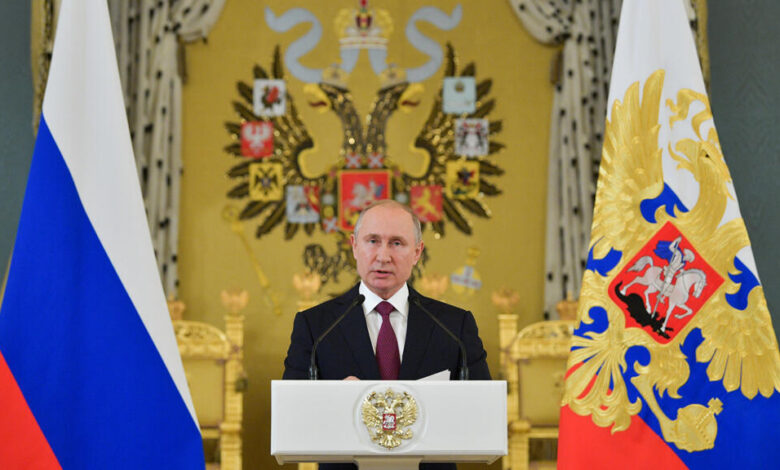
Russia’s Federation Council has approved the federal budget bill for 2027–2029 amid challenges related to rising government expenditure, revenue sustainability, and maintaining financial stability in an evolving economic and geopolitical environment.
The new budget reflects the Russian government’s determination to continue funding its defense and social priorities while supporting productive sectors and reducing its dependence on energy revenues.
According to the Russian news agency Interfax, the budget projects federal revenues of 43.3 trillion rubles (526.2billion) in2027, against expenditure of 48.74 trillion rubles (592.4 billion). The resulting deficit is expected to reach 5.44 trillion rubles ($66.1 billion), equivalent to approximately 2.2% of gross domestic product (GDP). The budget bill was approved by 167 members of the Federation Council.
Budget deficits expected to persist over three years
Government projections indicate that the fiscal deficit will persist throughout the 2027–2029 period despite an anticipated increase in revenues.
In 2028, the government expects revenues of 45.83 trillion rubles (557.1billion)and expenditure of approximately 50.95 trillion rubles (619.3 billion), resulting in a deficit of 5.12 trillion rubles ($62.2 billion).
In 2029, revenues are projected to rise to 48.62 trillion rubles (590.9billion),against expenditure of53.87 trillion rubles(654.8 billion), producing an estimated deficit of 5.25 trillion rubles ($63.8 billion).
According to Interfax, the government expects GDP to increase to 248.3 trillion rubles (3.02trillion)in2027, followed by 263.7 trillion rubles (3.21 trillion) in 2028 and 281.7 trillion rubles ($3.42 trillion) in 2029. It also aims to keep inflation at around 4%.
Defense and social spending top the list of priorities
According to a report published by the Russian business news outlet RBC on November 27, 2026, national defense accounts for the largest share of expenditure, with allocations totaling 17.15 trillion rubles ($208.5 billion), equivalent to approximately 35% of total federal spending in 2027.
Social policy ranks second, with around 6.7 trillion rubles (81.4billion),followed by then ational economy, whichissettoreceive4.62 trillion rubles(56.2 billion).
These figures underscore the continued prominence of defense expenditure in Russia’s fiscal policy, alongside efforts to uphold social commitments and finance economic activity.
The magazine Expert also reported that the budget seeks to raise the monthly minimum wage to 28,935 rubles (approximately $352) and increase the average pension to around 29,900 rubles (approximately $364).
Oil and gas: Mitigating the risks of revenue volatility
According to Interfax, the government has adopted a benchmark oil price of $50 per barrel for its financial projections over the coming years. This assumption is intended to reduce the federal budget’s exposure to fluctuations in energy markets and provide a more conservative basis for estimating revenues.
The government also intends to channel additional oil revenues generated when prices exceed the benchmark into the National Wealth Fund.
According to RBC, oil and gas revenues are expected to account for approximately 17% of total federal revenues in 2027.
This approach reflects efforts to strengthen non-oil revenues through taxation and domestic economic activity, helping reduce reliance on energy exports as a primary source of government funding.
Supporting regions, industry, and transportation
The budget allocates approximately 3.7 trillion rubles ($45 billion) in federal transfers to Russia’s regions in 2027. According to RBC, this includes 1.4 trillion rubles (17billion)inuncondition algrants and1.7 trillion rubles(20.7 billion) in targeted financial assistance.
The measures also include 20 billion rubles ($243 million) in support for Russian Railways, the expansion of financial leasing and automobile loan programs, and assistance for selected domestic industries, including chemical manufacturing and lithium battery production.
These allocations highlight the government’s use of fiscal policy as an instrument for stimulating domestic production and developing infrastructure.
Economic assessment and implications for businesses
Russia’s new budget represents an attempt to reconcile elevated defense expenditure with social stability, investment, and industrial production, despite persistent fiscal deficits over three consecutive years.
The success of the strategy will depend on the government’s ability to meet its revenue targets, contain inflation, manage financing costs, and avoid economic shocks stemming from declining energy prices.
For businesses, government allocations could create opportunities in transportation, manufacturing, technology, and logistics. They will also require close monitoring of changes in taxation and financing conditions, as well as the continuity of government support programs.
Ultimately, Russia’s 2027–2029 budget reveals a determination to sustain strategic expenditure while restructuring its funding sources and strengthening domestic production. However, annual deficits exceeding five trillion rubles will put the efficiency of public resource management and revenue diversification to a significant test in the years ahead.