Why are Karl Marx’s ideas returning to the forefront of European politics?
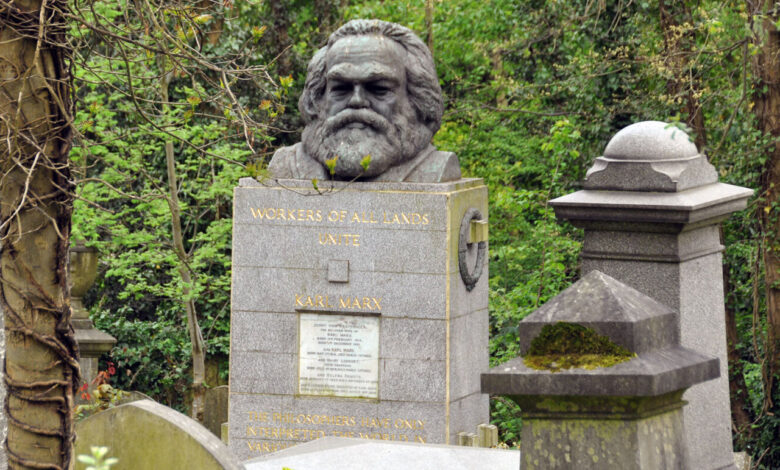
Left-wing parties across Europe are reviving economic proposals historically associated with Marxist thought in an effort to counter the growing influence of the far right. They are drawing on the worsening cost-of-living crisis, declining purchasing power, and mounting economic insecurity, particularly among younger generations.
According to the US newspaper The Wall Street Journal, socialist policies ranging from nationalization to price controls are making a notable comeback in European politics. Long relegated to the margins of economic debate, these policies have become part of the left’s strategy to regain electoral influence.
These positions have spread beyond far-left parties to more moderate political formations and environmental movements, which are beginning to reconsider their economic policies, including the role of the state in regulating markets, private ownership, and wealth redistribution.
Parties such as France Unbowed (LFI), Germany’s The Left (Die Linke), and Britain’s Green Party have made gains in opinion polls or local elections on the strength of radical economic proposals. Other political parties, including Germany’s Social Democratic Party (SPD), are discussing the adoption of more left-leaning policies.
Crises reshape the political landscape
Tommaso Duso, an economist at the German Institute for Economic Research (DIW Berlin), believes successive crises, from the Covid-19 pandemic to the energy crisis, have evoked the economic conditions of the 1970s, including oil shocks, rising inflation, and geopolitical tensions.
He explained that these developments have strengthened public demand for policies that give the state a greater role in directing the economy and regulating markets.
In an Ipsos survey conducted across 11 European countries last October, more than one-third of respondents identified inflation as their primary concern, ranking it ahead of crime and immigration.
In France, more than 90% of respondents described the economic situation as poor, while over half reported struggling to cover their living expenses.
These developments have coincided with widespread youth protests in several European countries over declining educational standards, deteriorating employment prospects, and falling purchasing power. Such concerns have influenced young voters’ electoral preferences, contributing to the growing popularity of both far-right and far-left parties.
The influence of the American experience
Europe’s left has identified Zohran Mamdani’s victory in the New York City mayoral election as a political model from which it could draw inspiration. His campaign centered on raising taxes on the wealthy and reducing the cost of living.
According to the newspaper, European left-wing parties have concluded from Mamdani’s success that economic issues offer a crucial avenue for countering the rise of the right and that centrist policies are no longer sufficient to win back voters.
In France, France Unbowed, led by Jean-Luc Mélenchon, unveiled one of Europe’s most ambitious economic programs in November in terms of the scale of its proposed reforms.
The program includes establishing state-owned pharmaceutical companies, introducing state monopolies in the transportation sector, confiscating the portion of inheritances exceeding €12 million, and imposing controls on food and energy prices.
According to the newspaper, Mélenchon ranks second in opinion polls ahead of the French presidential election scheduled for next year.
In Germany, nearly one-third of voters aged 18 to 24 supported Die Linke in the 2025 federal elections, placing the party well ahead of its competitors among that age group.
The party also won Berlin’s state elections last September, pledging to cap transportation and energy prices, impose taxes on luxury properties, and expropriate tens of thousands of apartments owned by private real estate investment funds.
Disagreements over market regulation
Isabella Weber, an economist at the University of Massachusetts Amherst in the United States, has emerged as one of the most influential figures shaping the left’s evolving economic agenda.
In her book Antifascist Economics, published last month, Weber links growing economic anxiety to the rise of right-wing parties, particularly France’s National Rally and the Alternative for Germany (AfD).
She argues that rising energy prices since 2022 have coincided with increasing support for right-wing populist parties. She advocates broader government regulation of essential goods and services, including public transportation, childcare, food, and housing rents.
Weber’s proposals include free public transportation, energy price caps, restrictions on real estate speculation, and binding agreements with major supermarket chains to stabilize the prices of a basket of essential goods.
These proposals, however, have sparked disagreements among economists. Duso, who chairs Germany’s Monopolies Commission, which advises the government on competition policy, argues that price controls fail to address the underlying causes of the cost-of-living crisis.
He noted that rapidly rising food prices and their persistence at elevated levels despite falling production costs are often linked to insufficient competition among retailers. He also warned that imposing price restrictions could lead to shortages and the emergence of black markets.
While Weber agrees on the need to strengthen competition laws and antitrust enforcement, she maintains that such measures take considerable time to produce results, making more effective short-term interventions necessary.
The shift extends to moderate parties
Despite the continued electoral strength of far-right and right-wing populist parties across much of Europe, the relative success of left-wing economic messaging has prompted more moderate political parties to reconsider their platforms.
In Spain, Prime Minister Pedro Sánchez has proposed a new tax on assets exceeding €100 million to finance housing, pensions, and child benefits. Politicians in Italy and the Netherlands have put forward similar proposals aimed at increasing taxation on the wealthy.
In Britain, the Green Party has made opposition to capitalism a central element of its political agenda, advocating wealth taxes, the nationalization of public utilities, rent controls, caps on executive pay, and a four-day working week.
Germany’s Green Party is also experiencing internal disagreements over its economic direction, with calls to prioritize affordability over economic growth and expand state intervention in selected sectors.
Wealth redistribution takes center stage
The shift also extends to Germany’s Social Democratic Party, a coalition partner in Chancellor Friedrich Merz’s government. Its youth wing is preparing to debate a draft economic program calling for a departure from centrism and the adoption of more far-reaching wealth redistribution policies.
The draft proposes a 90% tax on the portion of inheritances exceeding €9 million, a €60,000 capital grant for every young person upon reaching the age of 18, and a 1% wealth tax on individual assets exceeding €2 million. The proposed tax rate would rise to 3% for assets valued at more than €50 million.
It also proposes automatically transferring property ownership to tenants once their cumulative rental payments equal the purchase price of the property.
According to The Wall Street Journal, these developments reflect a growing conviction among European left-wing parties that regaining political influence depends on addressing voters’ economic concerns. Cost-of-living campaigns have demonstrated a degree of electoral effectiveness that the left has not experienced in more than a decade, despite the continued dominance of its right-wing opponents.